After building a new house earlier this year, my wife and I got to experience the challenge of having bulky items that either needed to be signed for or needed to be moved into a house we weren’t yet living in.
It was about an hour drive between our former and our new residence, so it was challenging when we’d make plans to be at the new location, only to have the delivery canceled or pushed back.
I rushed off a cruise ship media event early one morning to drive 90 minutes from the port to the new house, only to get a call halfway there that the delivery was not happening the next day.
In addition, I got an email one day saying our hot tub, which was backordered when I purchased it, had been delivered. That’s a problem, because it was sitting in my driveway, weighed 450 pounds, and I needed to hire movers to move it (which I did at an impressive same-day service premium).
For each of these situations, and a number of others, the company that sold us whatever we had purchased wasn’t the company delivering it. That means that your salesperson, or any store managers, have limited control over the process.
This regularly happens when you order appliances or other big items from Lowe’s and Home Depot, but that’s not the case when you buy larger items from Costco. The warehouse club has taken control of its own big and bulky deliveries.
In fact, it owns a company that specializes in doing just that.
Costco controls its own delivery fate
Costco completed the acquisition of Innovel Solutions, a provider of third-party end-to-end logistics solutions with nationwide capabilities in March 2020. Innovel was a subsidiary of Transform Holdco, LLC, which operates Sears and Kmart stores.
The purchase price of $1 billion was funded from Costco’s existing cash balances, according to a press release.
More Costco:
- Costco’s members get 1 big benefit they may not even think about
- Costco customers may qualify for $14M settlement
- Costco makes big payment changes
Sears was once America’s dominant appliance retailer.
“Sears has historically been the leader in the retail home appliance market, with a market share among the top 100 retailers of approximately 39% in 2004, down from 42% in 2003,” according to an SEC 10-K filing from Conn’s, a rival appliance retailer.
Sears had fewer than 100 stores left in 2020, according to Statista, meaning it no longer needed its own delivery service.
“Innovel has for decades provided Sears and, more recently, third parties with ‘final
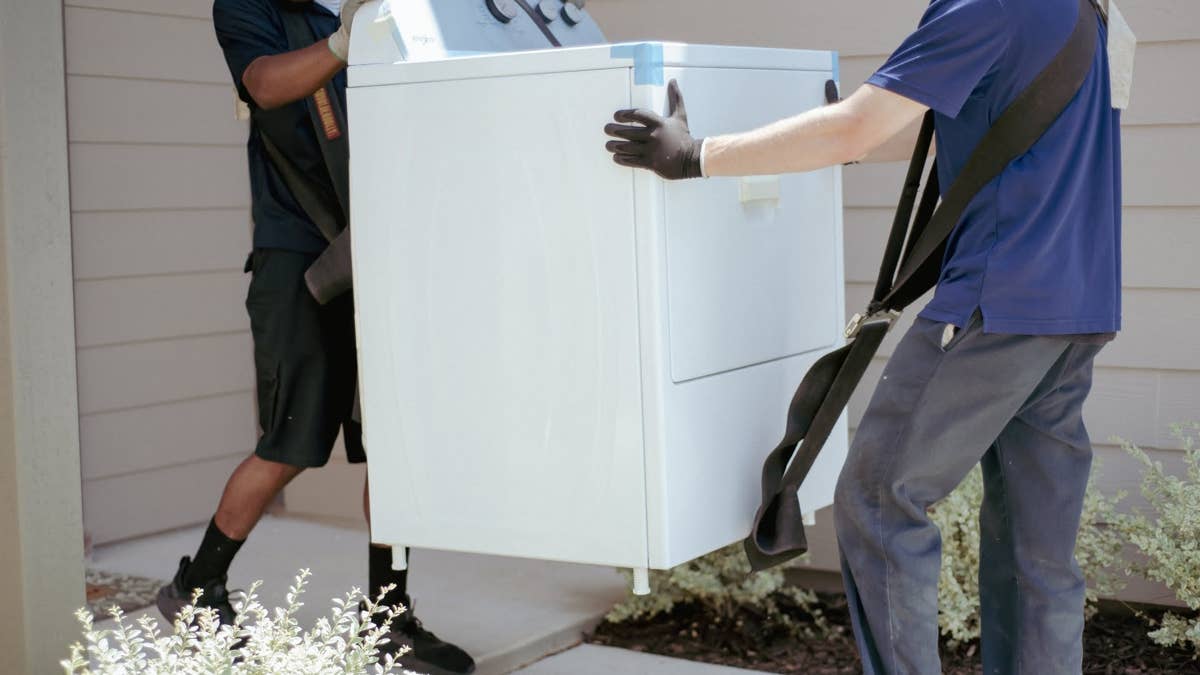
mile’ delivery, complete installation, and white glove capabilities for ‘big and bulky’ products across the United States and Puerto Rico. Innovel’s network offers coverage to nearly 90% of the U.S. and Puerto Rico,” Costco shared.
Shutterstock
Costco controls its last-mile delivery
The purchase of Innovel has worked out well for Costco, according to remarks made by CEO Ron Vachris during the retailer’s third-quarter earnings call.
“As you know, a few years back in 2020, we went ahead and made an acquisition to get into the big and bulky delivery because we felt that there was a significant opportunity in shortening the delivery times there. That has been very productive for the company, and we deliver a great example as far as that goes,” he said.
Unlike Costco, retailers including Lowe’s and Home Depot generally rely on a mix of company-operated and third-party delivery networks. Best Buy, another major player in the appliance space, uses a mix of Geek Squad teams and third-party delivery partners for appliance deliveries and installations.
RTM Nexus CEO Dominick Miserandino thinks Costco has made the right move controlling this part of the delivery process.
“Costco taking big-item delivery in-house is a massive play because the last mile is where retail reputations go to die,” he told TheStreet. “When you order a couch or a refrigerator, you aren’t just buying the product — you’re buying the delivery experience. The second a retailer hands that off to some third-party trucking company, they’re gambling with their own customer trust.”
He thinks the risks are simply too big to give up control.
“If the driver shows up late, dings the drywall, or leaves a $2,000 appliance sitting in the driveway, the customer isn’t mad at the contractor, they’re mad at Costco. By owning the trucks, the drivers, and the installation, Costco protects the exact thing their entire membership model relies on: total trust,” he added.
David Naumann, who leads Verizon’s marketing strategy, shared a similar view on RetailWire.
“The delivery and installation of large or complex products can have a huge impact on customer satisfaction. Owning the delivery and installation services will provide Costco greater control of the quality of service, which gives them more control of the entire buyer’s journey,” he wrote.