Going to the grocery store is a part of life we mostly do on autopilot: make a list, go to our local favorite store, look for good deals here and there, and head back home again to do our cooking for the week.
Some people opt to go to more than one store to get the best deals, but overall, it’s typically not a process we associate with any stress.
Most people know grocery stores have cameras for theft prevention and customer behavior tracking and aren’t bothered by it.
They understand that all stores have loss prevention to keep under control, and being seen on camera mulling over which lettuce to buy doesn’t concern the average consumer, especially considering that our smartphones are much more invasive tracking devices that we willingly carry everywhere.
Now, a grocery chain is using a new technology in its stores to do the same thing the cameras do, but on a more detailed level — and it’s not something every consumer is going to feel comfortable with.
Face scans during your grocery run
Grocery Outlet, a chain that operates across 16 states with more than 200 locations in the California region, has introduced AI-powered face-scanning technology at the entrances of its Bay Area stores, according to reporting from Mission Local.
A small sign posted on the side of the door reads, “Face Matching Software being used for security and safety.”
Related: Is AI Buying Your Groceries?
The technology is powered by SAFR Guard, a product made by AI company SAFR. It works by scanning customers’ faces and comparing them to a watchlist of people who have caused harm, whether through shoplifting or other issues. If the system finds a match, it notifies the retailer, who can take action as needed.
If the face scanned is not a match, it is deleted immediately, SAFR President Charisse Jacques told Mission Local. “It’s not about mass surveillance; it’s about ‘targeted deployment.'”
Thanks to California’s Consumer Privacy Act (CCPA), customers do have the right to request that SAFR delete their image, as well as ask that it not be sold or shared. But this can’t be done in advance, so the only way to prevent it entirely is to avoid entering the store.
It’s not about mass surveillance; it’s about ‘targeted deployment.’
The customers who entered the store had mixed emotions when Mission Local informed them about the technology. Some appreciated that no items in the store had to be locked up thanks to the face-scanning technology. But others said they would not return to the store from now on.
“I don’t like that,” customer Alice York said. “That’s without my consent. I’m not coming here again,” York added. “That’s a shame, too.”
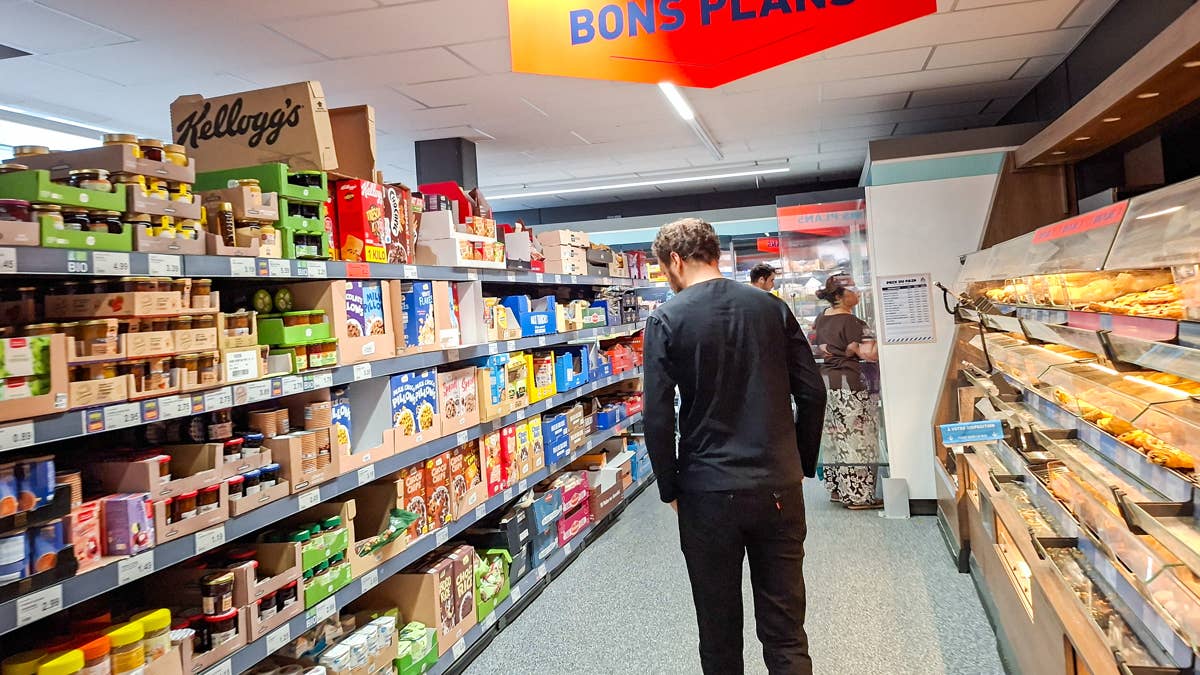
Facial recognition tech may be at your local grocery, too
Grocery Outlet is not the only grocery store to use this technology. In January, the ACLU reported that Wegman’s was also using it, storing the data, and working with law enforcement if persons of interest were identified.
“At Wegmans, the safety of our customers and employees is a top priority,” the company said in a statement.
More Retail:
- Coca-Cola quietly hints at reinventing previously failed flavor
- Bath & Body Works quietly gains a competitive advantage
- Dollar General brings back old prices
“Like many retailers, we use cameras to help identify individuals who pose a risk to our people, customers, or operation. In a small fraction of our stores that exhibit an elevated risk, we have deployed cameras equipped with facial recognition technology. In New York City, we comply with local requirements by posting the mandated signage to notify customers about the technology.”
Rite Aid also used facial recognition technology without informing its customers, leading to an FTC investigation and a five-year ban on its use.
The website Ban Facial Recognition provides a U.S. map that tracks where facial recognition is being used, as well as the cities and states where the technology has been banned or is in the process of being banned.
In the meantime, if you’re concerned about the technology, check your state’s consumer privacy laws. If a store you shop at uses the technology, you have the right to ask customer service how facial images are stored and shared.
And of course, you can always take your business elsewhere.