“Luxury goods are the only area in which it is possible to make luxury margins,” said Bernard Arnault, CEO of LVMH, the world’s largest luxury group behind powerhouses such as Louis Vuitton, Christian Dior, Fendi, and Givenchy.
Arnault may be right about margins, but high fashion isn’t inflation-proof. Even LVMH saw revenue slip 5% in 2025 and another 3% in early 2026, while retail giant Saks Global was forced into Chapter 11 bankruptcy.
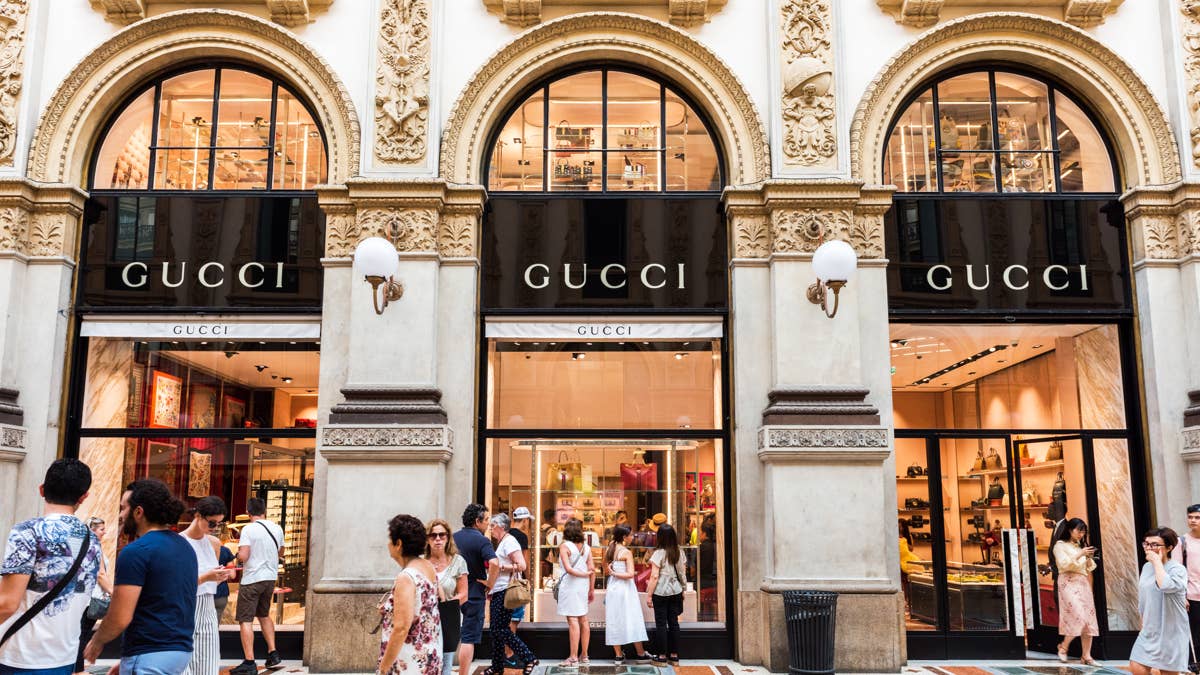
Now, the challenges have hit Kering. The French luxury giant behind Gucci, Saint Laurent, Bottega Veneta, and Balenciaga closed 84 stores in the first half of 2026, and is planning more.
Kering closes at least 217 stores in 18 months
“Despite being the world’s second-largest luxury group, with revenue of €14.7 billion ($17.38 billion) in 2025, Kering has faced mounting pressure in recent years. Leadership changes, shifting consumer preferences, and broader industry headwinds have challenged its performance,” according to TheStreet retail reporter Fernanda Tronco.
In 2025, the luxury giant opened 58 new stores, but closed another 133, resulting in net 75 closures for the year, said Kering CFO Armelle Poulou during the Q4 2025 earnings call.
“Our store network is being assessed constantly, and we have accelerated its rationalization by closing stores that no longer support our ambition to strengthen sales density,” Poulou added.
On July 28, 2026, Kering reported earnings and operational results for the first half of 2026, revealing more closures.
During the first six months of 2026, Kering finalized 84 net closures, reducing its total store count to 1,635, down from the 1,719 it had on Dec. 31, 2025.
The luxury group didn’t disclose gross closing numbers or new store openings for the first six months of the year, only net closures. Based on this, it is evident that over the past 18 months, Kering closed at least 217 stores.
These closures were offset with openings, resulting in net closures of 159 for the period.
The company highlighted that the 84 net closures in the first half of the year resulted in a reduction of 5% of its directly operated stores as of Dec. 31, 2025, and are part of the 100 targeted closures for the 2026 full year.
First half of 2026 Kering net store closures:
- Western Europe: 13
- North America: 20
- Japan: 16
- Asia-Pacific: 31
- Rest of the world: 8
Source: Kering
The four-store gap between the regional total (88) and the group-level figure (84) reflects the difference between the Fashion & Leather Goods segment and Kering’s overall Group Level total.
Why Kering is closing stores
The store optimization strategy comes after declining profits for the luxury giant in recent years.
The group didn’t decide to close 159 net stores on a whim. It was forced into the optimization strategy after its operating income dropped by nearly half (46%) due to underperforming, low-density retail stores.
Related: Iconic outdoor retailer closes key store due to retail theft
“In a difficult year, we accelerated the transformation of several of our Houses and moved determinedly to strengthen the health and desirability of our brands for the long term,” stated then-CEO François-Henri Pinault.
For the full year of 2025, Kering reported a revenue drop of 13% year over year and 10% on a comparable basis.
Interestingly, the group’s biggest and most powerful brand, Gucci, drove the decline, posting revenue drops of 22% and 19% on a comparable basis.
Back in August 2025, Luca Solca, managing director at Bernstein, wrote a letter to Kering CEO Luca de Meo, identifying two immediate priorities:
- Debt levels must be curbed.
- The management organization must be fixed.
Kering’s new strategy showing early success
The new strategy seems to be working, as for the first half of the year, Kering reported solid results, with revenue of €7.22 billion ($7.9 billion), down 3% on a reported basis compared to the same period in 2025, but returning to growth in the second quarter.
“Store optimization is not only about reducing our footprint, it is also about upgrading, renovating and elevating our most strategic locations. And the fact that we returned to growth while materially reshaping our network demonstrates the improving productivity of our retail operations,” de Meo said during the earnings call.
“I think momentum improved across nearly all our houses,” de Meo continued. “Gucci accelerated significantly on a sequential basis, and our operating margin improved.”
Kering makes big moves to revive profits
Under its new recovery strategy, in addition to store optimization, the group is working on limiting its dependence on fashion, while also expanding into other potentially lucrative luxury categories.
Beauty division sold to L’Oréal
In October 2025, Kering agreed to sell its beauty division to L’Oréal for $4.7 billion, establishing a 50-year exclusive licensing agreement scheduled to start in early 2026, according to the company’s press release.
Kering and L’Oréal are also launching a joint venture in the high-growth wellness and longevity market to drive innovation in fragrances and cosmetics.
Raselli Farco jewelry acquisition
Recognizing jewelry as a resilient category during luxury downturns, Kering acquired Raselli Farco in late 2025 to strengthen production, according to Kering’s official press release.
“By securing critical manufacturing capabilities for our jewelry activity, this partnership will strengthen our value chain and accelerate the growth of our Houses. It reflects our unwavering commitment to excellence and our determination to shape the future of jewelry,” stated de Meo.
Gucci & L’Oréal licensing agreement
Gucci and L’Oréal entered into a 50-year exclusive beauty licensing agreement set to begin in mid-2027, replacing Gucci’s previous deal with Coty ahead of its scheduled 2028 expiration.
Combining Gucci’s brand vision with L’Oréal’s global distribution aims to “unlock significant long-term growth opportunities” while deepening consumer engagement and reinforcing brand consistency across fragrance and beauty, according to the company’s press release.
Related: Popular mall retailer is quietly shifting away from traditional malls