When your local grocery store closes, it doesn’t matter to impacted residents that the chain is adding locations in other markets.
My family owns a vacation home in Jaffrey, New Hampshire, and the closest grocery store was about five miles away in a neighboring town. When that store closed, our options were smaller, much more expensive specialty markets, or driving to Walmart about 20 minutes away.
It was around two years before a Stop and Shop was built, replacing the closed Market Basket, but it was known from the point of the closing that the replacement was coming.
Unlike many retailers, grocery stores serve a frequent and essential need, which means that losing a nearby location can immediately change how people shop for everyday necessities.
Some areas are not lucky enough to have a new option step in relatively quickly, leaving residents without a convenient option for groceries. That’s what Avondale, Ohio, City Council Member Mark Jefferies talked about with Fox News after his community’s only grocery store closed.
“At a time when so many families already face barriers to accessing fresh fruits, vegetables, and affordable groceries, losing a neighborhood market is a real setback. We must continue working together to attract and support businesses that expand access to healthy food and strengthen our communities,” he said.
Now, Aldi has joined a long list of grocery chains selectively closing locations in 2026.
Aldi closing a number of stores in 2026
Aldi operates more than 2,500 stores across 41 states and Washington, D.C. The company is currently in the midst of opening more than 225 new stores nationwide this year, its largest single-year expansion ever, which is part of a five-year, $9 billion growth strategy.
The discount grocery chain will grow its store count to nearly 2,800 by the end of 2026 with plans to hit 3,200 by the end of 2028.
“One in three U.S. households shopped at ALDI this past year, and in 2026, we’re focused on making it even easier for customers to shop our aisles first,” said Aldi U.S. CEO Atty McGrath in a press release.
“That means bringing ALDI to even more neighborhoods, upgrading our website and planning additional distribution centers to keep our shelves stocked with the products our shoppers love.”
That does not dim the pain felt by people impacted by the chain’s decision to close select locations.
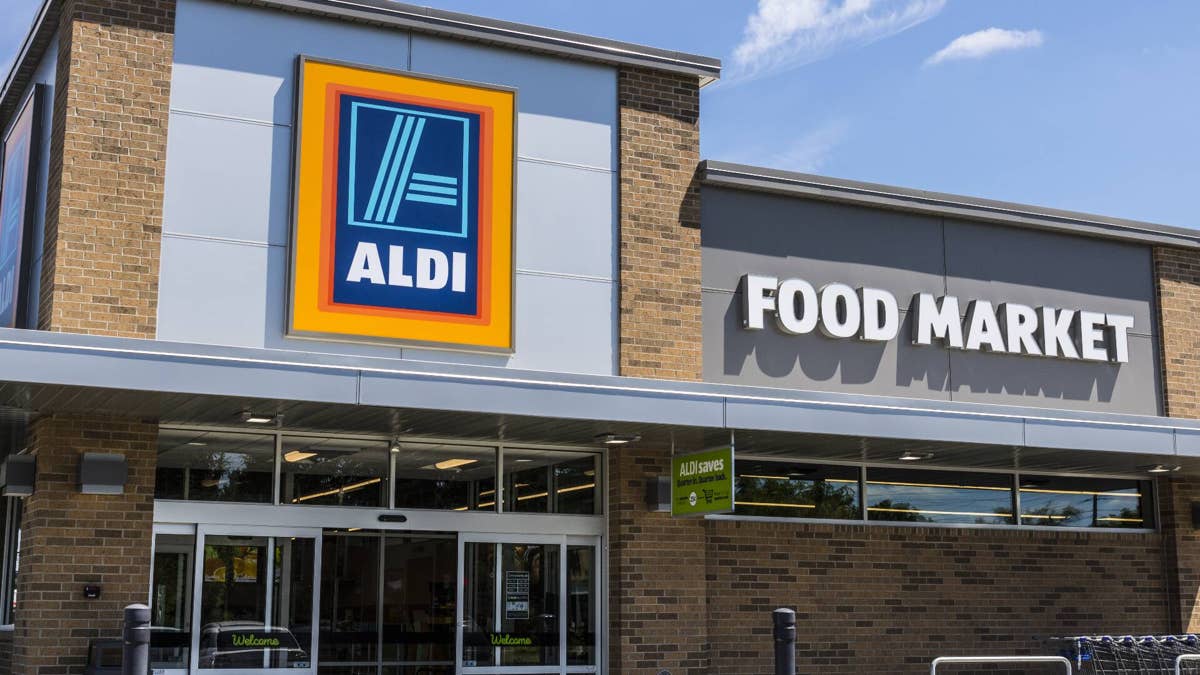
Shutterstock
Aldi is closing stores
Theron Hawk shared the impact of his local Aldi closing with a Chicago-area local website.
“Of course, Aldi was the asset,” Hawk said. “I got rid of my car, that’s why it was so easy for me to make the change.”
That Aldi later closed, leaving the area without a true supermarket.
“We have a store directly across the street from Aldi,” Hawk said. “It has a sign that says Madison Supermarket, but they’re not a supermarket. They’re like a candy store, a cigarette store, can’t buy a loaf of bread there, can’t buy a gallon of milk there.”
It’s not an issue that’s limited to Aldi, but store closures, even when a chain is growing overall, can have a real impact on the area they serve.
Inc. compiled a list of Aldi locations that have closed in 2026.
Minnesota
- 1451 Riverwood Drive, Burnsville, Minnesota
Illinois
- 1202 W. Dundee Road, Buffalo Grove, IL
Texas
- 9779 Forest Lane #200c, Dallas, TX
- 7440 McCart Ave., Fort Worth
Wisconsin
- 5301 N. Hopkins Street, Milwaukee, WI
- 1712 S. 108th Street, West Allis, WI
Aldi also closed 22 locations in 2025.
Retailers routinely adjust their store portfolios, opening locations in stronger markets while closing stores that no longer meet performance goals.
A study published in the Journal of Retailing found that chain retailers use store openings and closings as a way to improve performance and adjust their distribution strategies.
Aldi is not alone in closing stores
When a grocery store closes, the impact on the community can go well beyond that of losing any other type of retailer.
Researchers studying grocery-store closures have found that losing a local supermarket can create measurable costs for consumers, including higher transportation burdens and reduced access to affordable food options.
A study published in the International Journal of Sustainable Development and Planning found that grocery-store closures can create additional transportation costs for consumers who must travel farther to shop.
“When you have to rely on a very small store, like a corner store, to be the main source of your meals, that means that you are limited in the options that can be there. It’s not the sole responsibility of the corner store owner to provide fresh fruits and vegetables for an entire community, said Ruby Ferguson, Chicago’s Food Equity Policy Lead.
Not every store closure leaves a community underserved, but many of the closing stores serve communities where some residents will lose easy access to fresh food.
The chains closing locations include:
- Kroger: About 60 planned, 33 closed so far, spanning Fred Meyer, Fry’s, Harris Teeter, King Soopers, Mariano’s, Pick ‘n Save, and QFC, according to Fast Company.
- Albertsons: More than a dozen in 2026 after about 30 in 2025, reported TheStreet.
- Amazon Fresh and Go: All 72 stores, announced Jan. 27, according to Geekwire.
- Grocery Outlet: 36 stores; CEO admitted overexpansion after a $218 million fourth-quarter net loss, Mashed reported.
- Save A Lot, Chicago: Seven South and West Side stores closed July 25, three years after a $26 million city incentive package, according to Block Club Chicago.
- Winn-Dixie and Harveys: 32 Winn-Dixie and eight Harveys in the retreat to Florida, reported WRIC.
- Homeland, Oklahoma: 17 locations, employee-owned chain, according to TheStreet.
- Brookshire: Four stores in Louisiana and Arkansas, July 24, added TheStreet.
Related: Kroger makes a pricing move Costco and Walmart will love