After closing hundreds of stores and offloading a major luxury brand, one of the fashion industry’s best-known groups continues to shrink its retail footprint.
The move comes as luxury companies navigate a challenging environment marked by softer shopping demand, economic uncertainty, and shifting spending patterns.
According to the McKinsey & Company State of Fashion 2026 Report, the global fashion industry is projected to grow only in the low single digits in 2026, due to macroeconomic volatility, tariff pressures, and weaker consumer sentiment.
Now, another iconic luxury group is rethinking its footprint while attempting to strengthen its remaining brands and return to growth.
The company began in 1981 as Michael Kors Holdings Limited and changed its name to Capri Holdings Limited in 2018 following its acquisition of Jimmy Choo. It later added Versace to its portfolio before selling the brand to Prada Group in 2025.
Capri Holdings closes 41 stores
Capri Holdings (CPRI) had 871 retail locations as of June 27, 2026, down 41 stores from the 912 it had a year earlier, according to Modaes.
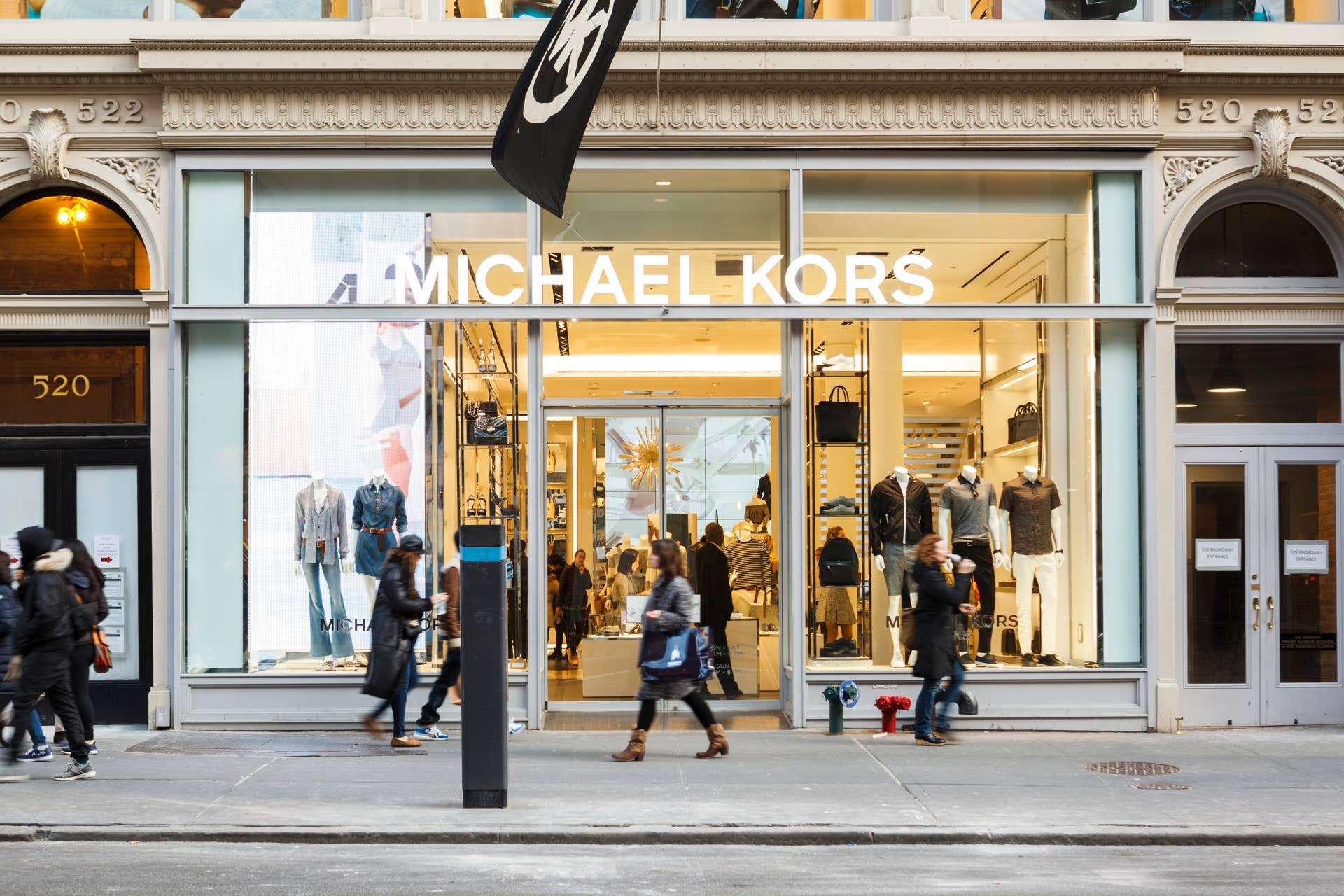
The closures included 33 Michael Kors stores and eight Jimmy Choo locations. Michael Kors had 662 stores as of June 27, down from 695 a year earlier, while Jimmy Choo had 209, down from 217.
The closures come as Capri Holdings experiences uneven performance across its brands. During the first quarter of fiscal 2027, the company reported:
- Net revenue decreased 3.5% year over year to $769 million.
- Michael Kors’ revenue fell 7.1% to $590 million.
- Jimmy Choo’s revenue increased 10.5% to $179 million.
The latest closures continue a recent pattern for the retailer. During the same quarter a year earlier, Capri Holdings closed 79 locations, according to its first-quarter fiscal 2026 earnings report.
The store reductions highlight how Capri Holdings is cutting locations and expenses while investing in its brands, stores, and digital operations to reignite growth.
Capri Holdings previously owned Versace, which was acquired by the Prada Group in December 2025 in a cash deal valued at €1.25 billion, or approximately $1.44 billion. The narrower portfolio gives Capri Holdings a more focused approach as it works to revive growth across its two remaining brands.
The deal also marked the end of Donatella Versace’s nearly 30-year leadership of the brand.
Capri Holdings’ new strategy to boost growth
Alongside the closures, Capri Holdings outlined five key priorities to turn around its brands.
- Strengthen brand appeal through storytelling.
- Develop fashion that reflects each brand’s heritage while emphasizing design and innovation.
- Improve the customer experience across digital and physical channels.
- Use data analytics to personalize interactions.
- Invest cash flow in store renovations, technology, and digital improvements, while continuing share buybacks.
The strategy comes as the company’s two remaining brands follow significantly different trajectories.
Capri Holdings expects Jimmy Choo to grow and return to profitability, while Michael Kors continues to face headwinds. The company cited lower-than-anticipated inventory levels in the second quarter, softer trends in EMEA, and updated foreign currency exchange-rate assumptions as factors affecting its outlook.
Capri Holdings now expects fiscal 2027 revenue of approximately $3.4 billion, below its earlier expectations. The company lowered its forecast for Michael Kors, while increasing it for Jimmy Choo.
Capri Holdings also plans to reduce expenses while maintaining its earnings-per-share outlook of approximately $2.15, representing 40% growth over the prior year.
“We remain optimistic about Capri Holdings’ future,” said Capri Holdings CEO John Idol during the company’s first-quarter earnings call.
“Across Michael Kors and Jimmy Choo, we have clear strategies focused on elevating brand desirability, deepening consumer engagement, strengthening product innovation, and improving the quality of our sales.”
The company’s strategy reflects a broader shift among luxury retailers, who are increasingly reassessing their store portfolios and investing in the brands and shopping experiences they believe can drive stronger sales.
Luxury industry rivals close stores
Capri Holdings is not alone in reducing its store footprint. Several major luxury and retail groups have also closed locations or announced additional shutdowns as they attempt to adjust their businesses to changing consumer demand.
The recent moves by other luxury groups show how widespread the push to reassess physical retail footprints has become.
Here’s some of my previous coverage of store closures:
- Prada Group: Closed 10 Versace stores since the end of 2025 and plans to shutter more locations while relocating select boutiques to stronger markets in 2026 and 2027.
- Kering: Closed 133 locations across its brands in 2025, with an additional 100 store closures scheduled worldwide in 2026.
- Saks Global: Plans to close an additional nine stores following the shutdown of hundreds of locations and its Chapter 11 bankruptcy filing.
- Ferragamo: Closing roughly 70 stores between 2025 and 2026.
- Burberry: Shuttered 21 locations during fiscal 2026.
For Capri Holdings, the latest closures represent more than a reduction in its physical footprint.
They are part of a broader effort to streamline the business, concentrate resources on its remaining brands, and rebuild demand at a time when luxury consumers are becoming more selective about where and how they spend.
Related: Sportswear giant continues store closures nationwide