The artificial-intelligence boom is sold to investors as one of the broadest technology shifts in decades.
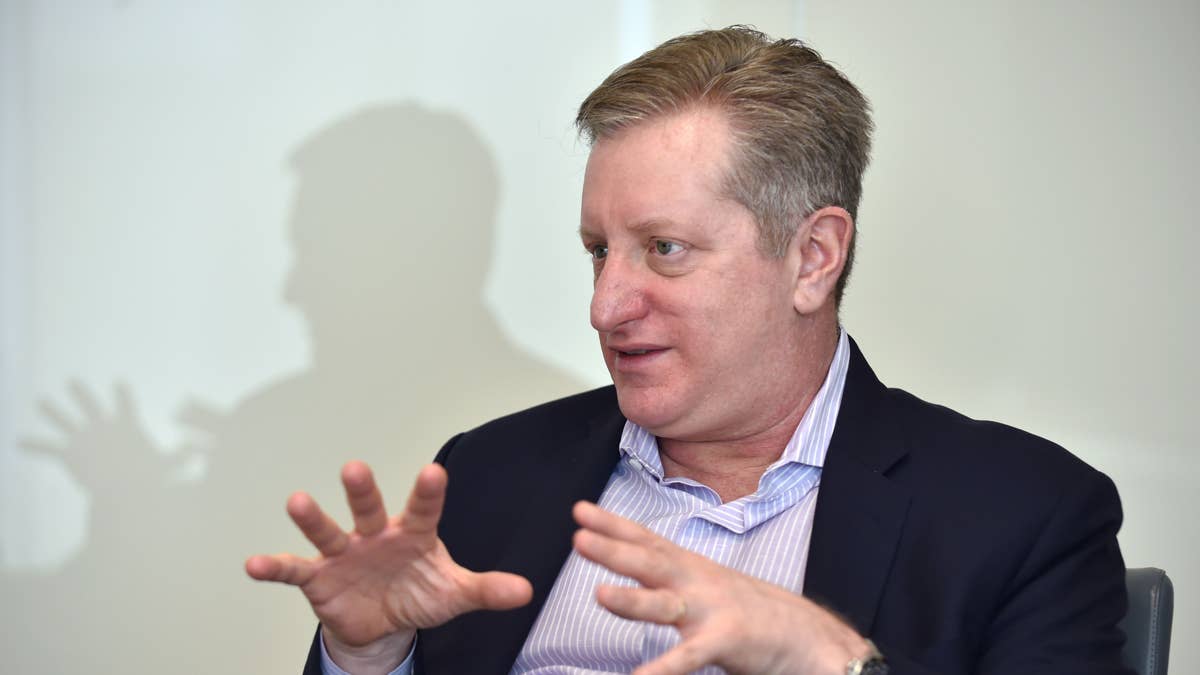
And a shockingly substantial part of the answer may lie with just two corporations, says Steve Eisman.
The investor best known for betting against the U.S. housing market before the financial crisis told CNBC that OpenAI and Anthropic account for roughly 70% of AI-related revenue at Microsoft (MSFT), Amazon (AMZN), Alphabet (GOOGL) and Oracle (ORCL). He also estimated that the two startups may represent roughly 25% to 35% of cloud revenue at those companies.
Eisman views that concentration as the “Achilles’ heel” of the AI trade.
The problem is not that demand for artificial intelligence would evaporate quickly. However, the economics could change quickly if cheaper rivals gain the upper hand and launch a price war.
Eisman notably mentioned Chinese open-source and open-weight AI models, which he argued are far cheaper and starting to gain share.
That leaves investors with a bigger question regarding AI growth.
If hyperscalers are spending hundreds of billions of dollars to serve AI demand, how much of the return on that investment is dependent on a small number of customers continuing to expand at extraordinary rates?
“The futures of these massive companies, in a sense, are a bet that OpenAI, Anthropic are going to succeed,” Eisman said on CNBC.
Eisman’s concern is about concentration, not AI demand itself
Microsoft, Amazon, Google, and Oracle have all spent extensively to expand their AI infrastructure.
Cloud capacity is one of the main beneficiaries of the development in AI, as startups and corporations rent access to pricey computer resources instead of building their own infrastructure from scratch.
That is a powerful growth engine for hyperscalers. It also leads to customer concentration.
If Eisman’s estimate is right, then both OpenAI and Anthropic make up an exceptionally substantial share of AI-related revenue across several of the world’s major cloud firms.
That’s important because investors frequently think of cloud demand as spread over thousands of clients.
AI demand may be significantly more focused.
A few frontier-model developers use vast quantities of processing power, so their success can have an outsized impact on suppliers. But for the hyperscalers, that can work well while those companies are developing swiftly.
The risk emerges when one or two clients are responsible for too much of the incremental revenue.
Related: ‘Big Short’ Michael Burry takes aim at surging AI stock
That concentration might increase both upside and downside.
As OpenAI and Anthropic continue to grow, hyperscalers gain from more cloud use, larger commitments, and better utilization of data-center investments. If demand softens, or consumers switch to cheaper versions, or become more price sensitive, the economics could change far quicker than investors expect.
Chinese AI models could force the price war Eisman fears
Eisman’s second issue is competition.
Chinese open-source and open-weight solutions are cheaper and seem to be taking market share.
That matters because the AI industry has based its business model on the assumption that leading frontier models can charge enough to cover huge infrastructure costs.
A pricing war would test that assumption.
If cheaper models become “good enough” for more business use cases, clients might not require the most expensive frontier models for all tasks. That might put pressure on the pricing of AI services and, eventually, on what model developers are ready to pay cloud providers for computation, he said.
For hyperscalers, the risk might not be an implosion in demand.
It could be an aggravation of the economics of that demand.
That matters because AI use can continue to grow with shrinking margins and returns on infrastructure spending.
More AI:
- Nvidia just made a move Wall Street wasn’t ready for
- Microsoft just took sides in AI policy fight
- OpenAI just disclosed something genuinely alarming
Eisman’s warning goes right to one of Wall Street’s major questions: whether the massive capital expenditures driving AI will provide adequate return on invested capital.
The bull argument is that expenditure will ultimately be proven out by increased usage, cloud expansion, and enterprise acceptance. The bear case: decreased pricing, competition, and concentrated demand make for significantly less attractive returns.
Michael Burry is making an even darker AI bet
Eisman isn’t the only investor tied to “The Big Short” having concerns.
Michael Burry is even more negative and has questioned whether a large part of the AI demand is coming from real end consumers or from financing arrangements that he has termed “circular.”
Burry has also taken short positions on some of the biggest winners of the AI boom, such as Nvidia (NVDA).
The two investors aren’t quite making the same point.
Eisman’s problem is more about concentration and price risk. More structural is Burry’s fear, however, whether some of the demand underpinning the AI buildout will prove as permanent as investors anticipate.
But together, they hint at the same larger problem.
The AI trade is so vital to big tech that if the economics underpinning it falters, it might have implications far beyond a handful of startups. That could simultaneously hurt cloud growth, semiconductor demand, data-center spending and stock market valuations.
Hyperscalers now have more riding on AI than investors may realize
AI is becoming crucial to the growth story for Microsoft, Amazon, Google, and Oracle.
That has helped fund huge infrastructure expenses and fueled investor optimism about cloud development.
But concentration risk modifies how investors need to think about those metrics.
If most AI revenue at many hyperscalers comes from OpenAI and Anthropic, revenue growth may not be as diversified as it looks.
That’s not to say the AI growth is a bubble.
This could suggest the industry has a smaller base than investors believe.
What investors should watch next
- OpenAI and Anthropic growth: If both continue expanding rapidly, hyperscaler AI revenue should remain supported.
- Chinese open-weight models: Cheaper alternatives could pressure model pricing.
- Cloud concentration: Investors should watch whether hyperscalers diversify AI revenue beyond a small group of large customers.
- AI pricing: A broad price war would challenge return-on-investment assumptions.
- Capital spending: Hyperscalers are still committing enormous sums to AI infrastructure.
- Nvidia demand: Any slowdown in infrastructure investment would eventually matter to chip suppliers as well.
The key element of Eisman’s warning is not that artificial intelligence will fail.
It is that success may be more concentrated than it seems.
Wall Street has viewed the AI boom as a huge ecosystem of semiconductors, cloud providers, data centers, software businesses, and enterprise customers.
Eisman’s argument is that much of the current revenue engine may still run through only a few companies at the center of that ecosystem.
If OpenAI and Anthropic continue to win, that concentration might not matter.
If cheaper models start taking share and forcing prices lower, it could matter rapidly.
That’s why the next phase of the AI trade may be less about whether demand exists and more about who controls it and how much they are ready to pay.
Related: ‘Big Short’ investor warns AI has become one dangerous trade