David Tepper entered the second quarter with his hedge fund sitting on a massive stake in one of 2026’s hottest memory stocks.
At the end of March, his Appaloosa portfolio held 1.67 million shares worth around $562.5 million. Given its exposure to the booming demand for AI memory and its tremendous run this year, holding on may have seemed like the obvious move.
Tepper did the opposite.
During Q2, Appaloosa sold 690,000 shares, cutting its stake by nearly 41%. That eye-catching reduction isn’t entirely out of character for arguably one of the most successful fund managers over the past three decades.
Surprisingly, though, despite Tepper selling off roughly 50% of shares, the value of what remained didn’t shrink. It nearly doubled.
By June 30, Appaloosa’s remaining position was worth $1.1 billion, which created one of the more strange-looking moves in Tepper’s latest portfolio.
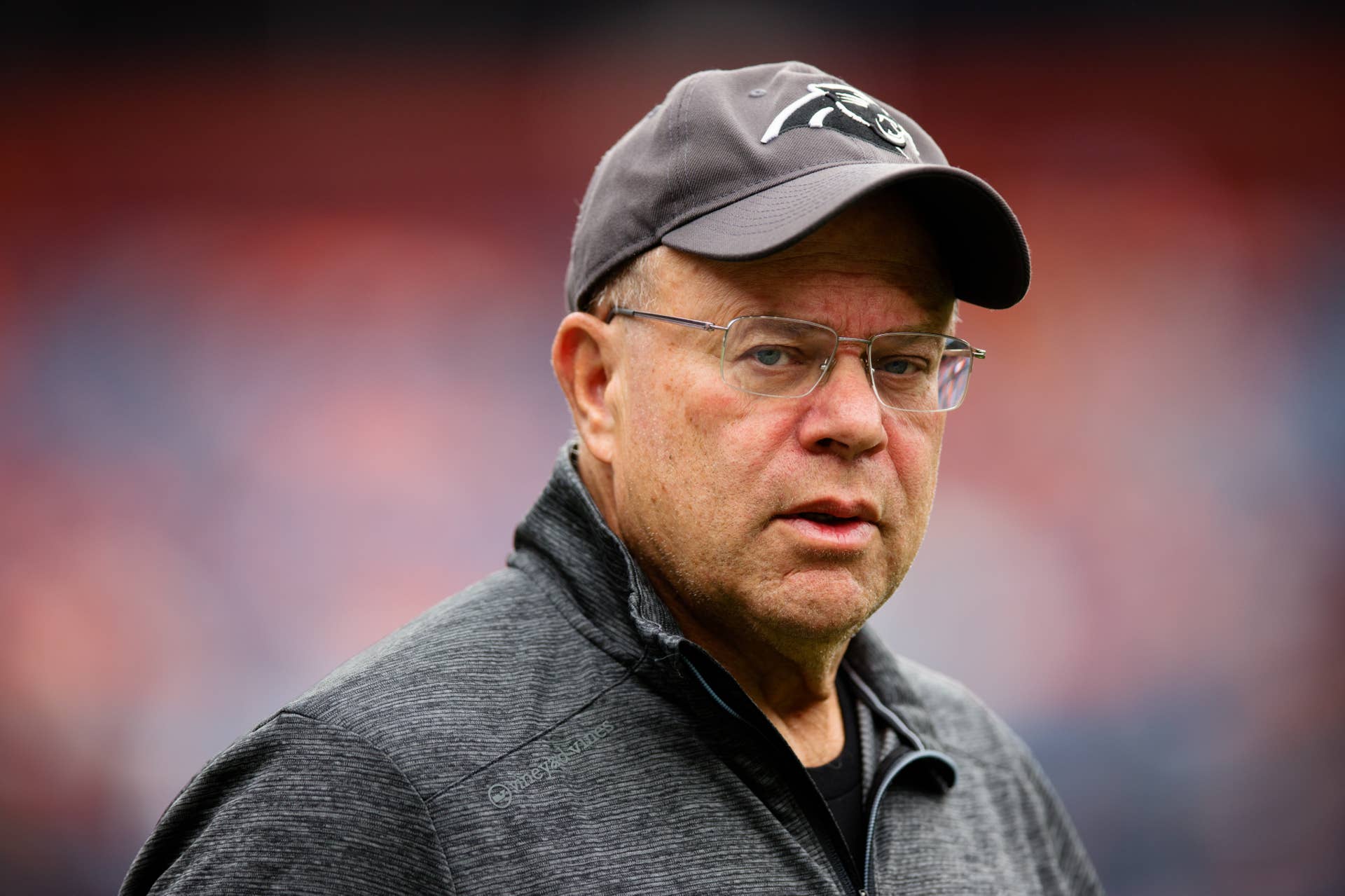
Tepper cuts Micron after explosive run
Tepper’s Appaloosa axed a ton of Micron Technology (MU) shares from its portfolio in Q2.
More Manager Buy/Sells:
- Michael Burry increases his bet against popular chip giant
- Warren Buffett reveals he broke his own investing pattern
- Mark Cuban bets on MLB with Athletics minority stake
Appaloosa sold 690,000 Micron shares, cutting its position 41%, from 1.665 million shares to 975,000, according to a SEC filing. Interestingly, the value of the stake surged from $562.5 million to $1.125 billion between March 31 and June 30.
That dichotomy is explained by Micron’s tremendous run.
Based on Appaloosa’s quarter-end filing values, Micron went from about $338 per share at March 31 to $1,154 at June 30, representing a whopping 242% increase.
Also, the rally clearly had a ton of fundamental support.
Micron’s fiscal Q3 sales surged to a record $41.46 billion, from $23.86 billion the prior quarter and $9.30 billion a year earlier. Adjusted EPS jumped to $25.11, while adjusted gross margin grew to 84.9%. Moreover, management guided fiscal Q4 revenue to $50 billion, sailing above Wall Street expectations.
Micron stock jumped another 17% to record highs following those results, as per Yahoo Finance.
AI memory demand remains the primary driver.
Micron supplies high-bandwidth memory used with Nvidia accelerators, while shortages of HBM and conventional DRAM have sharply raised prices. Moreover, the memory giant has secured $22 billion in customer commitments, while remaining performance obligations linked to strategic supply agreements reached $100 billion.
Management expects tight memory conditions to stay beyond 2027.
From a competitive standpoint, Micron has been doing exceedingly well.
Counterpoint estimates it secured 25% of global DRAM sales in Q2, narrowly behind SK Hynix at 26% and Samsung at 39%, with its DRAM revenues rising fivefold from a year earlier.
Tepper didn’t explain the sale, but profit-taking looks plausible. Following a momentous rally, Micron’s stock reached nosebleed-level valuations despite Appaloosa owning fewer shares.
Another big clue is that Tepper exited Sandisk (SNDK) completely. Appaloosa owned 281,250 shares worth $178.7 million at the end of Q1, but reported none in Q2.
That means Tepper was trimming memory-cycle risk, not abandoning the thesis entirely. For perspective, Tepper’s Q2 13F portfolio was worth about $7.73 billion across 27 holdings according to 13f.info.
Tepper doubles down on AI, cloud, and power
Away from Micron, Tepper’s Q2 moves show that we continued to add risk across AI, just much more selectively.
His biggest commitment was Amazon (AMZN).
Appaloosa bought another 680,000 shares, bumping its stake 16% to 5 million shares worth $1.19 billion. The thesis, as I’ve covered in recent weeks, is increasingly linked to AWS, where Q2 results showed jaw-dropping sales growth accelerating to 37% and backlog jumping to $496 billion.
Investors wanted evidence that AI infrastructure spending was translating into contracted demand, and Amazon gave them exactly that.
Moreover, Tepper also raised its Taiwan Semiconductor (TSM) stake by 24%, scooping 322,500 shares, and wrapping up June with 1.65 million shares worth $788 million.
TSMC offers a picks-and-shovels approach to AI, manufacturing advanced chips for Nvidia and other big name AI leaders. Moreover, its Q2 profit surged 77% to a record $22 billion, reinforcing the demand picture.
Tepper’s most aggressive percentage increase was Meta Platforms (META). Appaloosa added 238,500 shares, bumping his holding 55% to 675,000 shares worth $380.2 million. For context, Meta’s AI spending is massive, but its advertising engine remains remarkably potent with its Q2 revenue later rising 28% to $60.8 billion.
Tepper also added 1.36 million Uber (UBER) shares, lifting the position 22% to 7.69 million shares worth $555.2 million. That gives Appaloosa greater exposure to a profitable platform with autonomous-driving optionality. Uber recently reported 24% quarterly growth in gross bookings to $58 billion.
Moreover, Tepper added 117,300 Alphabet (GOOG) shares, bringing his stake to 1.85 million shares worth $653.7 million. Later, Google Cloud posted 82% sales growth, solidifying the AI monetization argument.
He made smaller increases in Vistra (VST), adding 192,940 shares to reach $351.4 million, and Nvidia (NVDA), adding 53,500 shares for a $305.1 million position.
The outlier was Apple.
Appaloosa opened put options covering 835,000 Apple (AAPL) shares, reported at $241.6 million, signaling either downside protection or a bearish view.
David Tepper’s investing strategy explained
David Tepper built his investing reputation by buying aggressively when fear had already driven prices down.
His philosophy is blunt.
“I am the animal at the head of the pack. I generally am. I either get eaten or I get the good grass,” Tepper has said.
That attitude produced perhaps some of his most famous wins.
Appaloosa scooped up distressed securities linked to businesses including Enron, WorldCom, and Marconi, profiting from assets others had mostly abandoned.
Perhaps his most defining trade came during the 2008 financial crisis.
Tepper loaded on beaten-down financial assets, including shares of Bank of America, Citigroup, and AIG-related securities, as markets feared collapse. When the system recovered, Appaloosa made nearly $7 billion according to WSJ reporting.
Today, Forbes estimates Tepper’s net worth at nearly $23.7 billion. Moreover, sports fans would know that he owns the NFL’s Carolina Panthers, which he purchased in 2018.
Related: Cathie Wood buys $16.2 million of popular semiconductor stock