Meta has policies against non-consensual intimate imagery. Apple has policies against nudification apps.
Both companies have spent years telling regulators, journalists and lawmakers that their review systems catch this stuff. Last week, both were wrong at the same time, in the same incident.
An app called Kromix, which marketed itself as “the AI that men actually use,” ran ads on Meta’s platforms promising to generate nude deepfakes of real people. One of those ads featured an AI-generated pornographic video closely resembling a prominent U.S. politician.
The app was also available on Apple’s App Store. Neither company caught it until WIRED reporters Vittoria Elliott and Matt Burgess started asking questions, according to TechBuzz, with Apple pulling the app within hours of the inquiry.
Meta deepfake nudify app ads and what passed through the review system
The ads ran on Meta’s advertising network, which means they went through whatever automated and human review the company has in place.
Meta has publicly committed to cracking down on synthetic media abuse.
Mark Zuckerberg has testified before Congress about the company’s safety investments. Researchers have previously found that Meta removed 344,000 nudify-related ads by its own count. That number is both an acknowledgment that the problem exists and evidence that enforcement keeps failing.
This is not an isolated incident.
A CBS News investigation previously found hundreds of nudify ads across Meta’s platforms, including some using deepfake images of actors Scarlett Johansson and Anne Hathaway. Meta removed those ads after CBS inquired.
The pattern is the same every time: the ads run, generate revenue, and get pulled only after a journalist or researcher flags them.
WIRED found a second app, MaskAI, that also allowed face-swapping into sexual situations and similarly linked to the App Store through Meta ads.
Meta has previously gone so far as to sue a Hong Kong company called Joy Timeline HK Limited, the maker of CrushAI, for running more than 87,000 rule-violating ads across at least 170 fake business accounts.
The lawsuit acknowledged the company had to actively pursue app makers who kept finding ways around its ad review process. That legal action did not stop the next app from doing the same thing.
Apple App Store nudify app removal and what the guidelines actually say
Apple pulled Kromix within hours of WIRED’s inquiry. The company’s statement was unambiguous.
“We have always strictly prohibited apps designed to generate, distribute, or consume pornography. Nudification apps are against our App Review Guidelines, and we aggressively work to identify and remove apps as well as the developer accounts behind them that attempt to evade our processes and policies.”
Apple’s response was fast, and the policy language was clear. But that’s exactly what makes this awkward.
The App Store’s human review process is Apple’s main argument for why it deserves a 30% cut of every transaction and why it gets to be the only way iPhone users install apps. The whole pitch is that reviewers catch what open distribution misses. Kromix got through. The pitch is harder to make now.
This is also not the first time Apple has been here.
In July, San Francisco City Attorney David Chiu sent cease-and-desist letters to Apple and Google demanding they remove eight nudify apps from the App Store and five from the Play Store, accusing both companies of “aiding and abetting” the sale of explicit deepfake images and collecting “millions of dollars in fees” from the developers. Apple removed some of those apps. More kept showing up.
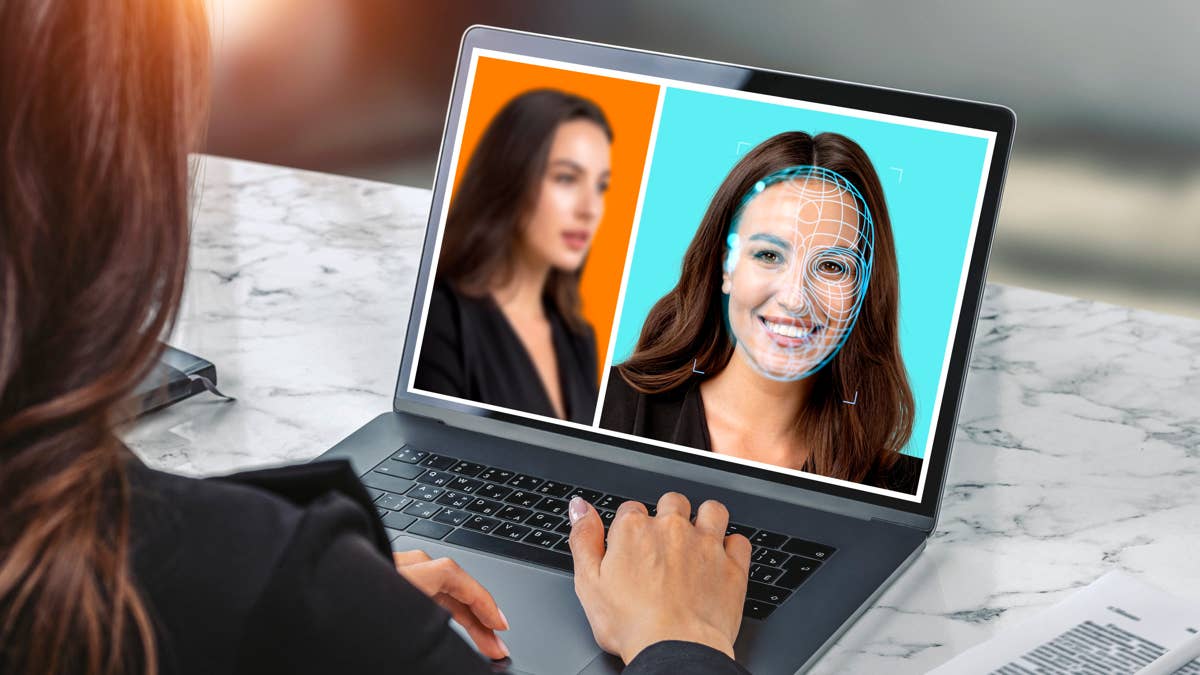
Ismagilov/Getty Images
Meta AI deepfake regulation and what lawmakers are watching
Both companies picked a bad week for this.
California already has a law on the books against facilitating non-consensual deepfake pornography. Other states are moving fast on similar legislation. Congress has been holding hearings on AI-generated abuse for months.
Regulators were already circling. This gives them something specific to point at.
The American Sunlight Project, a disinformation research group, previously identified more than 35,000 instances of deepfake content depicting 26 members of Congress, 25 of them women, across pornographic sites.
Nearly one in six women in Congress have been targeted by AI-generated sexual imagery. The apps that produce this content keep getting removed and keep coming back because the economics work. Developers create new accounts, rebrand the product, and run ads until someone catches them again.
Neither Meta nor Apple issued detailed statements explaining how this specific failure happened or what systemic changes they plan to make.
That silence is consistent with how both companies have handled previous incidents. They remove the content, issue a statement about their policies, and the cycle continues.
What the Kromix deepfake app incident reveals about platform moderation in 2026
The deeper problem is structural. Generative AI has made it trivially easy to create convincing nude images from ordinary photos.
The same technology that powers legitimate creative tools is being packaged into apps that exist specifically to generate non-consensual intimate imagery. Platform moderation was never designed to handle the volume and sophistication of what’s possible now.
Meta and Apple both have thousands of people working on trust and safety. They both have AI detection systems. They both have policies that should have caught Kromix before it ran a single ad.
The fact that it took WIRED reporters to surface the problem means one of three things: the detection systems aren’t working, the human reviewers aren’t catching it, or both. None of those options reflects well on the argument that self-regulation is sufficient.
Women in public life keep ending up at the center of these incidents because they are disproportionately targeted. That targeting is not accidental.
Apps like Kromix market themselves specifically around prominent women. The platforms that carry those ads benefit from the engagement and the ad revenue until a journalist documents the problem publicly. The moderation failure is not incidental to the business model. It is part of it.
Related: Bank of America sends strong verdict to Meta stock investor