The headline from Berkshire’s latest filing looked good. Greg Abel bought $19.8 billion in equities during the second quarter. That number made the rounds. Investors noticed.
Then someone looked at what Berkshire has actually been doing for the past four years and the picture changed entirely.
Berkshire Hathaway net equity sales BRK in 14 of 15 quarters since October 2022
Fourteen of the last fifteen quarters. That’s how long Berkshire has been a net seller of stocks. Since October 2022, the company has sold roughly $175 billion more than it bought, according to The Motley Fool.
The quarterly numbers tell it plainly. From Q4 2022 through Q4 2023, Berkshire shed between half a billion and nearly fifteen billion per quarter. Then it accelerated hard. Q1 2024 saw over seventeen billion in net sales. Q2 2024 was the biggest single quarter at $75.54 billion. Q3 2024 added more than thirty-four billion. Through all of 2025, the selling continued every quarter without interruption.
More Warren Buffett:
- Warren Buffett reveals he broke his own investing pattern
- Warren Buffett has a blunt take on today’s market
- Warren Buffett pulls no punches on stock market for 202
Q2 2026 shows $19.77 billion in net purchases. One quarter. After fourteen straight quarters of net selling.
Most of that buying was one trade. Abel spent about $17 billion on Alphabet shares. Take that out and the quarter looks a lot less like a turning point.
Greg Abel Alphabet stock purchase and what it means for Berkshire Hathaway investors
Abel buying Alphabet isn’t hard to understand. He’s shown more comfort with technology companies than Buffett historically had, and Alphabet is one of the few mega-cap businesses with a genuine argument for being undervalued relative to its earnings power.
But finding one stock you like at current prices is different from thinking the market is cheap. Berkshire can hold $17 billion of Alphabet and still think the rest of the market is expensive. Those two things are not in conflict.
The broader pattern hasn’t changed. Berkshire sold through bull markets, through earnings beats, through AI enthusiasm, through a period when most of Wall Street was adding risk. It kept selling. One quarter of buying Alphabet doesn’t undo four years of that behavior. Alphabet is now among Berkshire’s five largest equity holdings, alongside American Express, Apple, Bank of America and Coca-Cola, according to CNBC.
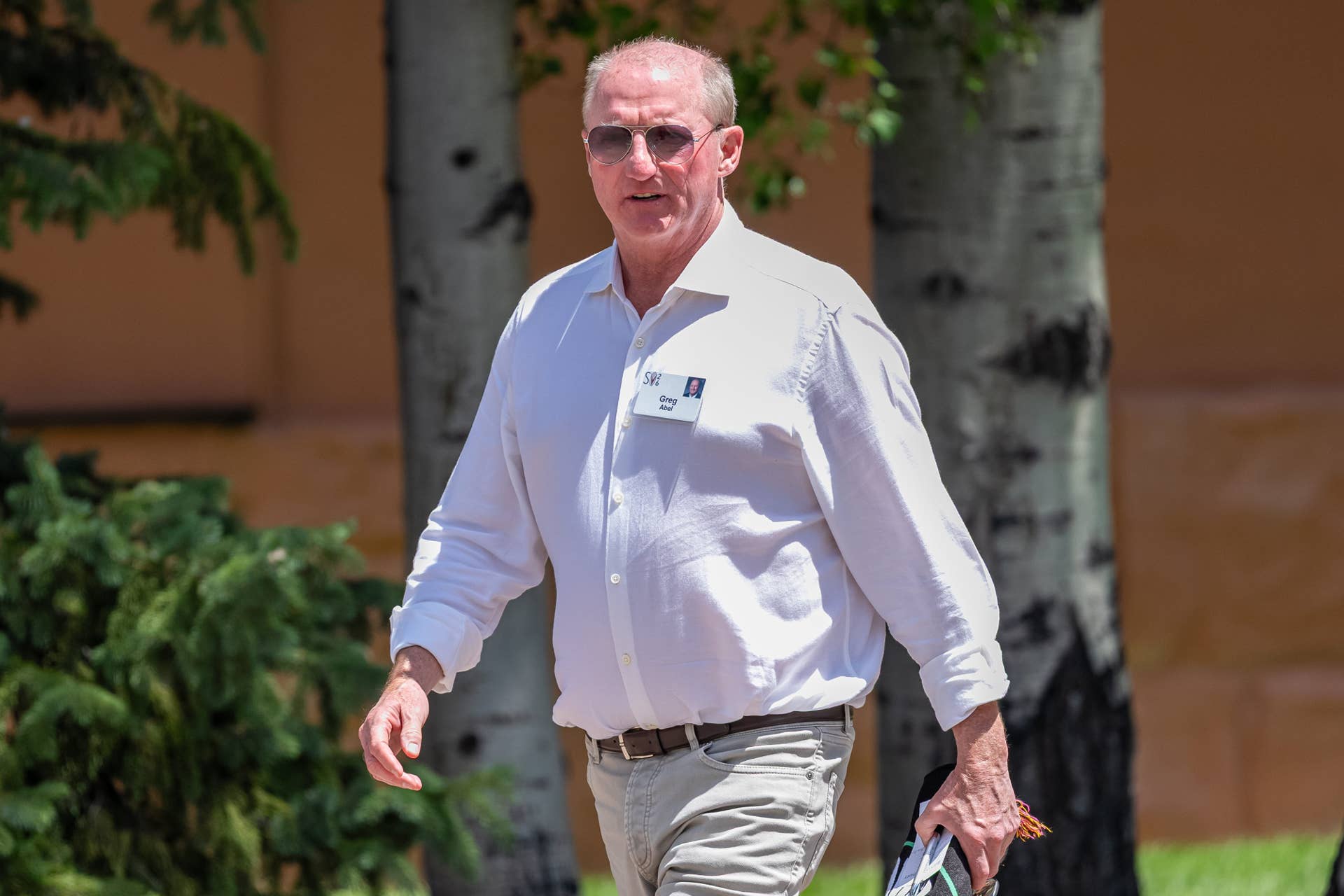
David/Getty Images
Warren Buffett indicator hits all-time high of 240% and stock market valuation warning
Buffett called the ratio of total U.S. stock market value to GDP “probably the best single measure of where valuations stand at any given moment” in a 2001 Fortune interview. Since December 1970, it has averaged 88%. On August 12 it hit 240.32%, according to GuruFocus. All-time high.
That doesn’t mean stocks crash tomorrow. It never does. What it means is that you are paying more per dollar of underlying economic activity than at any point in modern market history. The S&P 500’s Shiller price-to-earnings ratio is near where it was before the dot-com bubble burst, according to TheStreet.
Today’s market is not 2000. The biggest companies today have real revenue, real cash flow, real profits. That’s not what Pets.com had. But expensive companies can still produce disappointing returns if the price you paid was too high. That’s the risk. Not that the market is fake. That the margin for error is thin.
What Berkshire Hathaway $175 billion stock selling means for stock market investors 2026
Berkshire can wait in a way most investors cannot. It owns insurance businesses, operating subsidiaries and a portfolio that generates its own cash. Even after the Alphabet purchase, cash and Treasury bills stood at well over three hundred and sixty billion dollars as of June 30, still one of the largest corporate cash reserves in American history. Individual investors sitting on the sidelines for years miss real returns if the market keeps going up.
So this isn’t a signal to sell everything. That’s not what Buffett and Abel are telling you to do, and they’ve said as much. Their own businesses stay long-term optimistic.
What the $175 billion figure is saying is simpler than that. Finding genuinely good deals at reasonable prices is harder than it has been at almost any point in the last fifty years. If Berkshire, with all its analytical resources and patience, has spent four years struggling to find things worth buying at current prices, that’s worth sitting with before adding aggressively to a portfolio today.
Related: Warren Buffett has a stark message for stock market investors