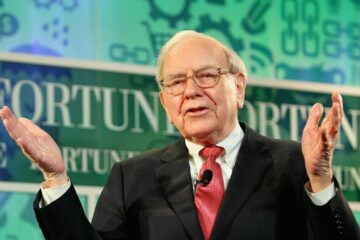
The man who has bought more American stocks than almost anyone alive just compared the current market to a casino floor. He used 10 words to do it. Those words deserve some attention.
Warren Buffett sat down with CNBC’s Becky Quick on July 15 and was asked about today’s market environment. His answer: “It’s tough to find values when everybody is preferring gambling.”
That quote, and the two valuation measures sitting behind it, tell investors something useful about where stock prices stand heading into the second half of 2026, according to CNBC.
What Buffett’s 10-word warning actually means for investors
Buffett has never been shy about staying out of expensive markets. Berkshire Hathaway was a net seller of stocks for 14 consecutive quarters before reversing course in the second quarter of 2026. The reversal does not mean he thinks the whole market is cheap.
In the same CNBC interview, Buffett said Berkshire would prefer to have less cash and more money in equities, but only when compelling opportunities appear. That is the same position he has held for decades.
More Warren Buffett:
- Warren Buffett reveals he broke his own investing pattern
- Warren Buffett has a blunt take on today’s market
- Warren Buffett pulls no punches on stock market for 2026
He does not avoid stocks because markets are volatile. He avoids paying prices that leave little room for error if something goes wrong.
His use of the word “gambling” is deliberate. Buffett draws a sharp line between buying a business because its underlying economics make sense and buying a stock because its price has been going up. The first is investing. The second, in his view, is speculation.
Why the Buffett indicator and CAPE ratio are both flashing red
Two valuation measures support Buffett’s caution, and both are at or near historic extremes.
The Buffett indicator measures total U.S. stock market capitalization as a percentage of gross domestic product. It currently stands near 238%, the highest level ever recorded, as TheStreet reported.
In a 2001 Fortune article, Buffett wrote that investors were “playing with fire” if the ratio approached 200%. It touched those levels near the top of the dot-com bubble in late 1999 and early 2000. It also approached 200% in November 2021, a few weeks before a bear market began.
The S&P 500 Shiller CAPE ratio, which compares stock prices to average inflation-adjusted earnings over the previous decade, is above 41. It has only been this elevated once before: briefly, near the peak of the technology bubble in late 1999 and early 2000.
History is not a roadmap. High valuations can persist for years. But they do tend to reduce the expected return on stocks bought at those levels.
Michael/Getty Images
Why Berkshire bought Alphabet, even as Buffett issued the warning
Berkshire’s biggest purchases in the second quarter were concentrated in Alphabet, Google’s parent company. Buffett confirmed to Becky Quick that he was personally responsible for the Alphabet buys. He noted that he and new CEO Greg Abel work together and that he does not make decisions Abel does not approve.
Alphabet traded at roughly 16.8 times forward earnings at the time, compared with about 19.9 times forward earnings for the S&P 500, according to CNBC. That is the lowest forward price-to-earnings ratio among the Magnificent 7 companies.
Buffett could warn about expensive markets generally while still finding a specific company that traded at a discount to the broader index.
That distinction is central to his approach. An expensive market does not mean every stock is overpriced. It means that finding reasonably priced stocks requires more work and more patience than it does when the whole market is cheap.
What Buffett’s warning means for stock market investors right now
Buffett and Berkshire are still buying stocks. The “gambling” comment is a call for selectivity, not an instruction to sell. He has been through expensive markets before and he has always said the same thing: Find the few things that are priced well and buy those. Skip the rest.
That is harder to do when valuations are high across the board. In a cheap market, you can throw darts and most of them land on something reasonable.
At a Buffett indicator of 238%, more of the market is priced for perfection. A company growing at a normal rate is already priced for an exceptional rate. If earnings disappoint even slightly, there is no cushion.
The Alphabet buy illustrates the method. Buffett did not buy the market. He found one large, profitable company with a lower multiple than the index and made a concentrated bet.
He has consistently said this is how you manage an expensive market. You raise your standards for what you will own, you wait longer for opportunities, and you accept that you will own fewer stocks than you would in a cheap market.
Investors who take the warning seriously will review whether the prices they’re paying match the businesses they are buying. That question is always worth asking. At a Buffett indicator of 238% and a CAPE ratio above 41, it is worth asking more often than usual.
Related: Warren Buffett doubles down on stock market message for 2026