A major global alcohol company has reduced its workforce by nearly 2,000 employees as a sweeping restructuring takes hold.
The management is also spending heavily to cut costs and generate billions of dollars in cash over the next several years.
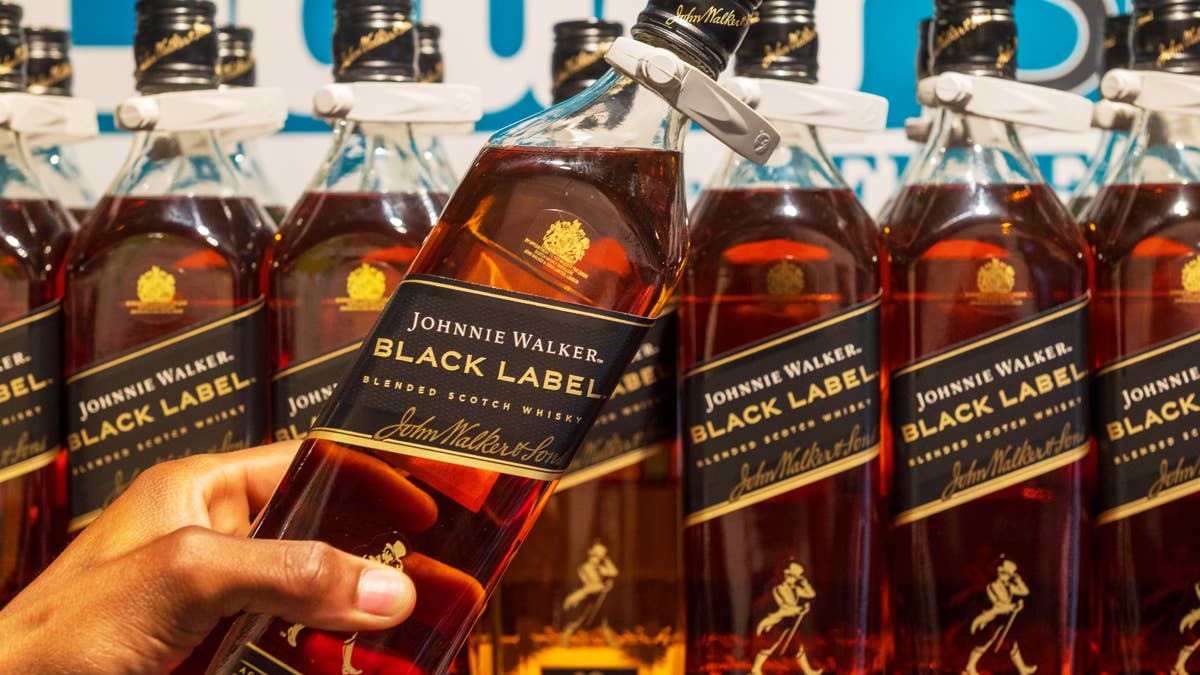
Diageo, the company behind Guinness, Johnnie Walker, Smirnoff, Don Julio, and Baileys, among others, reported an average of 27,938 full-time-equivalent employees in fiscal 2026, down from 29,860 a year earlier, according to its annual report.
That represents a decline of 1,922 employees, or roughly 6.4%.
Diageo’s disclosures, however, indicate that the decline in employee numbers is not solely due to layoffs.
It was also affected by business disposals and a site closure.
The workforce reduction comes amid a much broader effort to remake Diageo’s operations.
The London-based company, which has more than 200 brands sold in roughly 180 countries and territories, said it is investing about $1.2 billion in a two-year restructuring plan.
The reason is to make the business more competitive and efficient.
Of this, roughly $1.1 billion is tied to its new operating framework and $100 million to supply-chain changes.
Diageo restructuring brings major workforce changes
Diageo’s annual report shows that the workforce decline was uneven across the company, with the largest reductions in Africa, Corporate and other, and Asia Pacific.
The figure reflects average full-time-equivalent employees and does not represent layoffs alone, as headcount changes were also driven by business disposals and site closures.
|
Region/function |
2026 |
2025 |
Change |
|
North America |
2,857 |
2,986 |
-129 |
|
Europe |
3,128 |
3,024 |
+104 |
|
Asia Pacific |
5,868 |
6,224 |
-356 |
|
Latin America & Caribbean |
1,560 |
1,597 |
-37 |
|
Africa |
1,920 |
2,848 |
-928 |
|
Supply Chain & Procurement |
6,963 |
7,134 |
-171 |
|
Corporate and other |
5,642 |
6,047 |
-405 |
|
Total |
27,938 |
29,860 |
-1,922 |
The scale of the workforce changes is also visible in Diageo’s restructuring costs.
The company recorded about $900 million in restructuring charges during fiscal 2026, including approximately $752 million related to the implementation of its new operating framework.
More Layoffs:
- Samsung cuts jobs as it shifts U.S. headquarters
- Another popular soda giant closes warehouse operation, cuts 184 jobs
- Meta layoffs take disturbing turn in new lawsuit
Diageo has said the framework alone is expected to generate roughly $850 million in savings, with about 40% of those savings coming in fiscal 2027 and the remainder in fiscal 2028.
Another roughly $150 million in savings is expected from supply-chain initiatives, bringing anticipated savings from the programs to about $1 billion.
Diageo expects restructuring costs associated with the two programs to total roughly $1.2 billion.
Chief Executive Sir Dave Lewis also made clear that the restructuring is significant.
“The revised operating framework is being rolled out across Diageo, and the changes are significant,” Lewis said when the company reported its fiscal 2026 results.
He said the savings would allow Diageo to invest in turning the business around without needing to reduce operating profit before exceptional items.
Diageo’s annual report describes the new operating framework as a central part of its turnaround strategy.
The company said it is moving toward a more competitive and efficient structure to improve growth, cash generation, and shareholder returns.
Diageo had already begun cutting costs and jobs before the latest overhaul.
As part of its Accelerate program, announced in 2025, it generated $73 million in severance costs during fiscal 2025.
Severance expenses then surged to $514 million in fiscal 2026 as the company expanded its restructuring efforts.
The company expects 90% of the planned restructuring changes to be implemented by September 1, according to its annual report.
Diageo expects overhaul to help generate $8 billion in cash
The cuts are part of a financial plan that extends well beyond immediate cost savings.
At its August Capital Markets Day, Diageo said it expects to generate approximately $8 billion in cumulative free cash flow over fiscal 2027 through fiscal 2029, after about $850 million in exceptional cash costs mainly related to changes in its operating framework.
That makes the restructuring a significant upfront investment for Diageo.
The company expects approximately $2 billion in free cash flow in fiscal 2027 alone, after about $800 million in exceptional cash costs associated with the operating framework changes and another $50 million related to its supply-chain savings program.
Diageo generated $3.21 billion in free cash flow in fiscal 2026, up $463 million from the previous year. Net debt stood at $20.5 billion at the end of June.
The company is also selling assets as it works to strengthen its balance sheet.
Its sale of East African Breweries remained on track to close during the second half of 2026.
While the disposal of the Royal Challengers Bengaluru cricket business is progressing as planned, Diageo said in its annual results.
Diageo is struggling in its biggest market
The overhaul comes after a difficult fiscal year for the drinks giant.
Diageo reported $19.64 billion in net sales for fiscal 2026, down 3% from the previous year, while organic net sales declined 2%.
Reported operating profit fell 27.2% to $3.16 billion, with Diageo attributing much of the decline to exceptional restructuring expenses and impairment charges.
Net profit fell 22.9% to $1.96 billion.
The company’s biggest problem has been in North America.
Diageo said growth in Europe, Latin America and the Caribbean, and Africa was offset by weakness in North America and Asia-Pacific.
The company specifically blamed the unfavorable sales mix partly on the performance of its U.S. spirits business.
“North America has continued to experience softer demand, while geopolitical uncertainty, including ongoing conflict in the Middle East and tensions affecting global trade, have added further complexity,” said Chair Sir John Manzoni.
Diageo grew in three of its five regions, Lewis said, but “we have been uncompetitive in our largest market, North America, and urgent work is underway to address this.”
The pressure is significant because Diageo owns some of the most recognizable alcohol brands sold to U.S. consumers, spanning multiple categories and price points.
Its portfolio includes Guinness beer, Johnnie Walker Scotch whisky, Crown Royal Canadian whisky, Smirnoff vodka, Don Julio and Casamigos tequila, Captain Morgan rum, Tanqueray gin, and Baileys liqueur.
North America remains central to the company’s turnaround plan, and Diageo expects organic net sales in the region to decline by a mid-single-digit percentage in fiscal 2027 even as it works to regain market share.
Diageo bets restructuring can revive growth
Lewis, who took over as CEO in January, is working to streamline Diageo while directing more capital toward brands and categories where the company sees growth opportunities.
The company has also retired its previous “Growth Ambition” strategy as it shifts toward the turnaround plan Lewis presented in August.
For employees, however, the effects are already visible.
And for the company, the question now is whether those cuts can translate into stronger growth and competitiveness.
Related: Delta Air Lines CEO signals major shift in what travelers pay