Wall Street is confronting a difficult question as the U.S. national debt tops $40 trillion: Can Treasury Secretary Scott Bessent lower borrowing costs without making the Federal Reserve’s interest-rate decisions even more complicated?
The answer from the bond market so far is not very reassuring.
The CME Group FedWatch Tool shows a 42% probability of a Federal Reserve rate hike at the September meeting, down substantially from a week ago.
The market shift reflects softer economic data and fading expectations for another increase but the enormous federal debt burden remains a significant complication for the U.S. central bank.
The U.S. national debt crossed $40 trillion this month, according to Treasury data, after reaching $39 trillion in March.
This historic milestone highlights the growing cost of financing Washington’s borrowing needs at a time when long-term Treasury yields remain elevated.
Former Philadelphia Federal Reserve President Patrick Harker is warning that the central bank can’t simply offer vague assurances about the national debt.
Speaking Aug. 24 on CNBC, Harker stressed the need to confront the debt burden and inflation directly as the policymakers prep for the Fed’s annual Jackson Hole symposium this week.
This creates an uncomfortable backdrop for Kevin Warsh who will be making his debut at Jackson Hole as Fed Chairman after months of promising less forward guidance to investors.
Here’s Bessent’s bond-market move
Bessent has attempted to put a floor under the long-end Treasury market by expanding the government’s bond-buyback program.
Treasury announced that it would at least double the size of certain buyback operations involving 10-to-30 year securities and raise the maximum from $2 billion to at least $4 billion per operation.
The program is designed to improve liquidity and support demand for longer-date Treasuries.
The move initially pushed Treasury yields lower.
But the relief did not last
The 30-year Treasury yield recently climbed above 5.3%, levels not seen since 2007. Meanwhile the 10-year yield returned to roughly 4.69%.
Reuters reported Aug. 24 that Treasury plans to maintain its regular debt-auction schedule even as it expands long-term buybacks.
That matters because the federal government itself is becoming one of the biggest beneficiaries and victims of interest-rate policy.
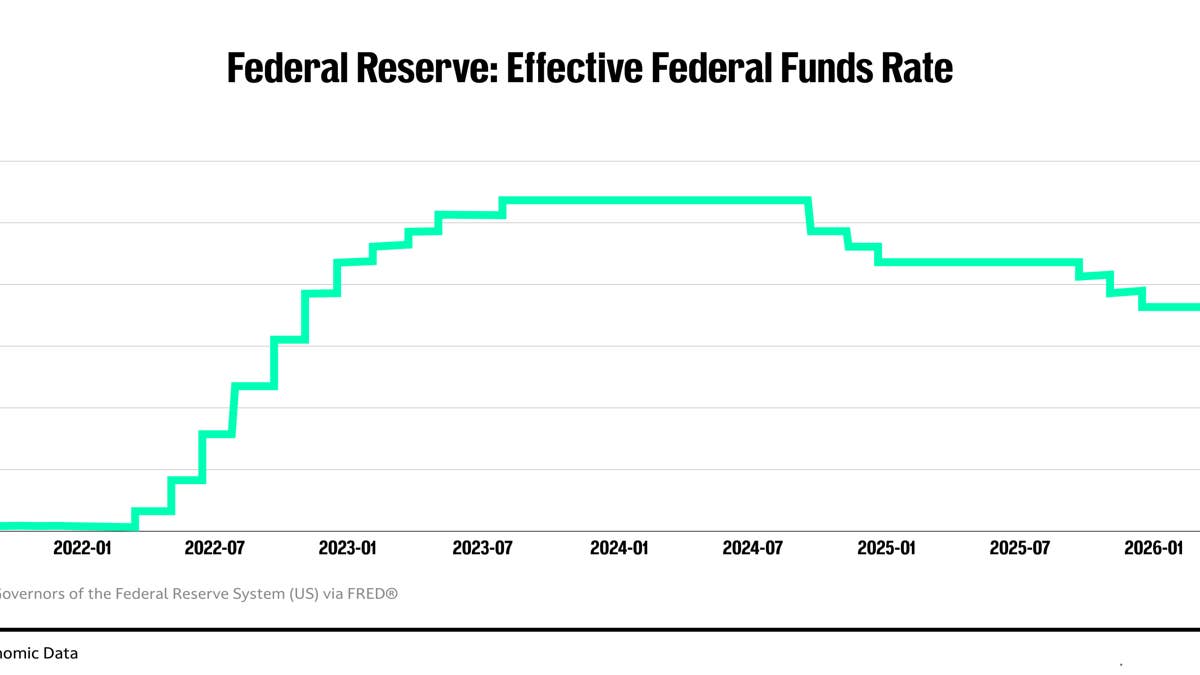
Higher yields mean higher borrowing costs for Washington. But if inflation remains persistent, the Fed cannot simply lower its benchmark interest rate, currently at 3.50% to 3.75%, to make the government’s debt burden easier to manage as the midterm elections approach.
Here’s the Fed’s rate-hike problem
That is where Bessent’s response to the $40 trillion debt burden collides with the Fed’s dual mandate of price stability and full employment.
Enrique Diaz-Alvarez, Ebury’s chief economist, told TheStreet in an email that recent U.S. economic data have generally pointed toward moderating demand and inflation pressures, thus reducing the immediate need for a rate increase at the next Federal Open Market Committee meeting on Sept. 16.
“With very limited forward-looking data releases between now and the September meeting, we think the hurdle is very high and expect no change,” Diaz-Alvarez said.
He also warned that political pressure from the Trump administration to drastically reduce rates and reduce the real cost of the government debt could work against Fed hawks favoring tighter monetary policy.
Why this Fed rate tension is crucial
If long-term Treasury yields remain high because investors demand greater compensation for inflation, fiscal deficits and the growing supply of government debt, then the Fed has less room to ease policy aggressively.
In other words, Bessent can influence Treasury-market liquidity but he cannot eliminate the underlying fiscal problem.
Morgan Stanley analysts have similarly questioned whether Treasury’s buyback strategy can overcome broader forces pushing yields higher.
The market reaction so far suggests investors remain focused on the government’s borrowing needs rather than the simple mechanics of Treasury buybacks.
Related: Bank of America issues stark warning on Fed and economy
For the Fed, that means the $40 trillion debt milestone is more than another Washington accounting figure.
It is increasingly part of the red-hot interest-rate debate.
The Fed must weigh inflation, employment and economic growth.
But with long-term Treasury yields elevated and federal borrowing needs enormous, policymakers also face a bond market that is demanding answers.
For the time being, the 42% FedWatch probability of a 25 basis-point hike in September suggests investors see a significantly lower chance of another increase than they did a week ago.
But the nation’s debt problem has not gone away.
Nor has the intense pressure it places on the Federal Reserve.
Related: The stock market may be walking into a Fed disaster