The United States has set up a really big dare for any country or any company dealing with Iran. Stop, or face the consequences.
Or was it?
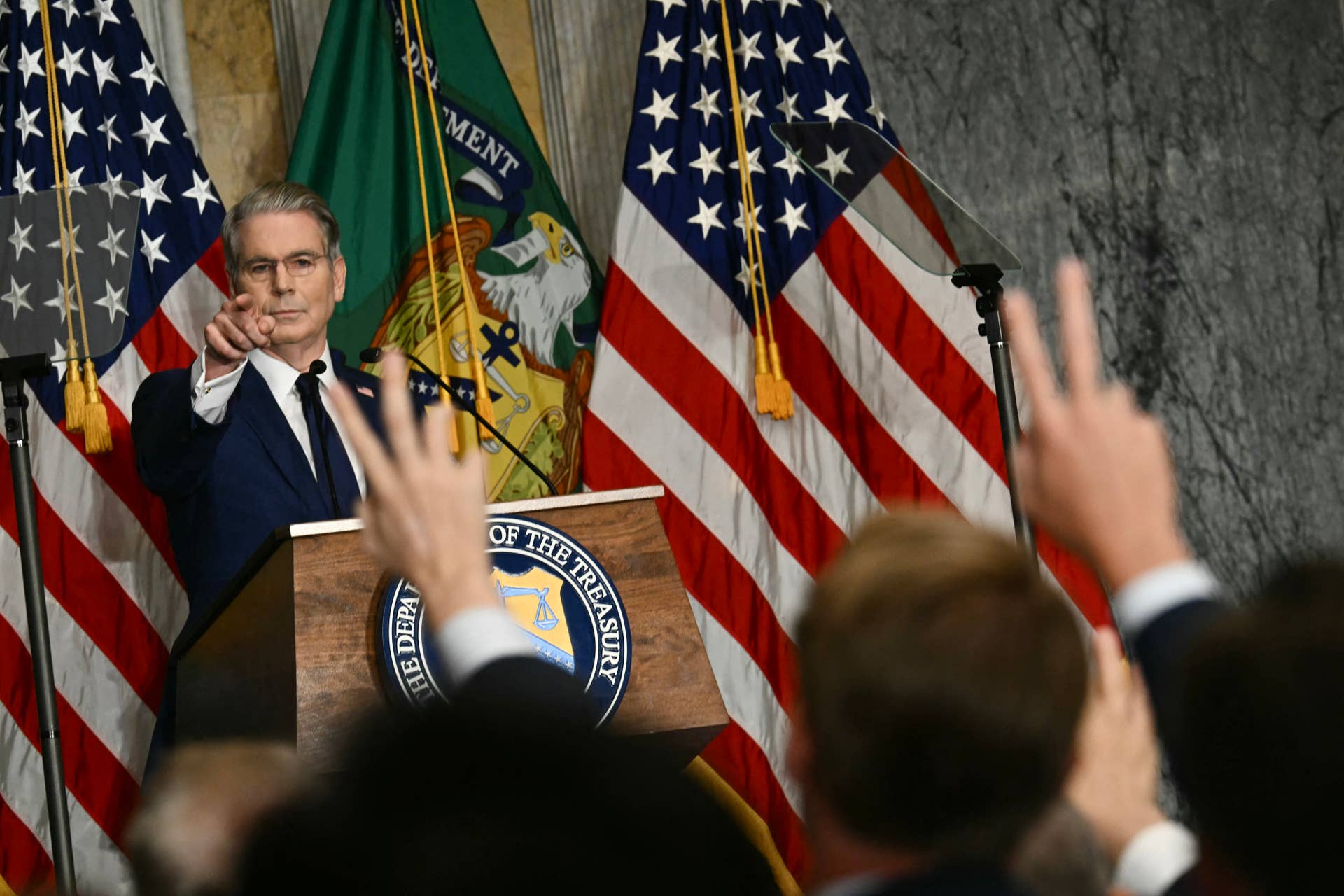
That is the question after Treasury Secretary Scott Bessent announced Economic D-Day, a plan to starve Iran’s economy and its war machine.
Since Iran’s biggest export is oil, the oil markets offered an answer. “Not yet.”
Related: Citi renews Nvidia stock forecast ahead of earnings
Futures trading on Aug. 24 saw Brent crude, the global benchmark, and light, sweet crude, the U.S. benchmark fall more than 2% after rising most of last week.
Brent settled at $92.17. Brent is down 24% from its high in early March after the Israel-United States war with Iran began.
Light sweet crude settled at $85.01. It’s off 29% from the March peak.
Both were little changed in early trading on Aug. 25.
Oil prices tumble
Since Iran has long been a major producer of oil and possesses the world’s third-largest oil reserves, one might expect oil prices to rise on Bessent’s announcement.
It didn’t happen. Here’s how analysts Brian Martin and Daniel Hynes of ANZ Research in Australia read the Bessent announcement and the market reaction:
“The market was unimpressed with Bessent’s announcement on an ‘unprecedented’ campaign to isolate Iran from the global economy.” The issue: “There was no specific timeline on actions or plans.”
Bessent’s argument was the Trump Administration wanted to give companies and countries time to unwind their relationships with Iran. And, he said, President Trump has been calling world leaders to explain the Administration’s policy.
One country did last week: the United Arab Emirates, located across the Persian Gulf from Iran. The U.A.E. move came on Aug. 18 after the UAE Defense Ministry said that Iran had “fired two ballistic missiles toward the Gulf state,” The Washington Post reported.
Why blow up the global financial system?
Bessent’s campaign is going after a number of nations that have enabled Iran’s regime. These include, he said, U.A.E., Iraq, Turkey, Malaysia, Qatar, Pakistan and, above all, China.
But China has signaled its resistance to pressure to cut off its Iran links. And Bessent was willing to give China and its huge economy time to adjust. “Why would I want to blow up the global financial system?” he said during his news conference.
China is Iran’s largest trading partner and buys 80% to 90% of Iran’s oil exports, sold at discounted prices. At the same time, Iran is required to use the revenue from its oil sales to China to buy Chinese goods and services, according to a report by Breugel, the European economic think tank.
Kent NISHIMURA / AFP / Getty Images
U.S. is tethered to China
So, it is not yet clear how the administration will lean on China, much less if the challenge can be resolved quickly.
China is deeply important to the U.S. economy. About 75% of Apple’s (AAPL) iPhone production is made there. At least half of Walmart’s (WMT) nonfood inventory comes from China. Nvidia (NVDA) gets much of its raw materials from China.
It is the primary supplier of rare earth metals used in a variety of industrials products, including computers and motor vehicles. It also supplies a major share of components used in electronics, semiconductors and artificial intelligence applications.
And China president Xi Jinping is scheduled to visit the White House on Sept. 24. So far, the trip is still on.
Separately, the Treasury Department released a list of about 60 organizations, companies around the world that are helping Iran evade various sanctions.
Related: Gold, silver rally off ugly crash, but investors remain on edge