Inventing something and owning it are two very different things.
Britain built the first commercial railways and then spent a century watching other countries lay better track. The United States invented the transistor and then handed most of the manufacturing to Asia. The pattern repeats often enough that it should probably have a name.
Germany has spent 140 years on the winning side of that equation. Carl Benz patented his three-wheeled Motorwagen in January 1886, and the country has been building the world’s aspirational cars ever since. Porsche, BMW, Mercedes-Benz, Audi, Volkswagen.
Those brands function as a kind of national resume.
That resume has been getting thinner. Roughly 691,500 people worked in Germany’s automotive industry at the close of the first half of 2026, the lowest total since 2005 and a drop of 42,300 workers in a single year, according to Germany’s Federal Statistical Office as reported by Reuters.
Now the country that invented the car is importing the driver.
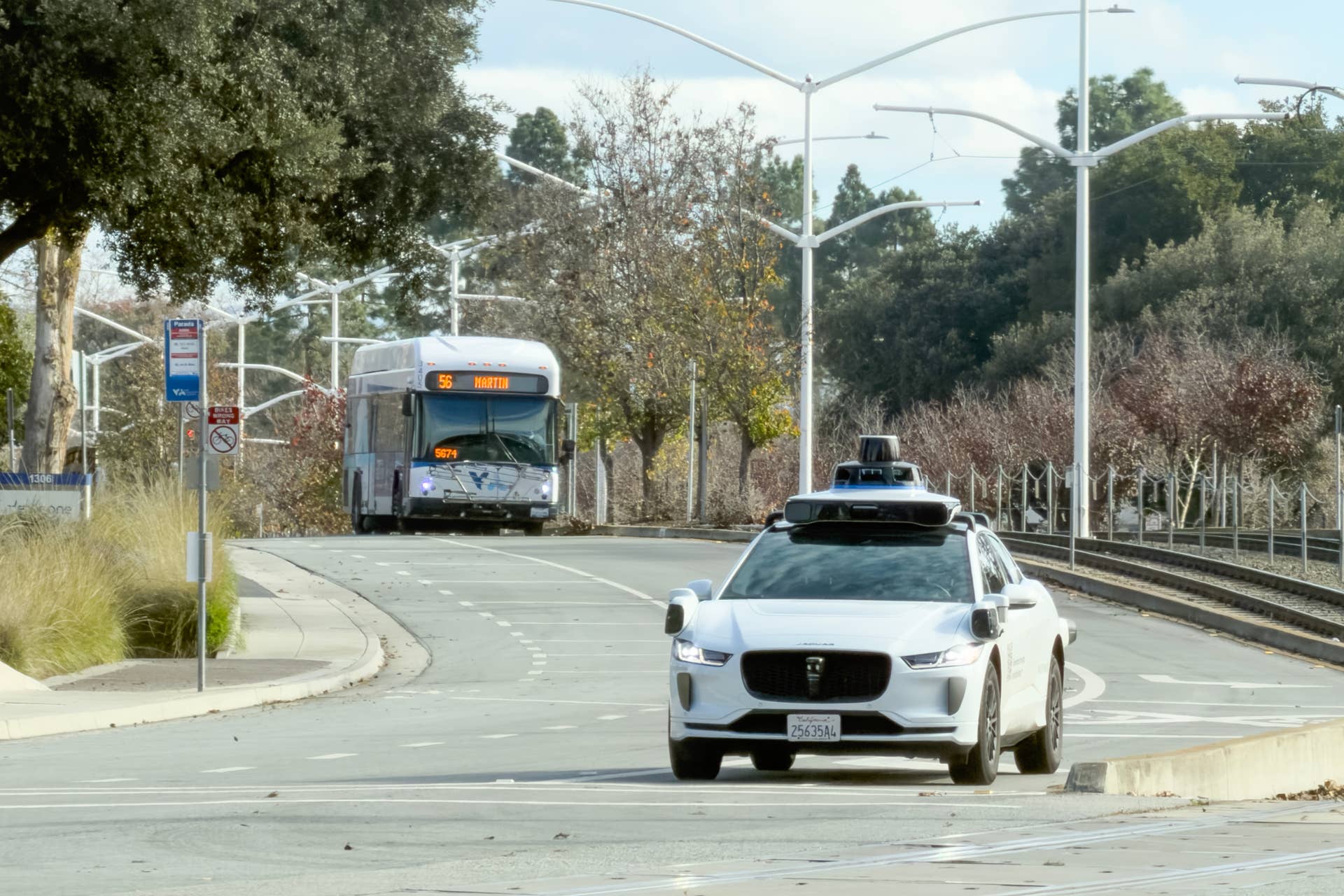
Alphabet’s (GOOGL) Waymo said Tuesday, Aug. 25, that it will bring fully autonomous ride-hailing to Munich, its first market in the European Union and third outside the United States after London and Tokyo, according to CNBC.
Why Munich matters more than Berlin for Waymo
Waymo will spend the coming weeks driving manually through the city, building high-definition maps of the street network with trained autonomous specialists behind the wheel, according to Waymo. Commercial service opens to the public toward the end of 2027.
Munich is Germany’s third-largest city by population and its most densely populated, which makes it a harder problem than the wide grid of Phoenix or the flat sprawl of Austin.
It is also the global headquarters of BMW (BMWYY).
More Automotive:
- Nissan scrapped a bank it couldn’t afford to build
- Tariffs just pushed Hyundai deeper into America
- Tesla just set a date for its riskiest launch yet
That detail is the one my analysis keeps returning to. Waymo did not pick the political capital in Berlin. It picked the engineering capital.
“Munich is a world-class hub for mobility and engineering,” said co-CEO Tekedra Mawakana, according to Waymo.
German officials are not framing any of this as an incursion. Bavarian State Chancellery head Florian Herrmann called autonomous driving “a key technology for the future of mobility,” according to Agence France-Presse.
Germany also wrote the rulebook before anyone showed up to use it. The country passed an autonomous driving law in 2021 that permits driverless vehicles in defined operating areas, and a state secretary in the federal transport ministry pointed to that legal certainty as the reason Waymo came, according to Waymo.
What Germany’s auto industry is quietly losing
Here is the uncomfortable part of the story.
That 691,500 figure represents a 5.8% decline in twelve months, the steepest of any German industrial sector, with parts and accessories suppliers shedding 7.6% of their workforce.
The trade group expects worse. Germany’s automotive sector could lose another 125,000 jobs by 2035 on top of the roughly 100,000 already gone since 2019, according to the German Association of the Automotive Industry.
I ran those two figures against the current headcount, and the arithmetic is blunt. A total decline of 225,000 positions would erase close to a third of the industry’s present German workforce.
Related: Waymo’s driverless cars run on a secret weapon
That is the backdrop Waymo is walking into. Not a confident incumbent defending its turf, but a shrinking one that has spent two years asking Berlin and Brussels for relief on energy costs, labor costs and emissions rules.
The trade group has blamed Germany’s cost base rather than the technology shift alone, and it has been explicit that new mobility jobs are increasingly being created outside the country.
Here is what the company brings to that fight.
- More than 20 million lifetime autonomous trips completed, according to Waymo.
- More than 350 million fully autonomous kilometers driven, with 16 times fewer serious injury crashes than human drivers, according to Waymo.
- $16 billion raised in February at a $126 billion post-money valuation, according to Forbes.
- Service running in 11 U.S. cities with 19 more in progress, according to CNBC.
The robotaxi race in Europe just got crowded
Waymo is not arriving unopposed.
Uber (UBER), working with Pony.ai and Croatian operator Verne, launched autonomous rides in Zagreb this month, making the Croatian capital the first European city where a rider could hail a self-driving vehicle through the Uber app. Uber and WeRide have announced plans for Madrid and Zurich, and Uber has a separate Munich effort with Autobrains.
Tesla (TSLA) is the name most American investors reach for first, and it is the one with the least to show on European roads.
The German incumbents are not absent from autonomy either, which is what makes the Munich announcement sting. Mercedes-Benz (MBGYY) was the first automaker anywhere to win German approval for a Level 3 system that lets a driver legally take their eyes off the road in traffic. That was a genuine engineering first.
It was also a feature sold inside a car. Waymo is selling the trip.
Waymo is also not simply shipping hardware across the Atlantic. The company recently detailed a custom AI chip built to handle the earliest and heaviest stage of sensor processing before its main models take over, which is a per-vehicle cost story as much as a technology one.
What Munich really tests is not the driving. It is whether a European regulator, a European city government and a European public will accept an American robotaxi operating in the country that invented the category.
What Waymo’s Munich timeline means for Alphabet investors
The number that matters for Alphabet shareholders is not 2027. It is the gap in front of it.
Waymo has told the public it needs roughly fifteen months of mapping and supervised testing before a paying passenger in Munich rides without a driver. That is a long, capital-heavy stretch between announcement and revenue, and it will repeat in every European city the company enters.
Investor Vinod Khosla has described Waymo’s opportunity as “a multitrillion-dollar global market,” according to Forbes.
My analysis is less interested in the total addressable market than in the hiring line buried in the announcement. Waymo said it will invest in local fleet operations and create high-skilled jobs in Munich.
That means an American company will be recruiting from the same Bavarian engineering labor pool that BMW, Mercedes-Benz and their suppliers are currently shrinking.
The cars are the visible part. The talent is the part that moves first, and it moves quietly.
If Munich works, Germany’s automakers will face a rival in their own city that sells trips rather than vehicles, priced in euros, running on a fleet somebody else owns. Watch the 2027 date. Watch the job postings sooner.
Related: Waymo vs. human drivers: Experts reveal which is safer