Inflation may not be running at the same pace it did a few years ago. But that doesn’t mean shoppers have forgotten what higher prices feel like.
Groceries and other everyday necessities remain expensive, and consumers are still looking for ways to make their money go further.
That’s where Dollar Tree comes in.
Consumers have long relied on Dollar Tree for affordable staples. But the days of thinking of the retailer as a place where everything costs roughly a dollar are over.
Dollar Tree is growing increasingly comfortable with the idea of selling products at $3, $5, and other higher price points. And its latest results suggest shoppers are willing to buy them.
Dollar Tree enjoys strong quarter
During Dollar Tree’s second quarter 2027 earnings call, the company reported that net sales rose 7% year over year, while comparable sales rose 3.7%.
The average customer ticket also rose 3.3%.
Dollar Tree also recently saw an uptick in foot traffic year over year with a 1.7% increase in June and a 4.8% increase in July, according to data from Placer.ai.
Related: Walmart reveals its most important investment yet
“Holiday shopping around America’s 250th anniversary, back-to-school demand, and Dollar Tree’s multi-price assortment likely fueled the surge,” the report said.
The company also credits its multi-price strategy with its recent success.
“Multi-price gives us the flexibility to deliver the right item at the right price, while always maintaining that compelling value proposition across the store,” said Dollar Tree CEO Mike Creedon.
Dollar Tree wants shoppers to think differently about value
For decades, Dollar Tree’s appeal was pretty simple. You could walk into a store and find inexpensive products at an easy-to-understand price.
The company is now trying to preserve that value proposition while giving itself more room to sell products that simply don’t work at a lower price point.
Products sold at multiple price points accounted for 17% of Dollar Tree’s sales in the second quarter, Creedon said.
He also stated that thanks to the company’s multi-price strategy, “We are bringing more excitement, discovery, relevance, and choice to the shopping experience while maintaining the value that has always defined Dollar Tree.”
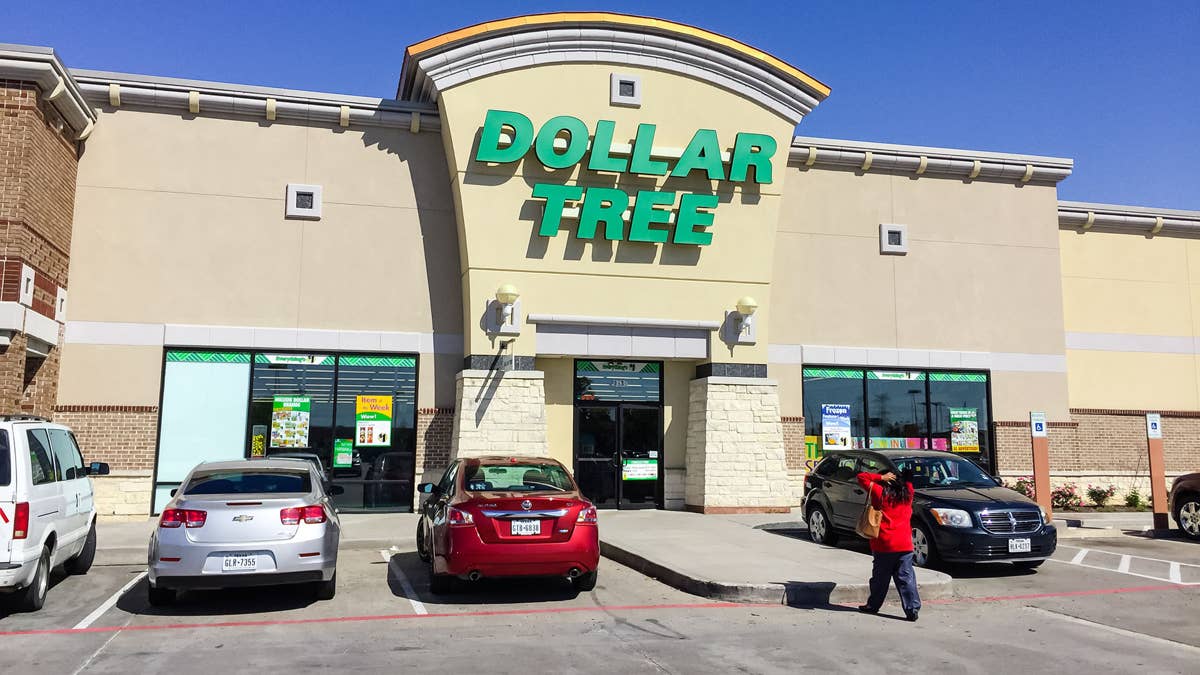
Trong Nguyen/Shutterstock
It’s not necessarily negative news for consumers
From the company’s perspective, multi-pricing makes a lot of sense. It gives Dollar Tree more flexibility to expand its assortment and grow sales without simply relying on getting more people through the doors.
But there’s a catch.
Dollar Tree’s core customers are among the consumers most likely to notice when a $1.25 item becomes a $3 item.
For a shopper with plenty of disposable income, the difference may be insignificant. For someone trying to buy household necessities on a very tight budget, it can be the difference between buying something and putting it back.
But Dollar Tree isn’t telling customers they have to pay more for the same products.
More Retail:
- Costco sees major shift in member behavior
- Retail chain shuts all locations as legal changes hit industry
- Costco makes major investment in online shopping for members
Rather, the company is giving itself permission to sell a broader range of products while still maintaining its traditional price point across core items.
“There’s nothing preventing us from maintaining a dollar price point within the assortment,” Creedon explained.
So while higher prices may be here to stay, they’re not going to apply to every item in the store. Not even close.