Retailers are not just quietly abandoning indoor malls, they are also escaping the suburban strip malls, as consumers continue to cut back on discretionary spending.
For shoppers in smaller communities, these closures could mean fewer places to buy affordable women’s clothing without driving to a larger city or shopping at a big-box retailer.
Over the past few years, a major name in the discount fashion industry operating across community strip shopping centers, often near large discounters like Walmart, has been quietly downsizing.
Founded 80 years ago, Cato Corporation, the value-priced women’s fashion chain, known for its Cato, It’s Fashion, and Versona stores, closed 14 stores this year, with plans to shut more in 2026.
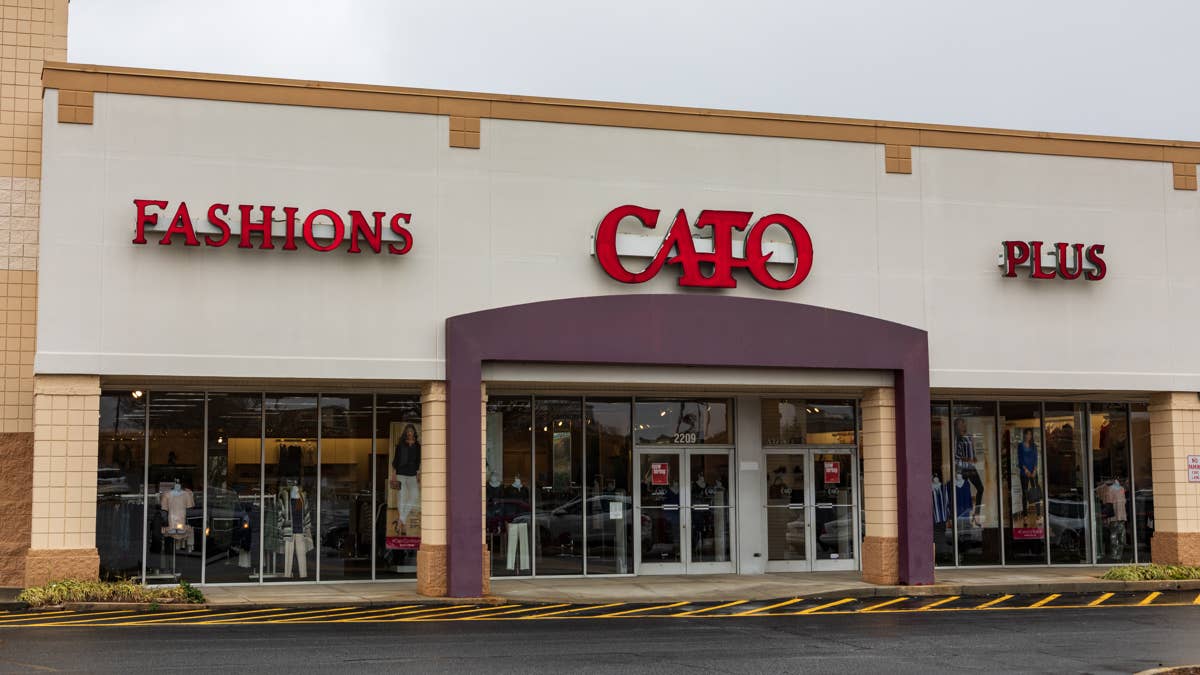
Cato Corporation closes 14 stores, plans up to 50 in 2026
Cato Corporation has closed 14 stores and opened two stores across its portfolio during the first six months of fiscal 2026, according to the company’s 10-Q filing with the Securities and Exchange Commission (SEC).
As of August 1, 2026, the discount fashion chain operated 1,057 stores, compared to 1,101 stores at the end of the same period of fiscal 2025. The clothing retailer had a net loss of 44 stores over the past year.
Moreover, Cato Corporation confirmed it plans to close around 50 stores total in fiscal 2026, while opening up to 10, which will result in a net decline of 40 stores for the full fiscal year 2026, unless plans change.
Cato’s sales for the first six months of fiscal 2026 fell 2.9% to $333.3 million from $343.1 million a year earlier. The decline was primarily related to flat comparable-store sales and the impact of closed stores, the retailer stated in the filing.
The retailer also reported net income of $10.5 million for the first six months of fiscal 2026, compared with $10.1 million during the same period a year earlier.
For shoppers, the most visible sign of the company’s changes may be the disappearing stores.
Cato has already closed hundreds of stores, exited one state
Earlier this year, I reported how Cato Corporation’s total store count decreased by 246 locations over the last four years.
As of Jan. 29, 2022, Cato Corporation operated 1,311 stores in 32 states, while as of May 2, 2026, the retailer operated 1,065 stores across 31 states. This means that the retailer exited one state.
The company’s previous financial filings revealed that the value-priced fashion chain’s store count has been declining about 60 stores on average per year since 2022.
More importantly, in its full year 2025 report, Cato Corporation said it plans to open 10 new stores and close 40 underperforming locations as leases expire. However, its latest report reveals it has raised the number of planned closures to 50.
Cato Corporation’s profit fell 83% last quarter
Cato’s profit for the first half of the year looks almost unchanged from last year; however, behind these numbers lies a different story.
In the second quarter of 2026, Cato earned $1.1 million in profit. In the same quarter last year, it earned $6.8 million. That’s a drop of 83%.
The six-month total looks steady because of a one-time tariff refund.
Cato recorded a $5.7 million reduction in cost of goods sold in the first quarter of fiscal 2026 as a refund of IEEPA (International Emergency Economic Powers Act) tariffs, after the U.S. The Supreme Court ruled certain tariffs had been imposed illegally. During the second quarter of fiscal 2026, the company received full payment of its tariff refund claim.
Sales also fell during the second quarter. Total sales dropped 6%, and same store sales fell 3.7%, according to its 10-Q filing.
Why has Cato Corporation been closing 60 stores per year?
The Cato Corporation’s CEO John Cato already warned about the company’s outlook earlier this year.
“For the foreseeable future we expect our sales to be negatively impacted by rising inflation, especially fuel and food prices, which will reduce our customers’ discretionary income,” Cato stated in the press release.
More recently, the company reiterated its previous economic warning, attributing the declines to challenges consumers continue to experience.
“Our second quarter results were negatively impacted by the continued pressure on our customers’ discretionary income. Higher fuel prices, persistent inflation and ongoing elevated interest rates continue to exert downward pressure on our customers’ discretionary income, which we believe will continue to make our customers more cautious with their discretionary spending into the foreseeable future,” Cato stated.
The retailer continued, “In addition, our ability to pass through cost increases caused by rising fuel prices, potential increased tariffs or other factors will be limited due in part to the pressure on our customers’ discretionary spending.”
Consumers are pulling back on discretionary spending
“Consumers reported plans to pull back across a broad range of discretionary purchases. Of the 22 categories in our survey, pet care services was the only one with net spending intent at zero or above; every other category was negative,” a recent McKinsey consumer survey found.
More importantly, consumer pullback extended into categories that typically see a strong seasonal lift. Net spending intent for apparel plummeted to –24, compared to just –1 during the same period last year, suggesting that budget-conscious shoppers are treating new clothes as a luxury expense.
Cato’s primary customers are middle-income families shopping in suburban strip centers, and they are also feeling the squeeze. McKinsey sentiment data highlights that while lower-income consumers remain pessimistic overall, middle- and high-income households reported the largest drop in optimism.
That broader pullback could put additional pressure on discretionary categories such as clothing.
What Cato Corporation closures mean for consumers
The Cato Corporation was founded in 1946 by Wayland Cato Sr., Wayland Cato Jr., and Edgar Thomas in Charlotte, North Carolina. It launched with only five main-street locations, and over the decades it grew its presence focusing on value-priced women’s fashion.
For 80 years, value-conscious shoppers have relied on The Cato Corporation, the driving force behind brands like Cato Fashions, Versona, and It’s Fashion, for trendy, budget-friendly clothing located conveniently close to home.
For shoppers in smaller communities, losing a Cato location can mean traveling farther for affordable women’s clothing or turning to larger retailers like Walmart or Target, and online shopping.
As inflation continues to squeeze the middle class, the quiet disappearance of stores like Cato proves that finding a good deal close to home is becoming harder than ever.