Micron Technology has been one of the most electric stories in the entire AI trade. Its shares are up nearly 700% over the past year as the memory chip maker rides surging demand for the components that power AI data centers.
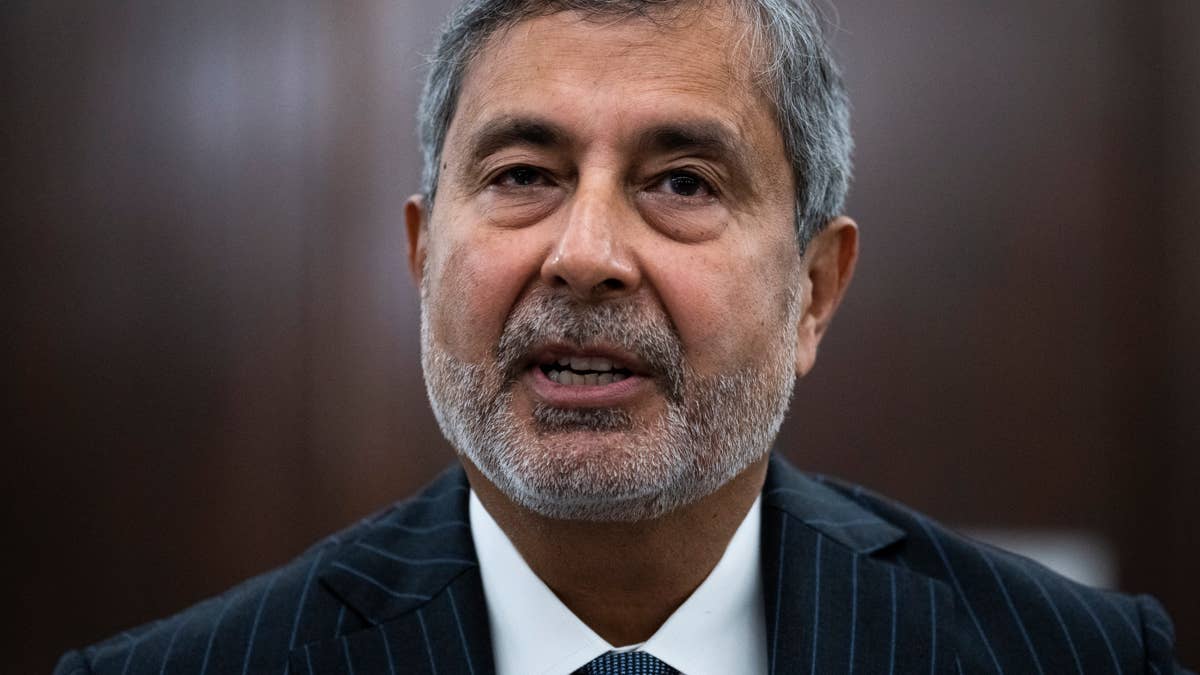
Jim Cramer has tracked the stock closely for months, praising CEO Sanjay Mehrotra as almost too humble, given what the company has managed to build.
So when Micron shares dropped even as Cramer insisted the underlying business had never looked stronger, he had a very specific explanation, and it had almost nothing to do with Micron itself.
Jim Cramer blames Samsung for Micron stock drop
Cramer had just returned from touring Micron’s facilities in Boise, Idaho, where he came away convinced the demand story was real. “It was very clear the demand was incredible; they’re going to make a fortune,” he said, according to Insider Monkey.
But days later, shares dropped anyway, and Cramer pointed straight at South Korea.
The trigger was Samsung’s shareholder-return announcement, which investors judged as inadequate next to what rival SK Hynix had already committed to.
“The Samsung buyback was regarded as not good enough. And that’s because they didn’t end up crunching shares, unlike SK Hynix,” Cramer said, describing the reaction as “chimerical,” given how strong Micron’s own fundamentals looked, Benzinga reported.
More Jim Cramer:
- Jim Cramer has terrifying one-word message for tech stock investors
- Jim Cramer says he’s steering clear of one popular stock
- Jim Cramer reveals 4 surging chip stocks he likes best
The comparison matters because SK Hynix had set a high bar. The company unveiled plans in August to repurchase and cancel roughly 40 trillion Korean won, or about $28.6 billion, worth of its own shares between Aug. 20 and Nov. 19, giving investors a concrete number to measure Samsung against, according to 24/7 Wall St.
Samsung had been expected to reveal shareholder returns exceeding $72 billion, a figure that made the eventual announcement look underwhelming by comparison.
Cramer’s point was not really about Samsung being wrong. It was about how the market works. “It’s not whether they should be; it’s that they are,” he said, according to Benzinga.
Micron moves when Samsung moves. That is the trade right now, and being right about Micron’s fundamentals does not protect you from it.
The Micron fundamentals Cramer says the market is ignoring
Micron’s most recent quarter gave Cramer plenty of ammunition for his bull case.
The company posted fiscal third-quarter revenue of $41.46 billion, up 346% year over year from $9.30 billion a year earlier and up 74% from $23.86 billion the prior quarter, with non-GAAP EPS of $25.11 beating consensus by 23.8% and non-GAAP gross margin reaching a record 84.9%, up from 39.0% a year ago, according to 24/7 Wall St.
Beyond the headline numbers, Micron has built a wall of contracted demand that Cramer argues makes the business look secular rather than cyclical. The company has $22 billion in cash deposits and related financial commitments from 16 strategic customers, agreements that include take-or-pay clauses, cash deposits and pricing floors.
Total AI contracted revenue locked through 2030 stands at $100 billion, Insider Monkey noted.
That demand visibility is why Cramer has pushed back hard against the idea that memory remains a purely boom-and-bust business. Micron’s HBM and DRAM capacity is sold out through 2027, and AI data centers are projected to consume roughly 70% of global memory chip production in 2026, TheStreet reported.
On the capital spending side, Micron is committing more than $250 billion through 2035 to expand its domestic manufacturing and research footprint.
Mehrotra himself has pushed back on the idea that Micron must choose between growth and shareholder returns, telling Cramer the company can pursue both, according to Insider Monkey.
Tom/Getty Images
Why Samsung still casts a long shadow over Micron stock
The Samsung relationship runs deeper than the headlines. Samsung’s own guidance has repeatedly moved Micron’s stock, both up and down, because the two companies compete directly for the same AI infrastructure customers and their results are treated by investors as a shared signal for the entire memory sector, according to Bloomberg.
Samsung has also been closing the technology gap. The company began mass-producing HBM4 in February 2026, beating everyone else to that milestone. Micron is still primarily shipping HBM3E.
That timing difference is small in isolation. But in a market where AI customers are constantly asking who has the most advanced product available, it has given investors another reason to be nervous about Micron’s position, Finance Feeds reported.
Market share data underscore how tightly contested this field remains. Samsung, SK Hynix, and Micron together control roughly 90% of global DRAM supply, giving each enormous pricing power during the current shortage, but also meaning that any one company’s missteps or wins ripple quickly across the other two stocks, according to Quartz.
Micron cannot even fight back the same way. Its CHIPS Act funding agreement bans large-scale share repurchases until Dec. 9, 2026. Samsung and SK Hynix can buy back tens of billions in shares. Micron is sitting on the sidelines by law.
Cramer brought this up directly with Mehrotra on air, 24/7 Wall St noted.
What Cramer’s Micron call means for memory chip investors
Despite the volatility tied to Samsung headlines, Micron’s valuation still looks inexpensive relative to other chipmakers. The stock trades at a forward price-to-earnings ratio of roughly 6, compared with Intel at 68.97 and AMD at 61. The valuation gap helps explain why Cramer has described Micron as radically undervalued, according to Insider Monkey.
Institutional investors appear to agree with that reading. Hedge fund ownership of Micron climbed from 154 out of 1,000 funds tracked in the first quarter to 184 in the second quarter, with Coatue Management increasing its stake by 1,794% to $3.6 billion, as Insider Monkey reported.
The stock will keep moving on Samsung and SK Hynix headlines. That is just the reality of how this sector trades right now.
The underlying Micron story — $100 billion in locked contracts, capacity sold out through 2027, a memory shortage that shows no sign of clearing — is genuinely strong.
But none of that stops the stock from dropping when Samsung disappoints on a buyback.
Related: Jim Cramer sends a strong message to Meta stock investors