A major grocery chain continues to reduce its store footprint, with another location set to close in a key U.S. market.
The latest shutdown will eliminate one of the city’s two remaining stores operated under the chain’s banner, leaving shoppers with fewer options for groceries, pharmacy services, and other everyday essentials.
The closure will affect about 100 unionized workers and comes as the company’s parent works to streamline its operations and reassess parts of its store portfolio.
Founded in 1922 in Portland, Oregon, by its namesake, the Fred Meyer grocery store chain was among the first to pioneer the one-stop-shop format. The Kroger Co. (KR) acquired Fred Meyer in 1999 and operates the banner alongside other brands.
Fred Meyer is closing one of its last remaining Tacoma stores
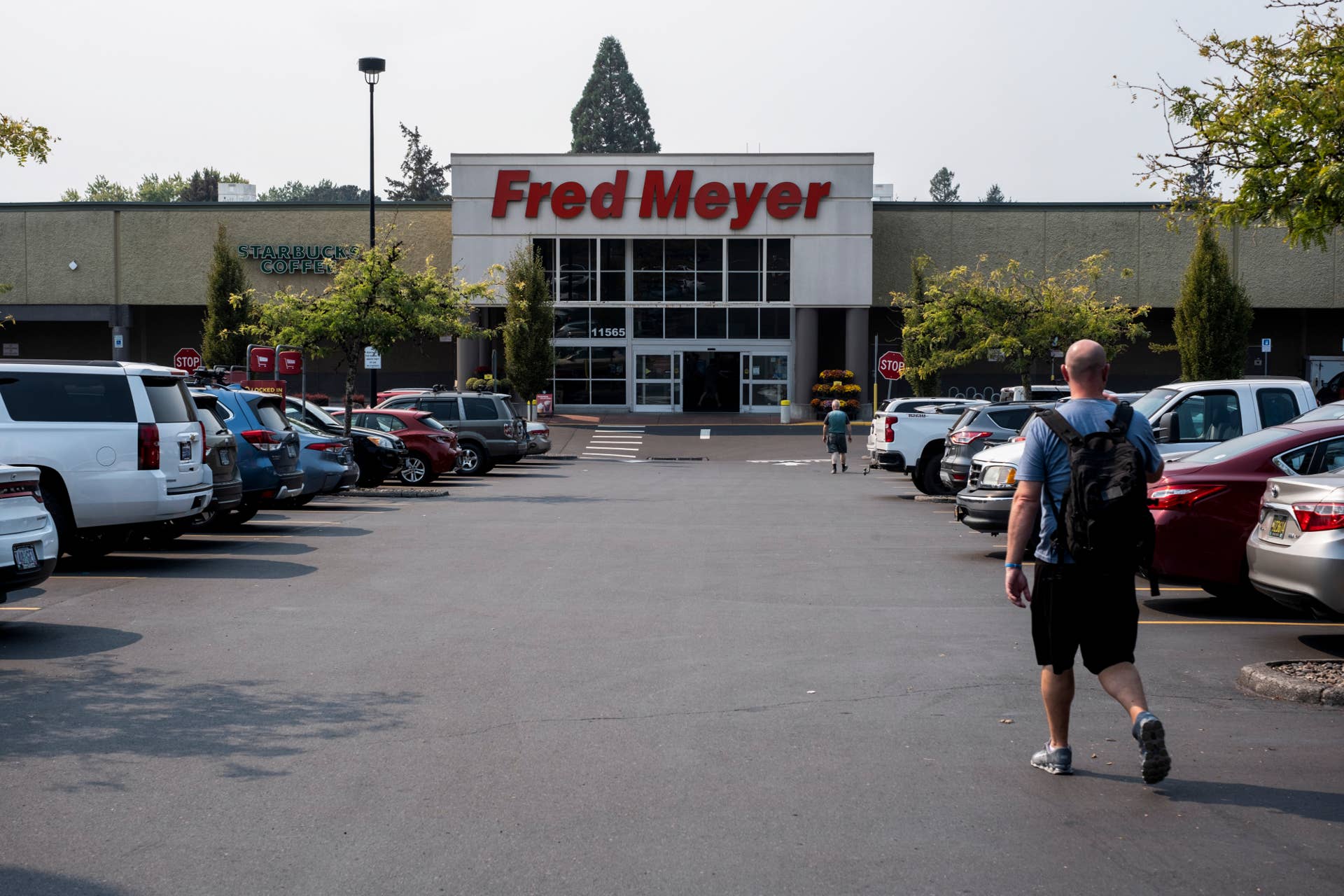
Fred Meyer is closing its James Center store at 6901 S. 19th St. in Tacoma, Washington. The store is expected to remain open until Jan. 30, 2027, and approximately 100 unionized workers will be affected.
The James Center location is one of two Fred Meyer stores in Tacoma. Its closure will leave the city with one remaining Fred Meyer location, the Tacoma-Stevens store at 4505 S. 19th St.
Fred Meyer currently has 54 stores across 42 cities in Washington, according to the company’s store locator.
“Fred Meyer never takes the decision to close a store lightly, and after careful evaluation, we have made the difficult decision to close our Tacoma store located at 6901 South 19th Street,” a spokesperson for Fred Meyer told FOX 13.
What the Fred Meyer closure means for consumers
The United Food and Commercial Workers Union (UFCW 367) issued a public statement opposing the Fred Meyer closure.
UFCW 367 said the shutdown could turn West Tacoma into an “immediate food desert,” arguing that the loss of the grocery store could make affordable, healthy food less accessible to local residents.
The union also said the closure could affect thousands of residents, particularly seniors, low-income households, and families who depend on public transportation, by reducing access to affordable fresh food, pharmacy services, and other essential goods.
“Workers drive the profits of Fred Meyer and are indisputably the most important part of this company,” said UFCW 367 President Michael Hines.
The union said it would focus on supporting its members and bargaining over the impact of the closure.
Why Fred Meyer is closing a Tacoma store
The closure comes as Kroger works to streamline its operations and redirect investments toward areas expected to generate stronger long-term returns.
Kroger revealed plans to close 60 stores under multiple brands by the end of 2026 in its first-quarter 2025 earnings results.
“We’re simplifying our business and reviewing areas that will not be meaningful to our future growth,” said Kroger Chairman Ron Sargent during the earnings call. “Unfortunately, today, not all of our stores are delivering the sustainable results we need.”
At the time, Kroger recorded a $100 million impairment charge related to the planned closures and said the restructuring would allow it to prioritize capital allocation and improve operating efficiency.
Kroger has since closed several stores under multiple banners as it continues to adjust its store portfolio.
Early signs the strategy may be gaining traction
Even as Kroger reduces its physical footprint, its recent financial results show some areas of operational improvement.
During the first quarter of fiscal 2026, Kroger reported:
- Total sales: Increased 2.2% year over year to $46.1 billion
- Comparable sales excluding fuel: Rose 1%
- Gross margin: 22.7%, down 23% a year earlier
Kroger attributed the decline in gross-margin rate primarily to the mix impact of higher fuel sales, higher transportation costs, egg deflation, and planned price investments. Those pressures were partially offset by improvements in pharmacy mix, e-commerce profitability, sourcing benefits, and lower depreciation.
“Kroger expects to continue to generate strong free cash flow and remains committed to investing in the business to drive long-term sustainable net earnings growth,” said Kroger CEO Greg Foran in the company’s first-quarter 2026 earnings report.
A single quarter does not determine Kroger’s long-term performance, but the results show the company is attempting to improve its operations and profitability while reshaping its physical store footprint.
Recent grocery store closures
Kroger is not the only supermarket company adjusting its store footprint. Several other grocery chains have also announced or completed store closures in recent months.
Here’s some of my previous coverage of grocery store closures:
- Grocery Outlet: Closed 12 stores during the 13 weeks ended July 4, 2026, including nine locations tied to its Optimization Plan.
- Ahold Delhaize USA: Closed several stores in 2026 and late 2025.
- Brookshire Grocery Company: Closed four locations across Louisiana and Arkansas in July 2026.
Related: Grocery giant rethinks supply chain plans as store closures mount