For years, Elon Musk’s most ambitious promises across Tesla and SpaceX lived mostly in keynote slides and roadmap timelines. That is starting to change, and Musk himself agreed with the shift.
Someone on X laid it all out. Robotaxi fleet growing. Cybercab event confirmed. Semi rolling off the line. Optimus production starting. A $100 billion spaceport breaking ground.
“The promises are turning into actual factories, vehicles and launch dates,” the user wrote. “Now comes the hard part: scaling them.”
Musk replied with one word. “True.”
The trillion dollar chip plant behind the Optimus
At the center of the renewed attention is Terafab, the semiconductor manufacturing project jointly backed by Tesla and SpaceX. The entity behind it, Terafab AI, recently locked in a tax value limitation agreement for its site in Grimes County, Texas.
SpaceX confirmed the location on August 6, with construction set to begin.
The initial commitment is real money. Tesla and SpaceX plan to invest $16.8 billion at the outset and employ at least 3,000 people. A May filing had outlined a potential $55 billion first-stage buildout that could grow to as much as $119 billion across additional phases.
The $16.8 billion is now the officially confirmed first-phase figure, TechCrunch reported.
One important detail the announcement did not lead with: the chips at Terafab will be manufactured by Intel, with Tesla, SpaceX and xAI as anchor customers. The facility is designed to bring logic, memory, packaging and testing under one roof, producing chips for Tesla’s Optimus robots and Cybercabs, as well as for space-based data centers SpaceX is developing.
More Elon Musk:
- Elon Musk makes bizarre claims about money, future of AI
- Elon Musk sends blunt verdict on the future of humanity and AI
- Elon Musk’s startling claim to SpaceX investors
What turned heads was ARK Invest’s longer-term framing of the project. ARK estimated Terafab could eventually require $1 trillion in total investment.
A figure that would surpass the inflation-adjusted $704 billion cost of building the entire U.S. Interstate Highway System. That comparison underscores just how large a bet Musk’s companies are making on controlling their own chip supply, according to Stocktwits.
Tesla and SpaceX have described the ambition in blunt terms. Musk has said Tesla will work with SpaceX on a one-terawatt compute hardware factory, with Terafab designed to help meet expected demand.
The two companies already have real commercial ties, with Tesla disclosing $143.3 million in 2025 revenue from SpaceX, primarily from vehicle sales including Cybertruck purchases, according to Quartz.
What this means for Tesla and SpaceX stock
The market has not been reading the two companies the same way. SpaceX recovered sharply from its July lows over the past month. Tesla did not get the same treatment. Same ecosystem, same billionaire, very different stock charts right now.
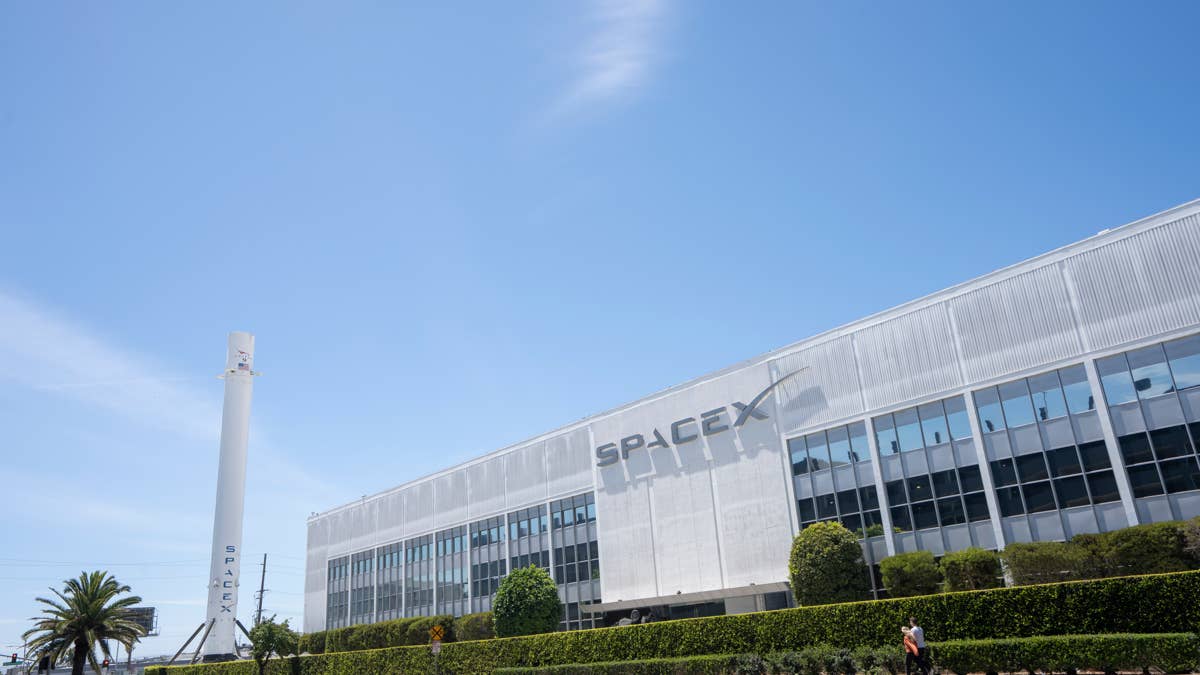
Part of that divergence traces back to SpaceX’s own headline-grabbing announcement this month. The company revealed plans to invest $100 billion in Starbase, Louisiana, a spaceport in Vermilion Parish expected to become its largest launch facility, with construction starting in 2027 and first launch targeted as early as 2029, according to CNBC.
At full buildout, the site is expected to include five launch complexes with two pads each, plus propellant production and employee housing. Shares of SPCX rose about 2% on the news.
Musk also used the weekend exchange to clear up confusion about a separate deal, the $1 billion acquisition of mobile power provider APR Energy. “Since I’m the controlling shareholder of SpaceX, it weirdly gets reported as me buying it, which is not true,” Musk said, clarifying that SpaceX, not Musk personally, made the purchase. APR Energy operates more than one gigawatt of mobile gas and diesel generation capacity, giving Musk’s companies access to deployable electricity as power becomes a growing constraint on AI expansion.
That growing overlap between Tesla and SpaceX is itself becoming a source of investor uncertainty.
One Jefferies analyst has warned that as SpaceX speculation intertwines further with Tesla’s stock, traditional valuation methods based on vehicle sales and margins may become less useful for explaining Tesla’s price moves, TheStreet reported.
Scaling is where Musk’s track record gets complicated
The X user’s comment about scaling being “the hard part” is not idle. Tesla’s own history offers a cautionary example in the Cybertruck.
It will be unveiled in 2019 with a promised $39,900 base price and annual production ambitions of 250,000 units. The current entry model starts at $74,990, and estimated U.S. sales fell from nearly 39,000 in 2024 to about 20,000 in 2025, TechCrunch reported.
The Semi faces a similar test now that production has actually started. Tesla’s first high-volume Semi rolled off the line at its Sparks, Nevada facility, targeting an annual capacity of 50,000 trucks, though analysts expect only 5,000 to 15,000 deliveries in 2026 as the ramp builds gradually, TheStreet reported.
Robotaxi scaling tells a similar story. Despite operating in multiple cities including Austin, Dallas, Houston, Miami, Orlando and Tampa, Tesla’s unsupervised fleet remains small relative to what Musk has long promised. The Sept. 3 event was marketed as folding a new two-seat vehicle into that existing service rather than a dramatic fleet expansion.
Retail sentiment reflects that mixed picture. On Stocktwits, sentiment toward SPCX registered as bearish alongside extremely low message volume. Meanwhile, TSLA traders remained neutral amid normal chatter. A sign that even engaged retail traders are not fully convinced the scaling phase is a sure thing.
What investors should watch next
The most immediate catalyst is Tesla’s Sept. 3 Cybercab launch event in Austin, which will be expected to show whether the two-seat, steering wheel-free vehicle can actually integrate into Tesla’s existing Robotaxi service rather than simply generating headlines.
Beyond that, the pace of Terafab’s construction in Texas and Starbase Louisiana’s 2027 groundbreaking will offer concrete markers for whether Tesla and SpaceX can convert massive capital commitments into physical infrastructure on schedule.
Louisiana officials project the spaceport will create 3,000 direct jobs over 10 years with an average annual salary of $92,600, according to TechCrunch.
Given how far apart SPCX and TSLA have moved over the past month, investors in either stock will likely need to watch both companies together rather than in isolation, since Musk’s ecosystem increasingly ties their fortunes to the same underlying bets on AI compute, autonomy and space infrastructure.