After years of losses and mounting financial pressure, a longtime luxury retailer recently received a new owner that promised to reshape the struggling business and return it to profitability.
But the change in ownership has not saved every location.
One of its stores is now facing closure after the business behind the location was placed in liquidation proceedings, highlighting the difficult decisions the retailer faces as its new owner begins restructuring the company.
Founded in 1831, Harvey Nichols is a British luxury department store chain known for its upscale designer fashion, beauty products, fine wines, and gourmet food. Frasers Group acquired the retailer on Aug. 13, 2026, through a pre-pack administration, taking over six UK stores, the online business, existing inventory, and more than 1,000 employees. Its international franchise agreements were also included in the transaction.
Harvey Nichols is closing its Ireland store
Harvey Nichols’ only store in Ireland, located inside Dundrum Town Centre in Dublin, is expected to close Sept. 13, 2026, after efforts to find a way to continue operating the business failed.
The store employs 33 people, all of whom have been informed of the planned closure.
The High Court appointed Grant Thornton’s John Boland and Nicholas O’Dwyer as provisional joint liquidators of the Dublin business in August after the company was found to be insolvent and unable to pay its debts.
Grant Thornton later confirmed that the store was expected to cease trading on or around Sept. 13 after it was unable to reach an agreement with Dundrum Town Centre to continue operating.
“We recognise that this is difficult news for employees, customers and other stakeholders,” Grant Thornton said in a statement reported by The Irish Times.
The firm added that representatives would meet with employees and provide support during the wind-down process.
Harvey Nichols opened its Dublin store in September 2025. Its planned closure means the retailer will no longer have a physical store in Ireland.
Why Harvey Nichols is closing its Dublin store
The closure follows years of financial difficulties at the Dublin business and the failure to reach an agreement that would allow the store to continue trading at Dundrum Town Centre.
The Irish company has been unprofitable for several years and has not recovered from the difficult trading conditions that followed the pandemic. It was also no longer receiving financial support from its UK parent company, according to evidence presented to the High Court.
Harvey Nichols CEO Julia Goddard said in written evidence that the store’s annual rent was nearly €1.1 million ($1.3 million). The Dublin business had net liabilities of €19.4 million ($22.5 million) in 2021, rising to €28.2 million ($32.7 million) by the end of its 2026 financial year.
Goddard also said that no buyer had been found for the Dublin company. The board therefore determined that winding up the business was in its best interests and that the liquidators would be best positioned to oversee an orderly cessation of trading and secure the company’s assets.
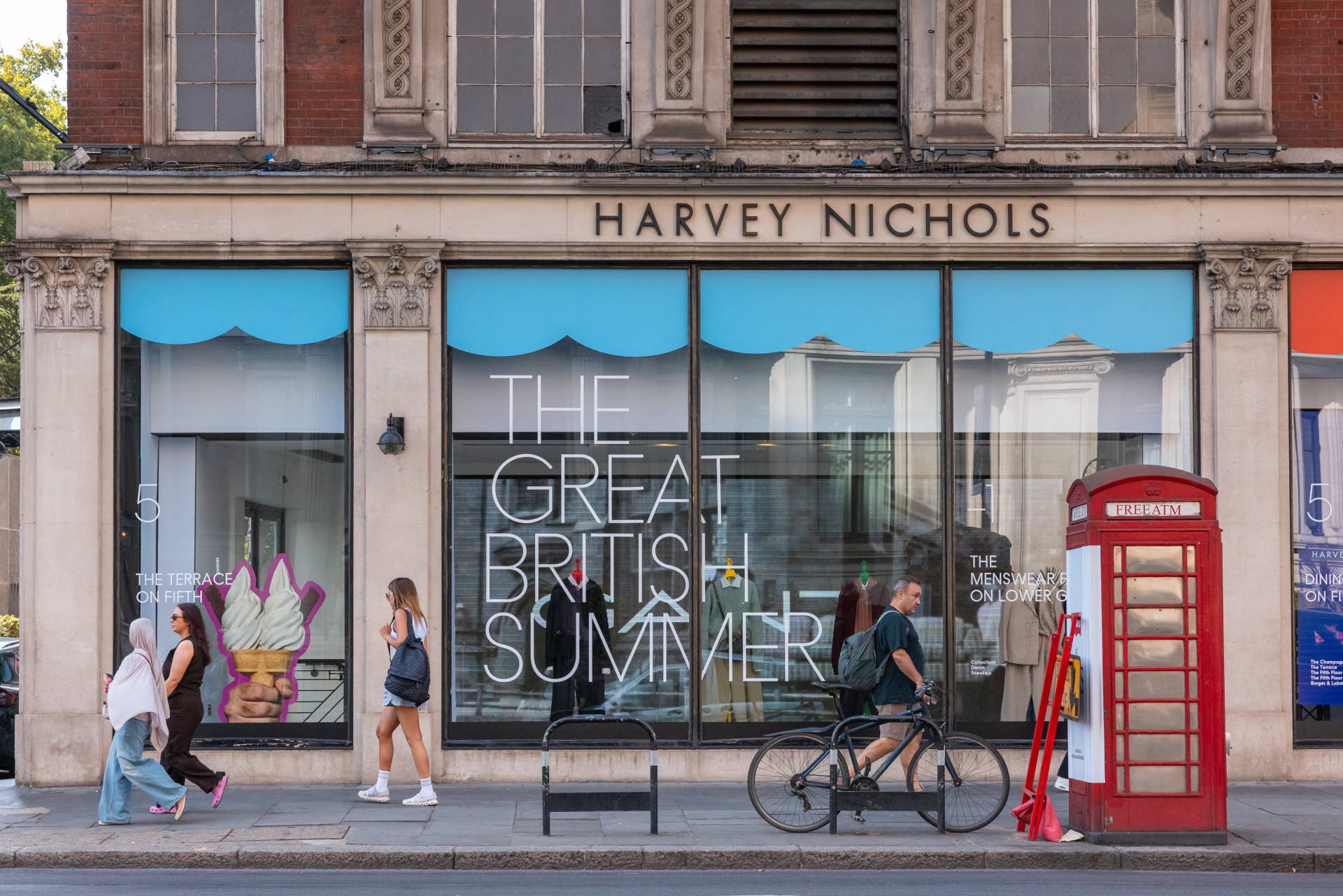
Harvey Nichols’ financial struggles
The Dublin closure comes as Harvey Nichols undergoes a major change in ownership following years of financial losses.
Hong Kong luxury goods businessman Dickson Poon acquired Harvey Nichols in 1991 from Debenhams and the Burton Group for £53 million. After 35 years of ownership, Poon put the retailer up for sale in June 2026 as it struggled with mounting losses and a lack of profitability.
The retailer had not returned to profitability following the pandemic and warned that it could run out of money within a year without additional investment.
Harvey Nichols reported a £105 million ($142 million) loss after tax for the year ended March 29, 2025, after writing off intercompany loans, according to its annual report and financial statements.
Revenue fell from £204.8 million ($277 million) to £184.8 million ($250 million) in the year, while pre-tax losses widened from £34 million ($46 million) to £49 million ($66 million). The retailer’s accumulated pre-tax losses had reached more than £140 million ($189 million) over five years.
The financial pressure reflects several challenges facing the retailer and the wider luxury market, including weaker consumer demand, higher operating costs, online competition, and changes in international shopping patterns. The end of tax-free shopping for tourists in the UK has also weighed on luxury retailers that rely on international visitors.
After months of uncertainty, Frasers Group announced on Aug. 13 that it had acquired Harvey Nichols through a pre-pack administration process. The deal included six UK stores, the retailer’s online business, existing inventory, more than 1,000 employees, and its international franchise agreements.
However, the future of the Dublin business remained separate from the acquisition. Frasers Group said discussions regarding the store were ongoing at the time of the deal and that it continued to support the Dublin location’s trading operations while its future was considered.
Here’s some of my previous coverage of store closures:
- Major mall retailer closes more stores in 2026
- Sportswear giant closes 113 stores as shares plunge
- 172-year-old luxury giant exits entire market
The acquisition marked the beginning of a significant restructuring effort for Harvey Nichols. Frasers Group said it would review and potentially rationalize the retailer’s store portfolio, organizational structure, operating model, and cost base as it works to create a sustainable business.
The Dublin closure underscores that the turnaround will not necessarily mean preserving every part of Harvey Nichols’ existing physical footprint.
Related: 200-year-old retailer shares its fate after shutdown warning