Kalshi, Polymarket and Polymarket US handled $45.33 billion in combined trading volume in August, according to The Block, down 14.5% from July’s record and the first monthly decline in a year.
It still ran 76.7% above the $25.66 billion the three platforms cleared in May.
On Aug. 28, a federal appeals court came for the legal shield underneath most of it:
“We conclude that Kalshi has not shown a likelihood that the CEA preempts state gaming regulations as applied to its sports event contracts.”
That was a three-judge panel of the 9th U.S. Circuit Court of Appeals, ruling 3-0 for Nevada’s gaming regulators and referring to the Commodity Exchange Act.
“This is a significant win for states’ authority to regulate gambling operations,” Arizona Attorney General Kris Mayes said.
“Despite the Ninth Circuit’s opinion, we still believe the CFTC regulations as written do not prohibit sports contracts,” Kalshi spokesperson Dani Lever told The Block. The company will seek further review.
Every one of these fights turns on one question. Ismail Vali, president of Gaming Compliance International, says America settled it long ago.
“Officially in America, it’s not gambling, it’s trading,” Vali said on the On The Margin podcast. “But everywhere else in the world is struggling with what do we do about these problems.”
Mayes has more riding on that question than most. Arizona is the only state to bring criminal charges against a prediction market, and the 9th Circuit binds it.
Arizona’s criminal case was frozen. Now it may thaw
Mayes filed 20 criminal counts against KalshiEx LLC and Kalshi Trading LLC in Maricopa County Superior Court on March 17: four for election wagering, which Arizona bans outright, and 16 for illegal betting, mostly on sports. An investigator from her own office placed the election bets, NPR reported.
The federal commodities statute “was never intended to strip states of their traditional police power over gambling,” Mayes said.
Kalshi went to federal court and won. U.S. District Judge Michael Liburdi issued an injunction on May 5, resting on the preemption argument the 9th Circuit has now rejected. Mayes says she will ask him to look at that order again.
The panel addressed sports event contracts, not election wagering or games of chance, which is where four of Arizona’s counts live, KJZZ reported.
The CFTC is not conceding either
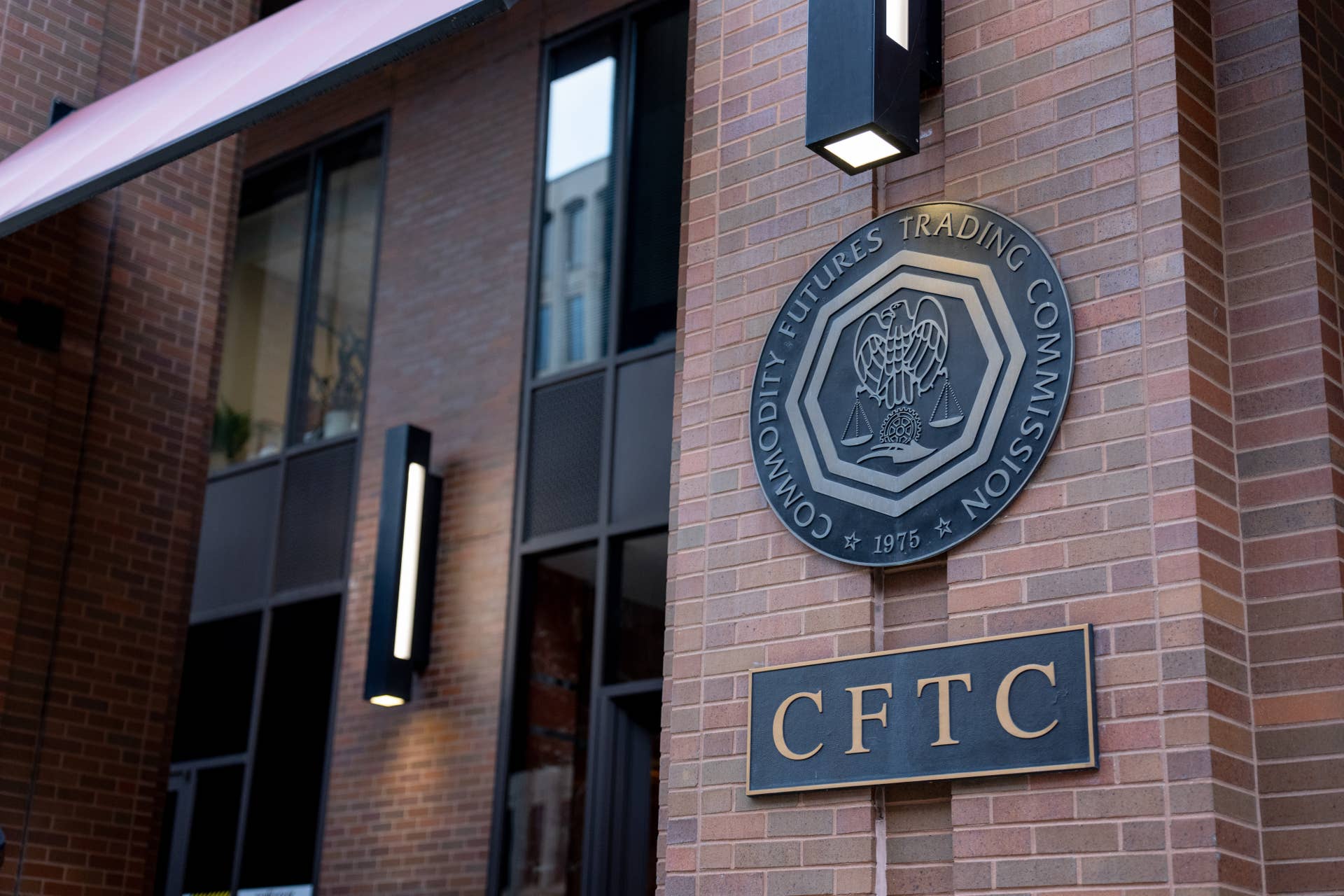
The Commodity Futures Trading Commission has spent 2026 suing states that try to police event contracts.
“A derivative contract structured as a swap is a swap regardless of the underlying subject matter,” CFTC spokesperson Zach Fulton told The Block, noting that the statute carves out only onions and movie box office receipts.
The 3rd Circuit ruled the other way in April in Kalshi’s fight with New Jersey, holding the same contracts were likely protected swaps. The CFTC says the conflict “calls out for resolution by the Supreme Court.”
Washington Attorney General Nick Brown, who sued in March, put his state’s case in plain terms.
“For Kalshi, every event, every tragedy is nothing more than a potential way for Americans to risk their fortunes and for Kalshi to get rich,” Brown said.
Where the state fights stand:
- Arizona: 20 criminal counts, frozen by federal injunction, now under fresh challenge.
- Nevada: Won at the 9th Circuit on Aug. 28.
- Washington: A King County judge ordered Kalshi on Aug. 13 to stop taking wagers on sports, elections, politics, entertainment, culture, tech and science, with geofencing due Sept. 2 and penalties of $120,000 a day, according to the state attorney general’s office.
- New York: Sued Kalshi on July 31 seeking more than $36 billion.
- Massachusetts and Michigan: Each holds a court order restricting the platform.
The argument underneath the lawsuits
“Right now, prediction market platforms are the hot thing in gaming, okay? But they’re not really gambling because in America, they’re seen as financial products, they’re futures derivatives, effectively,” Vali said.
His firm’s work, he says, shows prediction markets eating into sports betting’s share. He is harsher still on the retail trader’s odds.
“You are the sucker who’s being dragged into betting a load of money on stuff that’s probably not gonna happen,” Vali said.
Betr founder Joey Levy, whose company is rolling out sports prediction markets nationwide with Polymarket as the infrastructure, reads the same growth as expansion.
“I don’t know if I fully buy the cannibalization narrative that some are running with,” Levy said on the On The Margin podcast. “This is a story of TAM expansion.”
A game built with no payout
On the other hand, some companies offering the same competitive itch can be sold with nothing riding on it. ScorePoint’s games open in a browser tab with nothing to download, and nothing in them pays anyone to play.
Its in-platform currencies, ScoreCoin and LandCoin, buy progression and stay inside the platform, closed-loop virtual currencies for gameplay rather than cryptocurrencies, blockchain tokens or financial products. “
Scores are connected to identity, not just anonymous play,” the company said in written responses to questions.
“We created Match Kora to give players a football game they can enter quickly while still offering different ways to compete,” said Hussain Al-Malki, founder of the Jeddah-based platform. What it sells instead of a payout is standing: profiles, points, badges, clans that play other clans, rankings by country.
Kalshi’s whole case is that its contracts sit on the other side of that line, federal instruments the states have no say over. One appeals court has now said otherwise.
“Calling a sports bet a ‘swap’ doesn’t make it one,” Mayes said.