Costco usually makes its decisions with members in mind.
That’s especially important because membership fees account for a huge share of the company’s profit.
“Costco’s membership fees contributed some 72% to its operating income last year,” according to Retail Dive.
That makes gaining and retaining members pretty important, if not the most important, business metrics for the warehouse club.
Costco has done both of these well.
In the third quarter, the warehouse club reported membership fee income of $1.373 billion, an increase of $133 million or 10.7% year over year. Adjusting for FX, the increase was 9.9%, according to CFO Gary Millerchip, speaking during the company’s Q3 earnings.
That makes it somewhat surprising that the warehouse club recently killed a popular member service.
Costco killed Costco Next with no notice
Costco Next, which lets members access items the warehouse club does not stock, sort of like Amazon’s Marketplace, expanded product availability for Costco members. Products offered there were vetted by Costco’s team but were delivered by third-party partners.
It’s not a new service; it has technically been around since 2017. But Costco does not promote the offering, and it’s something I, and like many members, did not know about.
More Costco:
- Costco keeps discontinuing popular products
- Discontinued Costco member favorite returns to shelves
- Costco’s new service beats Amazon at its own game
That service was closed in early September with no notice.
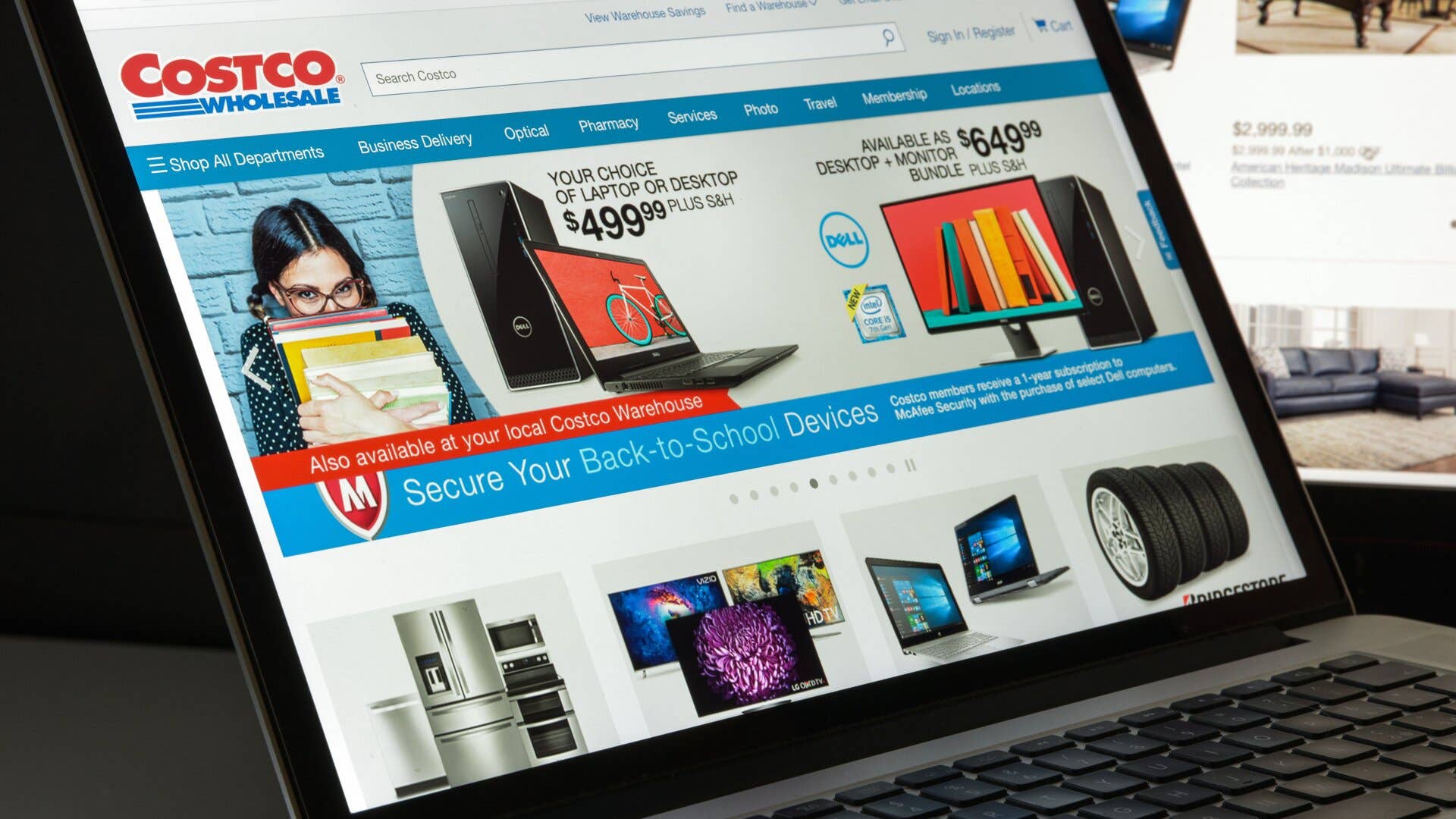
Visitors to the Costco Next web page got a terse message from the company.
“Access to Costco Next store fronts is no longer available. Please refer to the list below for contact information for vendors with active return policies. For eligible returns and warranty inquiries, contact the vendor directly,” the company shared.
That was followed by a long list of company names with their contact information.
Costco Next, before its abrupt closure, gave members up to 40% off on select products not offered in the chain’s warehouses. The program featured items from a specific list of vendor partners, ranging from home goods and luggage to electronics.
Shutterstock
Costco Next was fast-growing
It was not that long ago that Costco CFO Gary Millerchip was bragging about Costco Next’s quick growth.
“Costco Next, our curated marketplace, also continues to grow nicely. And we added eight new vendors in Q3, bringing the total to 75,” he said during the chain’s third-quarter 2024 earnings call.
Millerchip also made it clear that Next was different than other marketplace offerings.
“I think the difference for us on that would be, of course, that we are with Costco Next. It’s just being very curated for the members. So, we’re unlike a traditional marketplace that is about maybe just sheer volume. For us, it’s about making sure the members are getting something that truly is unique and valuable and consistent with who we are,” he added.
At the time, the CFO expressed strong support for the program.
“And it’s a tremendous upside opportunity there in that regard,” he said.
Costco has not commented on the shutdown and did not answer a request from TheStreet for comment.
Costco recently celebrated Costco Next’s success
“Costco Next, our curated marketplace, also continues to show healthy year-over-year growth. In Q3 fiscal year 2025, our sales on Costco Next equaled our total sales for all of fiscal year 2022, and we are excited about the pipeline of new vendors and development for future rollout,” CFO Gary Millerchip said during the company’s third-quarter 2025 earnings call.
- Products are offered from hand‑selected suppliers chosen for the quality of their merchandise and strong customer service, expanding the variety beyond typical warehouse inventory.
- The platform helps Costco offer higher‑margin discretionary items (e.g., electronics, appliances, goods sold directly from vendors) while leveraging member pricing perks.
- The impetus for Costco Next is to strengthen e‑commerce and mobile growth by offering discounted deals from trusted brands that complement warehouse inventory.
- Source: Costco website (now removed)
“Separate from what members will find in the warehouses or at Costco.com, Costco Next showcases products from some of Costco’s suppliers that have been selected for the quality of their merchandise and their exceptional customer service,” Costco General Merchandise Manager Cheryl Smeby said on Costco’s website.
Costco abandons an area that’s growing for rivals
Costco’s decision is particularly notable because marketplace models have become an increasingly important part of e-commerce.
Next expanded the selection of items available at warehouse club-style prices for Costco members while also featuring the company’s stamp of approval.
That’s different from most marketplaces. For example, companies such as Amazon and Walmart offer fulfillment services to vendors not stocked in their stores, but do not make the extensive curation effort Costco does.
Amazon’s Marketplace has been a sales driver for the online retailer.
“According to Marketplace Pulse estimates based on Amazon disclosures, first-party sales reached $255 billion and third-party marketplace sales reached $575 billion, with both segments growing at nearly identical 9% rates. This marks a continuation of the 6-10% growth range Amazon has maintained since 2022, returning to steady expansion after the exceptional 46% surge during the 2020 COVID peak,” Marketplace Pulse shared based on 2025 Amazon numbers.
An SEC-filed presentation from marketplace investor Ian Friedman delivered in 2021 shows just how many companies have leaned into marketplace offerings.
“Ten years ago, there were really only two marketplaces of scale, Amazon and eBay. Today, we’ve seen an explosion of other marketplaces. Walmart, Target, Google, Facebook, Instagram, Kroger, and others have gotten into the mix, where third-party online marketplaces have become an important part of their growth strategy,” he shared.
Many of these offerings, he noted, have been successful.
“These additional marketplaces are also seeing significant growth. For example, Walmart marketplace sales grew 80% year over year in 2020. Third-party marketplaces are currently 30% of U.S. e-commerce sales and are expected to grow to 41% of e-commerce sales in the U.S., over half a trillion dollars by 2025,” he added.
The data, at least at the time, suggest that Costco may have walked away from an opportunity.
“So at 30% of all e-commerce today, growing nearly two-and-a-half times faster than first-party e-commerce, the implications for brands are that most realize that not selling on third-party marketplaces means a lost opportunity to capture consumers where they love to shop,” he shared.
ALSO READ: Kroger, Publix, and regional grocery chains face pricing problem