Secrecy is an asset. Like any asset, it can be counterfeited.
Entertainment companies spend years deciding what you see and when, because scarcity turns a product launch into an event.
The tools for protecting scarcity are legal. When unreleased footage escapes, the studio sends copyright notices, platforms pull the clips, and the timeline goes back under company control.
That system works for exactly one reason. The studio owns the frames.
Rockstar Games, the Take-Two Interactive (TTWO) label behind Grand Theft Auto, has run that playbook harder than anyone. Two trailers in nearly three years. No press demos, no hands-on previews, no early code.
Then August arrived. Starting Aug. 18, an account posting as CyberLeek began publishing unreleased gameplay clips and apparent images of the full Leonida map.
Take-Two moved quickly. The publisher filed two DMCA subpoenas in the Southern District of New York on Aug. 20, demanding that Microsoft (MSFT) and Discord identify whoever sits behind the persona, according to Tom’s Hardware.
Those subpoenas are working as designed. And they cannot touch the actual problem.
Most of what is now circulating online under the words “GTA 6 leak” was never Rockstar footage in the first place. It was generated.
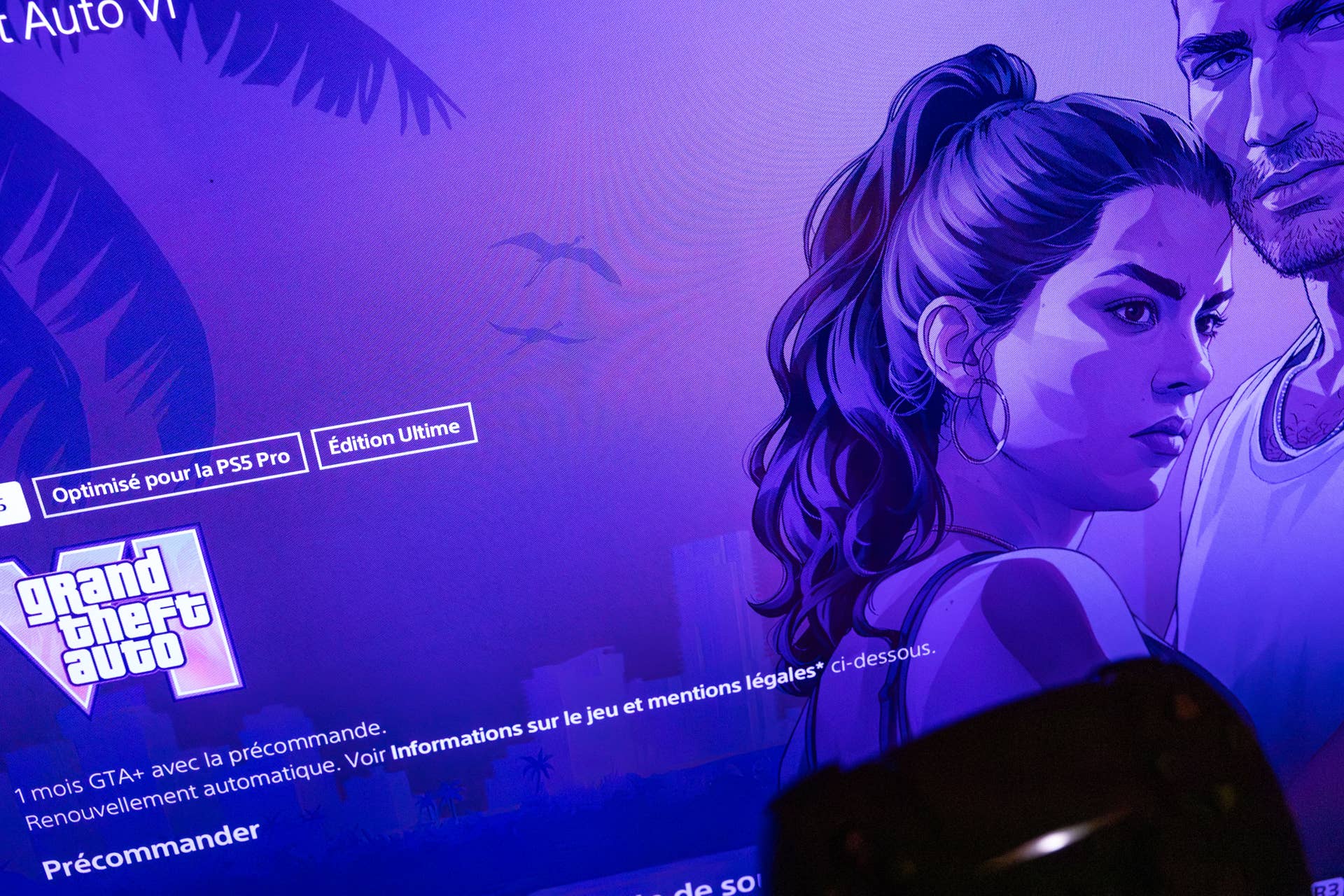
Take-Two’s takedown power stops where the fakes begin
A copyright notice requires a copyright. Take-Two can strip a stolen clip from a real build off X or Reddit within hours because the company owns that build.
An artificial intelligence (AI) video of a Vice City street that does not exist in Grand Theft Auto VI is not Take-Two property. It is someone else’s fabrication wearing Rockstar’s brand, and the standard legal remedy does not cleanly apply.
More Gaming:
- Morgan Stanley sends clear message on Take-Two stock ahead of GTA VI
- Online gaming company files Chapter 15 after $719M verdict
- Take-Two CEO says GTA VI could lift the entire gaming industry
That gap has produced an odd side effect. Whether a clip survives has become the fan community’s most reliable authentication test.
Real leaked footage vanishes fast. Fakes stay up.
Rockstar has said nothing publicly about the leaks. It has not needed to. The takedown filings did the confirming, which is exactly the dynamic that leaves everything still online looking suspiciously legitimate.
The volume is the harder half. A search for leaks now surfaces AI slop about as often as genuine material, Kotaku reported, noting that some of it looks “pretty convincing at a quick glance.”
AI fake leaks are now the cheapest attention trade online
None of this began in August. It has been building since the first trailer landed in December 2023.
A fan account that had spent months posting AI images engineered to resemble leaked screenshots issued a public apology on April 24 after receiving a cease-and-desist letter from Take-Two, according to GTA BOOM.
Related: Take-Two’s real GTA 6 jackpot may not be the game itself
The economics explain the persistence. A convincing fake costs a few cents and a prompt, and it competes for the same attention as footage that took a decade and hundreds of millions of dollars to produce.
Platforms also have little reason to intervene. A fabricated clip infringes no copyright, names no real person and defames nobody, which puts it outside nearly every automated category that actually triggers a removal.
Here is how the past three weeks actually unfolded.
- Aug. 18: CyberLeek publishes the first gameplay clips and alleged Leonida map images, according to GameSpot.
- Aug. 19: A malicious gta6_installer.exe sample appears one day later, according to Malwarebytes.
- Aug. 20: Take-Two files two DMCA subpoenas seeking device identifiers and login records, according to Tom’s Hardware.
- Aug. 25: Leaked footage reaches roughly 17 minutes in total, according to Cyber Magazine.
- Aug. 27: Rockstar premieres a 27-minute extended look on Netflix (NFLX), according to Variety.
Rockstar’s answer was to flood the zone with the real thing. The showcase was “captured entirely from in-game footage on PlayStation 5,” the company said on its Newswire.
What the fake leak wave costs Take-Two shareholders
When I lined the leak timeline up against Take-Two’s own investor filings, the mismatch was hard to miss. The company is running a precision marketing calendar into a channel it no longer controls.
Take-Two posted net bookings of $1.39 billion in the quarter ended June 30, with recurrent consumer spending accounting for 84% of that total, according to its fiscal first-quarter results.
Management reiterated fiscal 2027 net bookings guidance of $8 billion to $8.2 billion, roughly 20% growth, in the same filing.
Nearly all of that growth assumes one game lands on one date at $79.99.
Grand Theft Auto V has sold more than 230 million units worldwide, the company told analysts. That install base is the audience every counterfeit screenshot is competing to reach.
My analysis says the fake-leak flood is not a revenue event. It is a trust event, and trust is what a record pre-order book is priced on.
Every fabricated clip promising a feature that will not ship builds an expectation Rockstar never set. Those expectations arrive as refund requests and one-star reviews in the week the company can least afford them.
There is a second cost, and it lands on readers rather than shareholders. A malicious installer disguised as a GTA 6 build surfaced on Aug. 19, one day after the first genuine material began spreading, according to Malwarebytes.
If you go looking for leaked footage between now and November, the likeliest outcome is not spoilers. It is an infostealer.
Why the noise only gets louder before Nov. 19
Grand Theft Auto VI is scheduled for Nov. 19 on PlayStation 5 and Xbox Series X and S. Prediction market traders have put the odds of another delay in the low teens, according to Polymarket, though that number moves.
The marketing calendar from here is dense. More screenshots, more previews, a likely review embargo in late October or early November.
Each of those releases hands the fake-leak economy fresh raw material to work from. Official screenshots are exactly what an image model needs to produce a convincing counterfeit of the next one.
That is the trap. Rockstar cannot go quiet, because silence is what let the fakes fill the vacuum in August. It also cannot go loud without feeding them.
The Netflix partnership shows the company knows it. Putting the showcase behind a platform with verified distribution was a way to make one piece of footage unambiguously real.
The practical takeaway is smaller and more useful than the legal fight. Treat anything labeled a leak as fabricated until a takedown notice proves otherwise, and never install a file promising early access.
Take-Two will win the CyberLeek case or it will not. Either way, the counterfeits stay up, because there is nothing to sue. The company spent 13 years controlling a story it will now have to share with anyone holding a prompt window.
Related: As GTA VI pre-orders break records, investors still need one answer