Your wallet and your portfolio kick off this week quivering on the cusp of anticipation for the newest round of inflation data that’s coming in just days.
It could trigger an interest-rate hike by the Federal Reserve next week that will pinch households, investors, and businesses, just as the nation heads into a bitter midterm election driven by affordability pressures.
The Sept. 4 blowout jobs report demonstrates the U.S. labor market is plowing through the economic uncertainty and financial jitters from the Iran War despite higher gas and other energy prices.
But the persistently high inflation of the last five years is shadowing the Fed, which Chairman Kevin Warsh says is now focused squarely on the other side of its dual mandate: price stability.
And thus squeezes the central bank into deciding whether to hike benchmark interest rates Sept. 15-16 and raise the cost of short-term borrowing on credit cards, student loans and home-equity loans.
Higher interest rates also increase the yield on fixed income and alter how equity markets value future corporate earnings.
The current inflationary environment is challenging the effectiveness of Fed policy, according to Rob Conzo, CEO and Managing Director at The Wealth Alliance.
“The Fed must determine whether higher energy prices will remain isolated or spread through the broader economy,’’ Conzo told TheStreet in an email. “Tightening policy too aggressively could weaken growth and employment. Moving too cautiously risks inflation expectations to become embedded.”
Fed interest-rate hike risk tied to new inflation data
Fed officials are divided over how the central bank should act in the short term but agree that new evidence of sticky price pressures could shift the Federal Open Market Committee into a rate hike next week.
The Bureau of Labor Statistics will release August data for the Producer Price Index on Sept. 10 and the Consumer Price Index on Sept. 11.
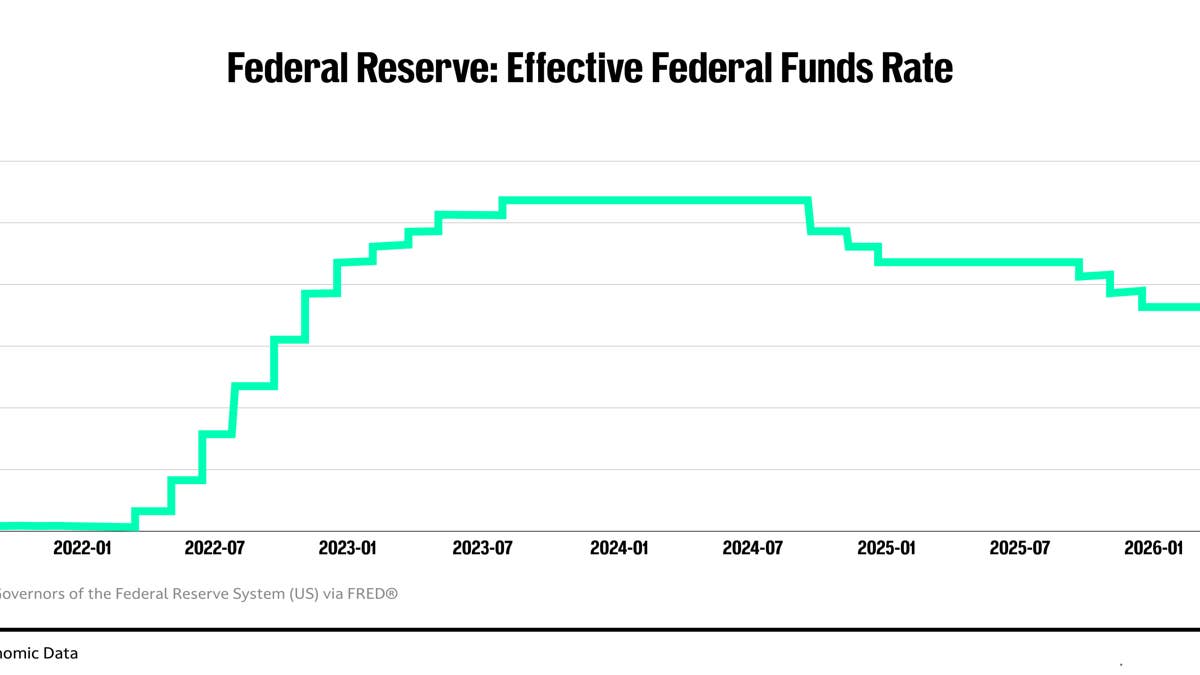
Cool PPI and CPI headlines could keep the Federal Funds Rate on hold at 3.50%-3.75%.
The fact that the August jobs figures show strong wage growth is missing from the economy suggests today’s inflation is not primarily a labor story, Conzo said.
Plus inflation driven by supply-side forces “cannot be directly controlled by Fed monetary policy,’’ he added.
“Therefore, policymakers may have to tolerate some inflation volatility while focusing on preventing second-round effects from taking hold,’’ such as wage catch-up demands and business pass-through costs, Conzo said.
The typical broad-based pay increases that occur in the usual wage-price spiral have not taken hold, Conzo said.
“In many cases, wages have reacted to higher prices rather than driving the higher prices,’’ Conzo said.
Warsh’s Fed is divided on interest-rate hike risk
Warsh displayed a noticeable hawkish shift during an Aug. 28 speech in which he pledged the central bank would work to tame elevated inflation: “We have work to do.”
That commitment reset market expectations in the CME Group FedWatch Tool for a 25 basis-point hike probability to nearly 60% this month.
But Fed officials are divided on the interest-rate hike path.
Federal Reserve Governor Christopher Waller said on Sept. 3 that he is tilting toward holding rates steady next week if the new inflation data shows price pressures are continuing to moderate.
“If there is continued progress toward our 2% goal, then I am willing to support holding the policy rate at its current level,” Waller said.
But he added that the upcoming August CPI and PPI figures could shift his support to a rate hike this month.
New York Fed President John Williams called the most recent inflation numbers “encouraging,” adding that they definitely showed that price pressures are slowing.
“If inflation comes in hot, I would consider a rate hike,” he said, adding that the biggest drivers of inflation are still tariffs and higher energy prices from the Iran War.
Federal Reserve Bank of Cleveland President Beth Hammack, one of three FOMC dissenting members to vote for a 25-basis-point hike in July, said in a Sept. 4 LinkedIn post that it’s time for a rate hike to cool inflation.
“Right now, what I’m hearing is that it’s time to act,” Hammack said, adding that both data and anecdotes from her district are telling her that current monetary policy is not sufficient.
Warsh focuses on inflation side of the Fed’s mandate
The Fed’s dual mandate from Congress requires maximum employment and stable prices.
- Lower interest rates support hiring but can fuel inflation. This risks fueling further inflation, potentially leading to an inflationary spiral.
- Higher rates cool prices but can weaken the job market. This increases the cost of borrowing and further stifles economic activity.
U.S. job growth surged in August and the unemployment rate held steady at 4.1%, topping all estimates and hinting that the labor market has more momentum than previously thought.
August jobs report could lead to interest-rate hike: analyst
Stephen Evans, Chief Investment Officer at Pave Finance, said in an email to TheStreet that the August jobs report also contained signs of inflationary pressure, with average hourly earnings rising alongside average workweek hours.
“This may point to tighter labor supply and, if employers are struggling to find suitable workers, they may have to pay more and ask existing staff to work longer hours. Wage inflation can be particularly persistent because higher pay is difficult to reverse once given,’’ Evans said.
Related: Investors drop two-word verdict on Warsh’s Fed rate shift
The Phillips curve trade-off between low unemployment and inflation holds true here, he said.
“At around 4% unemployment, we may be approaching the point where a tight labor market starts to generate more persistent wage and price pressures,’’ he said. “This, in turn, could make it harder for the Fed to cut rates, and even lead to rate hikes if the trend progresses.”
How Fed monetary policy affects you
As I reported, the rate-setting FOMC voted 9-3 last month to hold its benchmark Federal Funds Rate target in a range of 3.5% to 3.75%. The three dissenters wanted to raise rates by 25 basis points because of inflation concerns.
Policymakers had cut rates by 25 basis points at its last three meetings of 2025 to shore up the softening labor market.
These “insurance” cuts stopped after the majority of policymakers decided the risk from higher prices was outweighing signs that the jobs market was stabilizing.
The funds rate is the interest rate at which banks lend balances at the Federal Reserve to other banks overnight.
A change in the funds rate triggers moves in short-term borrowing costs ranging from credit cards to student loans and home equity loans.
Related: Veteran analyst predicts Fed rate hike after Warsh’s hawkish shift