If your 401(k) holds a Nasdaq-100 index fund, you may already own shares in the biggest wealth fight playing out in Washington.
Elon Musk’s fortune sits at about $908 billion as of early September 2026, according to Forbes.
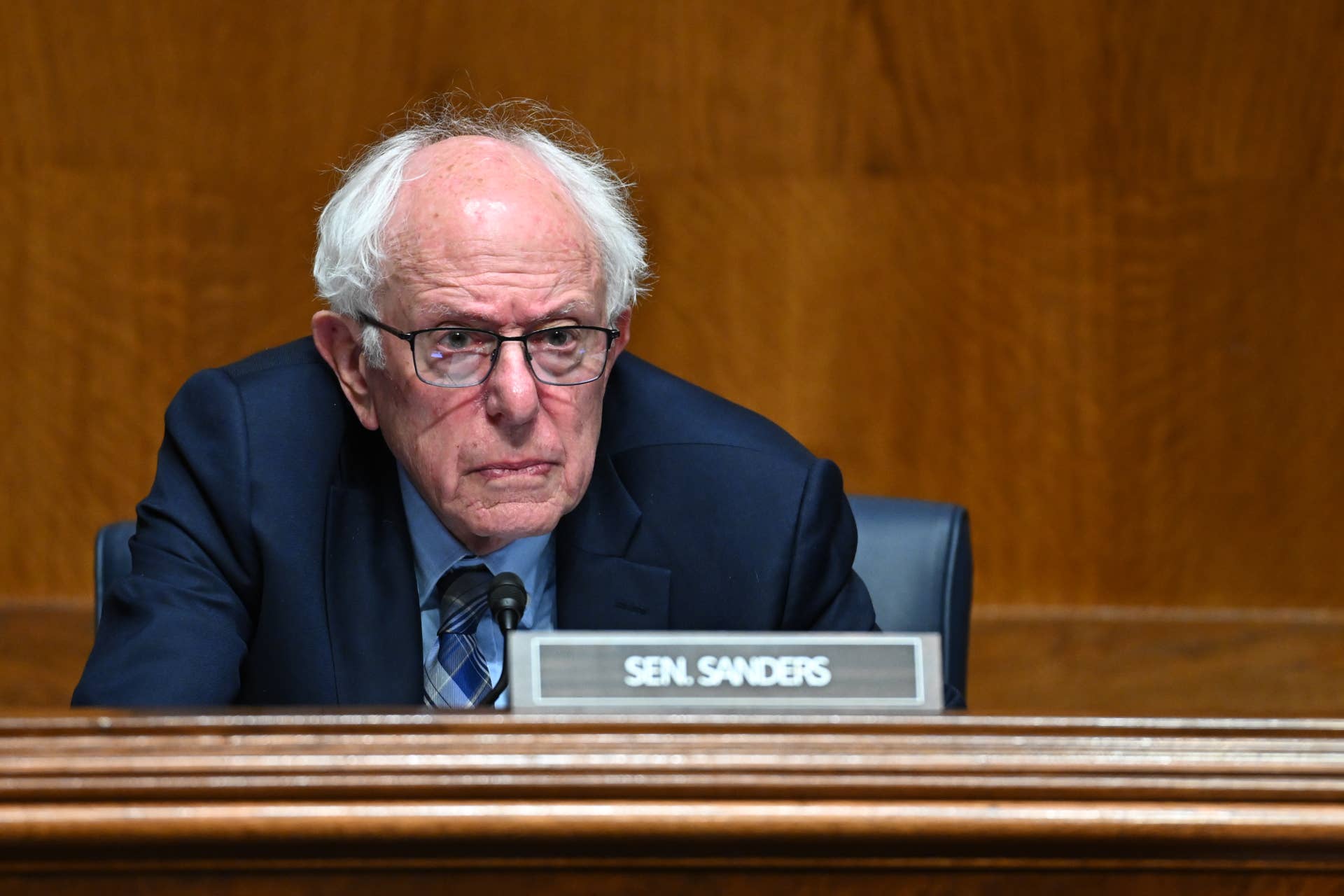
Senator Bernie Sanders wants to tax stock wealth at that scale through a proposed $7 trillion federal AI trust fund.
Musk fired back, saying his money is paper, not cash. Sanders argues that fortunes built on rising stock values should contribute more to the public.
For investors, however, the debate is about more than taxes on billionaires. Musk’s companies are increasingly embedded in the same index funds Americans use to save for retirement.
Musk says $908 billion is stock, not a cash pile
In a September 5 post on X, Musk wrote: “I have stock in SpaceX and Tesla, not some big pile of cash,” responding to Sanders’ comparison of his fortune to the wealth of the bottom half of U.S. households.
Sanders had argued that Musk owns more wealth than the bottom half of American households combined.
More SpaceX:
- Morgan Stanley says SpaceX investors miss the bigger story
- Peter Schiff says SpaceX is a warning for hyped stocks
- SpaceX stock defies latest Wall Street forecasts
The distinction carries real weight. The overwhelming majority of Musk’s net worth sits in his stakes of about 42% of SpaceX and 20% of Tesla, according to Forbes and Bloomberg tallies.
His SpaceX stake remains under a 366-day post-IPO lockup, and his Tesla holdings sit at the level he has voted-share control over, meaning neither position has been converted to cash.
His fortune peaked near $1.45 trillion when SpaceX debuted on the Nasdaq in June, then dropped below $700 billion by July before rebounding through August.
Musk added a second layer to his argument on X, writing that his shares’ value increases “proportionate to their projected usefulness,” which he framed as a benefit to every holder, including pension and retirement funds owning the same stock.
Sanders’ $7 trillion AI fund targets stock, not income
Sanders introduced the American A.I. Sovereign Wealth Fund Act in June 2026, Forbes reported.
The bill proposes a one-time 50% tax, paid in stock, on companies earning more than $200 million annually in AI-related revenue. Sanders estimated the resulting trust could start at roughly $7 trillion.
A new federal commission would manage the fund. Sanders proposed directing 5% of its value each year toward direct payments to Americans, alongside health care and housing spending.
The bill targets equity, not earnings. SpaceX and Tesla make up the bulk of Musk’s fortune, so any forced stock transfer would directly affect both share prices.
James Broughel, an economist and Forbes contributor, warned that a 50% equity claim could discourage capital investment in AI firms that remain unprofitable.
He also flagged a valuation problem, noting that taxpayers could end up buying into these companies at prices that outpace their fundamentals.
Bridgewater Associates founder Ray Dalio raised a related concern months before Sanders introduced his bill. In a November 2025 post on X, Dalio argued that wealth taxes would “trigger a forced selling of private and public equity, depressing valuations.”
His warning was directed at broader wealth-tax proposals, not at the Sanders bill specifically, but the mechanism he described applies wherever wealth is concentrated in a single stock.
SpaceX already sits inside millions of retirement accounts
SpaceX went public on June 12, 2026, at $135 per share. The offering closed on June 15 at approximately $85.7 billion in gross proceeds after underwriters fully exercised their overallotment option, making it the largest IPO in history.
SpaceX’s July 7 addition to the Nasdaq-100 triggered automatic buying across every fund tracking the benchmark, including Invesco’s QQQ, QQQM, and target-date retirement funds with Nasdaq-100 sleeves.
TD Securities projects that SpaceX’s weight in the Nasdaq-100 could rise from about 1% to above 3.5% at the September 2026 quarterly rebalance.
The S&P 500 has not added SpaceX because the company does not meet the index’s profitability and public float requirements.
A 401(k) holding only S&P 500 index funds carries no direct SpaceX exposure, which makes the gap between the two benchmarks meaningful for retirement savers.
Valuation and key-person risks compound the passive exposure
Nicolas Owens, an equity analyst at Morningstar, assigns SpaceX a fair value estimate of $62, well below its recent trading range around $148.
SpaceX posted $18.7 billion in revenue in 2025, alongside a net loss of $4.9 billion, with losses widening in the first quarter of 2026.
Tesla demonstrated similar sensitivity in early 2025. Shares fell roughly 50% from their mid-December 2024 peak to their April 2025 lows after Musk shifted his attention to leading the Department of Government Efficiency, CNN reported.
Tim Quigley, a professor of strategic leadership and governance at the International Institute for Management Development, told CNN that investors are not adequately accounting for how dependent both companies are on a single founder.
<strong>I think the market is probably underpricing the risk,</strong>
Musk has argued that rising share prices lift all holders, including retirement savers, BeInCrypto reported. The same index mechanics that deliver those gains also transmit losses when either stock reprices.
The one detail that determines your 401(k)’s SpaceX exposure
SpaceX does not appear by name in most target-date or index fund descriptions. The only way for plan participants to confirm the exposure is through their fund’s holdings report.
That gap is where the Musk-Sanders fight lands for retirement savers, the same one Nasdaq-100 buying compresses each rebalance cycle.
Morningstar’s $62 fair value estimate suggests that weight is building at a price the company’s financials have not yet supported.
The Musk-Sanders wealth fight will keep playing out in Congress and on social media. For the millions of 401(k) holders already exposed, the actionable step does not require waiting on Washington.
Morningstar’s analysis points to one check: the benchmark a fund tracks determines whether it holds SpaceX, and that is where any repricing of Musk’s wealth lands first.
Related: Elon Musk sends a strong message to Tesla and SpaceX investors