You know things are getting out of control in the global oil markets when U.S. officials start talking about curbing diesel exports and Costco Wholesale limits how much motor oil you can buy.
But that’s what’s happening as crude oil prices hit their highest levels since mid-May on Sept. 15 and show few signs of falling back any time soon.
In fact, higher prices may come as early as Sept. 16, Tom Kloza, chief energy advisor at Gulf Oil, told TheStreet in an interview. Look for big increases in the Great Lakes and Rocky Mountain, he said.
Brent crude, the global benchmark, closed at $108.75 per 42-gallon barrel, up 2.9% on the day. Light sweet crude settled at $105.83 a barrel, up $4.44 or 4.4%, in New York.
It was, as Kloza put it, “an epic day.”
Related: From gas pumps to bond markets: stocks are getting squeezed
The effects of all this on consumers and customers? Bad and worse. The U.S. national average price of gasoline was at $4.3289 a gallon, according to AAA Fuels, up 0.3% on the day, and 4.6% in the last seven days. GasBuddy.com put its U.S. price at $4.323 a gallon, up about a penny from Monday and 5.6% from a week ago.
Gasoline prices are up about 51% on the year, according to both sites.
Normally, oil prices are coming down when the summer driving season ends and autumn starts. Futures prices say prices won’t fall back until November or December.
Fighting in the Middle East keeps getting worse
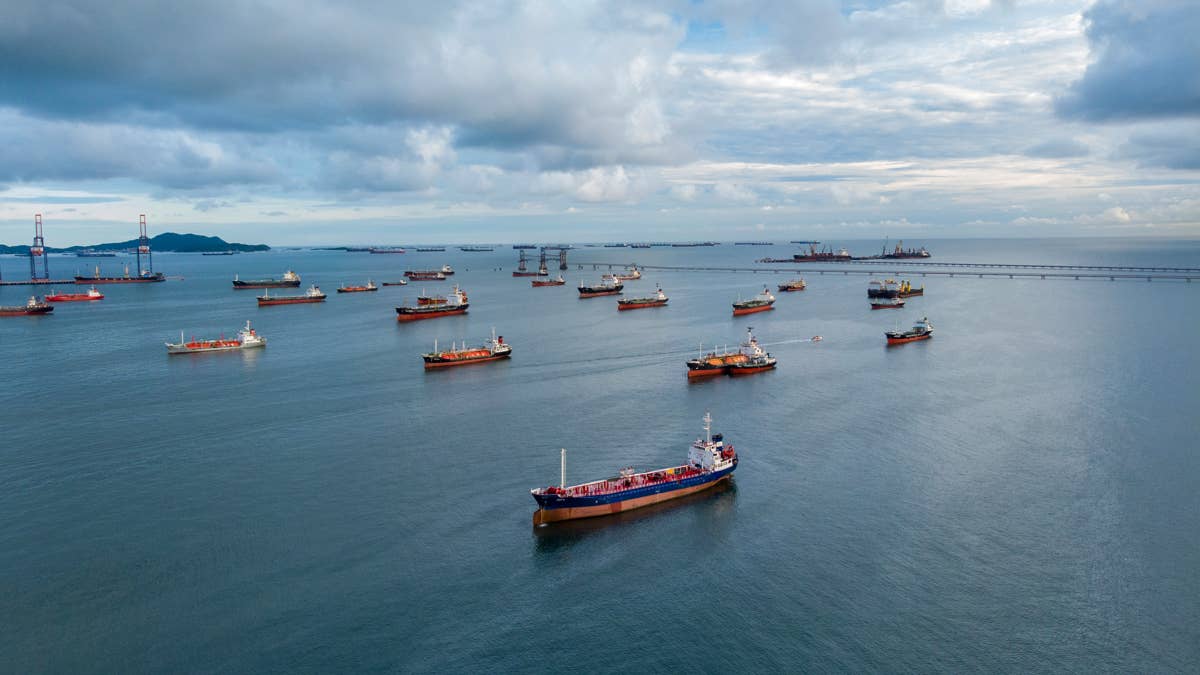
The culprit is that the fighting in the Middle East is becoming increasingly more complicated. Saudi Arabia is increasingly unable to ship oil, despite its huge reserves. Iran has pinned down tanker traffic in the Strait of Hormuz.
Now, missile attacks from Iranian allies in Iraq have damaged Saudi Arabia’s East-West Pipeline, which links oil fields on the Persian Gulf to the Red Sea of Yanbu. The Saudis have depended on the 700-mile pipeline to meet customer demands, but there are reports they’re cancelling some loadings of tankers.
It’s not clear how long repairs to the pipeline will take. It has a capacity of 7 millions barrels of crude oil per day. OilPrice.com said repairs could take several weeks. U.S. Energy Secretary Chris Wright told CNBC the repairs might take only days.
Diesel prices hit a record level
Diesel is the biggest concern, hitting a record $6.27 a gallon nationally on Sept. 15, up 76% on the year. It’s worse in California, where AAA data showed the price at $8.124.
So, while a 150-gallon fill-up in Ohio might cost $918, the cost jumps to $1,219 in California.
Diesel is a key to making the U.S. economy work, with railroads, truckers and farmers depending on it.
More oil
- Drivers lose control over gas price squeeze
- Risk of a market breakdown is building as oil pressure continues
- Goldman Sachs doubles down on oil price forecast for 2026
Even Costco is affected
Meanwhile, Costco (COST) has started limiting purchases of some motor oils after sharply raising the price of its Kirkland Signature synthetic product. The issue is supply shortages are pushing costs higher through the supply chain.
The price of a 5-quart, two-bottle case of its synthetic motor oil now costs $57.99, up from an average in the mid-$30 range Costco has maintained for years, according to The Auto Wire, an automotive web site. And the Costco website says it is limiting purchases to two packages every seven days.
The turmoil in the Middle East has provoked talk — and only talk — that a ban on diesel exports from the United States might be coming. Theoretically, an export ban would trim prices. Senate Majority Leader John Thune, R-South Dakota, told reporters he’s open to the idea.
The Trump Administration has not weighed in directly. Interior Secretary Doug Burgum said on Sept. 14 that an export ban on crude oil or fuels would be unlikely to help lower retail energy prices.
But Jarrod Agen, executive director of the administration’s National Energy Dominance Council, said at the G20 meeting in Houston the public would soon be hearing about energy deals to help bring down energy prices.
Stocks weighed down by energy concerns
Stocks fell for a second day in a row.
The Standard & Poor’s 500 Index fell for a second day in a row and seventh decline in the first 10 trading days of September.
The 10-year Treasury closed above 5% for the first time since July 2007. The yield briefly breached the 5% level on October 2023 and on Sept. 14.
Related: Why Bessent’s Iran strategy looks like a work in progress