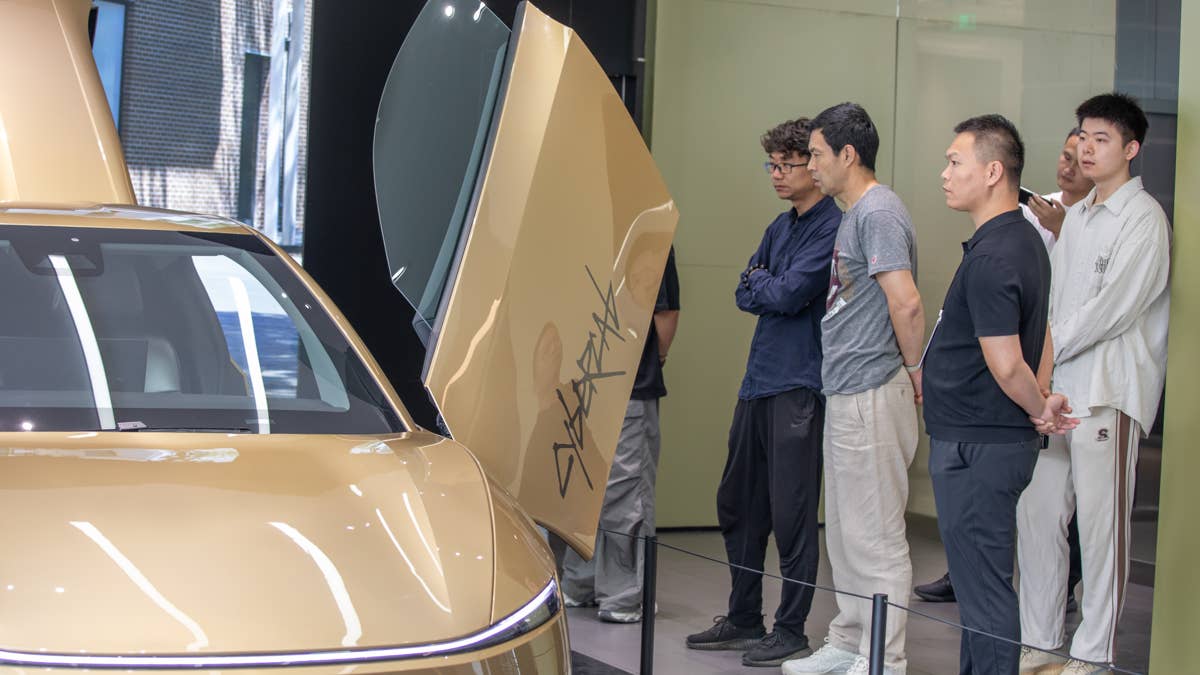
Whether you are a fan of Tesla, autonomous driving or just enjoy the latest cutting edge technology, the Cybercab has been one of the most highly anticipated launches in a while.
Two years after the company first publicly debuted the concept during a made-by-Hollywood launch event, this month the electric vehicle maker finally started offering rides in its steering wheel-less, acceleration- and brake pedal-less vehicle.
Tesla launched the service in Austin, which has become the company’s headquarters and initial testing ground for the Robotaxi as well as the Cybercab, on Sept. 3 in a low-key 15-minute presentation where CEO Elon Musk did not speak.
That type of muted launch is out of character for the company which normally utilizes the social media platform Musk also owns to hype its latest breakthroughs and planned breakthroughs well before they come to fruition.
But while word of mouth will do plenty of PR for the company, there is one hitch in the Cybercab rollout that even the staunchest supporters didn’t see coming.
Cybercab has age restrictions at launch
If you are a teen looking for a ride in autonomous vehicle, Cybercab isn’t for you unless you are accompanied by an adult.
At launch, Tesla stipulated that teens aged between 13 and 17 can ride in the vehicle only if an adult accompanies them for the entire trip. Children under 13 aren’t allowed in the vehicle at all.
This comes as a surprise because the restrictions for its Model Y Robotaxis is different. Children aged between 8 and 17 can ride in the Robotaxi with an adult, and those younger than 8 are restricted.
Related: Goldman Sachs sends stark message to Tesla investors
Tesla has not explained the difference in restrictions, but the vehicle’s design might explain some of the rationale.
The Cybercab does not have a LATCH or ISOFIX child-restraint system. If a rider needs a booster seat, Tesla says the passenger must use a seat belt to secure it, Fox News reported.
Younger riders may need a booster to use the seat belts safely, but there are no LATCH anchors to attach one to.
NHTSA is investigating Cybercab shortly after launch
The National Highway Traffic Safety Administration has been busy with Tesla this year, and shortly after the Cybercab launch the NHTSA was there to start asking questions.
On Tuesday, Sept. 15, the NHTSA ordered Tesla to answer 21 detailed questions about the Cybercab, and even gave them a Sept. 30 deadline to explain how it self-certified the Cybercab as compliant with federal safety standards.
Should Tesla fail to respond by that deadline, it risks civil penalties of up to $139.35 million and criminal penalties of up to 15 years in prison, or both, the NHTSA said.
The NHTSA is seeking answers about everything from scaling plans to vehicle details to safety standards to temporary human controls to the mirrors on the vehicle, according to a list of the questions published by social media Tesla booster Sawyer Merritt.
The agency also asked about whether the vehicle’s touchscreen controls let occupants move the vehicle should an emergency occur.
Cybercab rollout has already had some hiccups
While Tesla fans have been posting videos of themselves riding shotgun in the two-seater, their enthusiasm masks some serious issues the platform has already run into.
Benzinga recently told the story of a Cybercab rider whose spent 70 minutes in the vehicle during a trip that should have taken no more than 15 minutes via highway after the vehicle chose to take side streets instead.
Meanwhile. institutional investors like Gary Black have been underwhelmed by the product’s launch.
¨The launch offered little detail and key questions remained unanswered following the event, including how many vehicles the company plans to deploy,¨Black tweeted recently citing a Bloomberg report. ¨The Cybercab’s launch also raises regulatory issues, including uncertainty associated with the vehicle’s lack of traditional driver compliance with federal safety standards.¨
Stakes for Tesla ‘could not be higher’ says BNP Paribas analysts
Earlier this year, Elon Musk announced that Tesla was increasing its capital expenditure this year to an eye-watering $25 billion as the company looks to solve autonomy and build the infrastructure needed to manufacture 1 million Optimus robots annually.
“Given Tesla’s sizable cash burn this year ($7 billion estimate by BNPP) and indications for massive multi-year investments on the horizon tied to a TeraFab and 100 GW solar capacity, the ‘stakes’ of TSLA’s demonstrated robotaxi and Optimus progress could not be higher,” analysts said in a recent note.
“A critical factor to this year is the Co.’s progress rate in its active Robotaxi fleet, which is climbing yet still limited to just two cities. The core catalysts for TSLA center on its ability to show meaningful progress toward its AI-defined future, inclusive of Robotaxi fleet expansion (targeting 7 new cities in 1H26) and commercialized production of Optimus by year-end.”
Related: Elon Musk sends strong message to SpaceX and Tesla investors