Gold is the asset people buy when they have stopped believing in promises. Then most of them hand it to a bank in another country for safekeeping, which is itself a promise.
That arrangement is older than most of the world’s central banks. The Bank of England has provided gold custody services to developing nations for decades, according to Reuters, and it usually works for the simple reason that nobody involved has any incentive to argue about it.
Custody is boring. It stays boring right up until two governments claim the same account.
Then the metal in the vault ceases to be a reserve asset and becomes a legal exhibit. It does not move, and it does not get sold.
It sits in a basement in London, earning nothing and settling nothing, while lawyers on two continents argue over whose signature counts on the paperwork.
That is exactly what happened to 31 metric tons of Venezuelan bullion, and after seven years, the standoff is nearing an end.
Venezuela’s government and its opposition are near an agreement to move the central bank’s gold, worth about $4 billion, from the Bank of England to the Federal Reserve Bank of New York, the Financial Times reported on Friday, Sept. 18.
Reuters said it could not immediately verify the report, which cited four people familiar with the discussions.
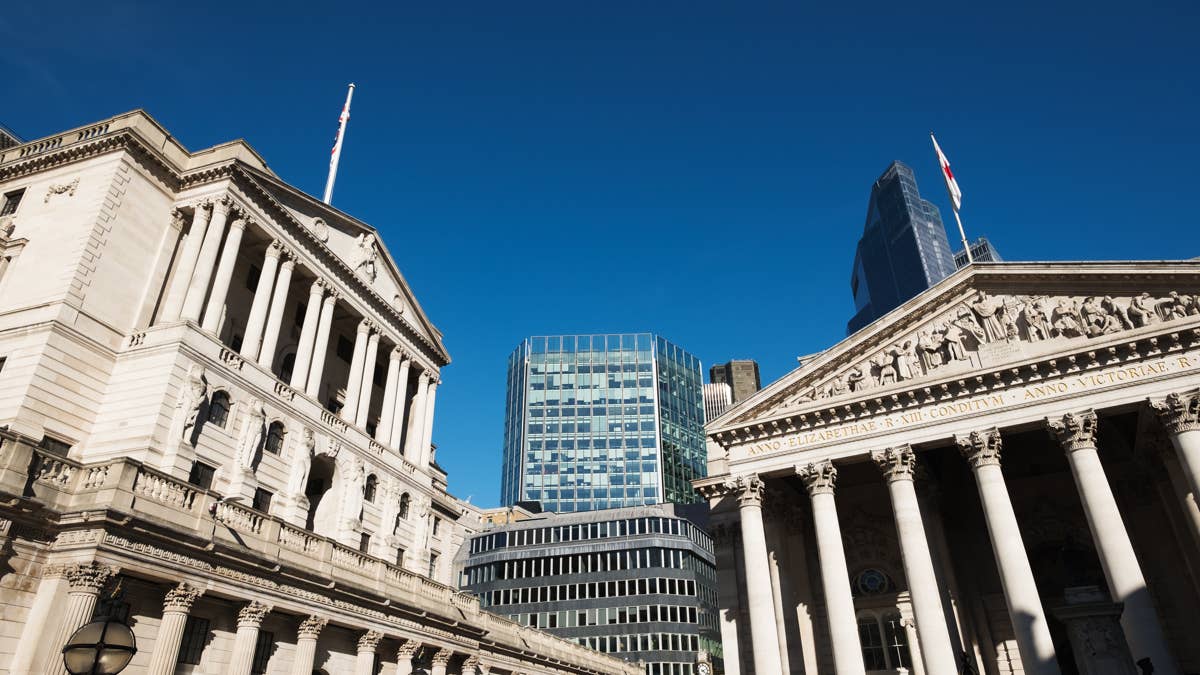
Why the Bank of England stopped moving Venezuela’s gold
The freeze started with a shipment request. Venezuela asked for part of its bullion back in 2018, and the Bank of England has withheld the roughly 31 metric tons it holds ever since, citing its non-recognition of the legitimacy of then-President Nicolas Maduro’s government, according to Reuters.
More Gold & Silver:
- Gold IRA vs. Gold ETF: Which is better for retirement?
- Deutsche Bank just made a fresh case for buying gold
- Gold, silver rally off ugly crash, but investors remain on edge
Britain recognized opposition leader Juan Guaido in February 2019. Two rival boards of Venezuela’s central bank then spent years sending the Bank of England conflicting instructions about the same bars.
The fight reached Britain’s highest court in December 2021. British courts were bound to accept that the government does not recognize Maduro as president “for any purpose,” the Supreme Court said in a press release, according to Al Jazeera.
That ruling handed the gold to nobody. It pushed the remaining questions back down to the Commercial Court, and the bars stayed put.
What the proposed gold transfer would actually change
The deal now on the table does not set the gold free. It changes the metal’s address and its job.
Under the terms being discussed, the interim government of Delcy Rodriguez would gain legal control of the holdings but would not be able to sell them immediately, according to Reuters. The reserves could instead be pledged as collateral for government borrowing, including money for reconstruction after June’s twin earthquakes.
The Bank of England is not moving anything on the strength of a newspaper report. It “is not in a position to act until there is a further order from the UK Court on who has legal authority over the account,” the bank said in response to a Reuters query.
Related: Gold bulls just found a smarter way to bet on the rally
The British Foreign Office kept its distance, too. The government is “not a party in the legal case to determine who should have control of Venezuelan gold,” a spokesperson said, according to Reuters.
Washington’s appetite for Venezuelan metal is not hypothetical. “We are getting a lot from Venezuela. We are getting gold,” Treasury Secretary Scott Bessent said in July, as TheStreet reported.
HOW THE STANDOFF GOT HERE
- 2018: The Bank of England begins withholding 31 metric tons after Venezuela asks for its bullion back, according to Reuters.
- December 2021: Britain’s Supreme Court rules that UK courts must accept the government’s non-recognition of Maduro, according to Al Jazeera.
- January 2026: Maduro is captured in a U.S. raid, as TheStreet reported at the time.
- Sept. 18, 2026: The Financial Times reports the two sides are close to a transfer deal, according to Reuters.
What 31 tons of gold is worth to a broken economy
I ran the math myself rather than trust the round number. Thirty-one metric tons comes to roughly 996,700 troy ounces, and at Sept. 18’s spot price near $4,385 an ounce, that is about $4.37 billion, according to Trading Economics.
Spread across Venezuela’s population, the hoard amounts to something like $140 per person. Measured against an economy the International Monetary Fund (IMF) sizes at roughly $111 billion this year, it is close to four percent of national output, sitting in a foreign basement.
That is real money in a country where consumer prices are projected to climb 387.4% in 2026, according to the IMF.
Here is the part that stopped me during my analysis of the case record. The same bars were valued at about $1.95 billion when the dispute reached the UK Supreme Court, according to a judgment summary published by the European Association of Private International Law.
Spot gold then ran up 64% in 2025 alone, its best year since 1979, Reuters reported. Getting locked out of the vault during the strongest gold market in four decades was, in pure dollar terms, the most profitable thing that could have happened to Venezuela’s balance sheet. The lawyers did what no reserve manager would have had the nerve to do, which was nothing.
What the London standoff teaches gold investors
Gold’s whole pitch is that it does not depend on anyone else’s solvency. Seven years in a London basement exposed the fine print, because custody still depends on somebody’s politics.
Most American investors will never be caught in a recognition dispute. They do, however, own gold the way Caracas owned it, as a claim on metal sitting with a custodian bank, which is how physically backed funds such as SPDR Gold Shares (GLD) and iShares Gold Trust (IAU) are built.
That structure is sound. It is also a decision I would rather see investors make deliberately than inherit by accident.
For the gold market itself, the read is narrow. Roughly 31 tons is a rounding error against annual global demand, and the proposed deal blocks a quick sale, so this is not the setup for a supply squeeze.
The borrowing is the part worth watching. Gold that becomes collateral eventually becomes a payment stream for somebody, and the lenders circling Venezuela’s reconstruction will want terms they can enforce. A vault in New York is far easier to lend against than a vault in litigation, which is the entire reason the address matters.
Seven years of arguing produced a pile of metal worth more than twice what everyone was fighting over. The next seven will decide who gets paid out of it.
Related: The best gold IRA companies of 2026 by fees, minimums & TrustPilot ratings