GE Vernova launched as a stand-alone company in late 2021 with a $6 billion backlog. Four-and-a half-years later, that number is $176 billion and climbing.
GE Vernova CEO Scott Strazik told a Morgan Stanley conference on Sept. 16, 2026, that it will hit $200 billion very early in 2027.
I have been watching GE Vernova’s story with genuine interest because it sits at the center of the two biggest infrastructure themes of this decade.
First, we have AI power demand, and second, the global electrification buildout. When both of those tailwinds converge on the same order book, the numbers get interesting fast.
GEV is up 44.14% year to date and approximately 54% over the past year, according to Yahoo Finance, despite a 6% pullback over the past month driven by broader concerns about the AI trade.
After the CEO’s appearance at the Morgan Stanley Laguna Conference, Bernstein reaffirmed a Buy rating and $1,298 price target on GE Vernova Inc., Investing.com reported.
Also Read: GE Vernova Latest News and Stories
What GE Vernova’s $176 billion in backlog actually means
Strazik described demand as “strong and durable” in the Morgan Stanley 14th Annual Laguna Conference, and the backlog composition is a huge backup.
In the first half of 2026, new contract commitments totaled 40 gigawatts. The second half is on pace toward approximately 20 gigawatts, a figure Strazik described as potentially conservative.
But we also aren’t going to be at a 40-gigawatt run rate every six months.
Customers are putting cash commitments down on delivery slots through 2032, with pricing remaining strong for 2030 and 2031 slots that have not yet been filled.
The backlog is not just large. Why? It extends into years that most companies cannot see clearly at all.
More Energy:
- Goldman Sachs sends surprising message on oil prices
- BofA commodities expert reveals what must happen before oil prices fall
- Chevron CEO evaluates new pipeline route around the Strait of Hormuz
The services revenue story layered on top is the other part I find most attractive. Strazik said every gigawatt of heavy-duty HA gas turbine capacity generates approximately $500 million in high-margin services revenue over the first 20 years of operation.
GE Vernova has installed more than 350 new machines in gas factories over the past 18 months. Power Services revenue is projected to rise from $12 billion in 2025 to $22 billion in 2035. In fact, Strazik described even that estimate as conservative.
GE Vernova’s data center demand keeps doubling
Electrification was a central theme at Laguna, and of course, the data center numbers are must-dig variables.
GE Vernova booked more than $5 billion in data center orders in the first half of 2026 alone, compared to approximately $2 billion for all of 2025. So, we’re seeing real traction there.
All that said, data centers represented about 40% of electrification orders in H1 2026. As other parts of the business catch up in the second half, that concentration drops to approximately 20%. That’s because the rest of the grid business is accelerating alongside it.
Related: Morgan Stanley strongly resets GE Vernova stock target
Separately, GE Vernova-backed nuclear startup Blue Energy submitted the first part of its application to build a BWRX-300 small modular reactor at the Port of Victoria, Texas.
The project would combine GE Vernova 7HA.02 gas turbines with GE Vernova-Hitachi small modular reactors (SMRs) to create a 2.5-gigawatt power plant by the early 2030s. This is early-stage, yes, but it signals that GE Vernova’s power portfolio extends well beyond the current gas and wind footprint.
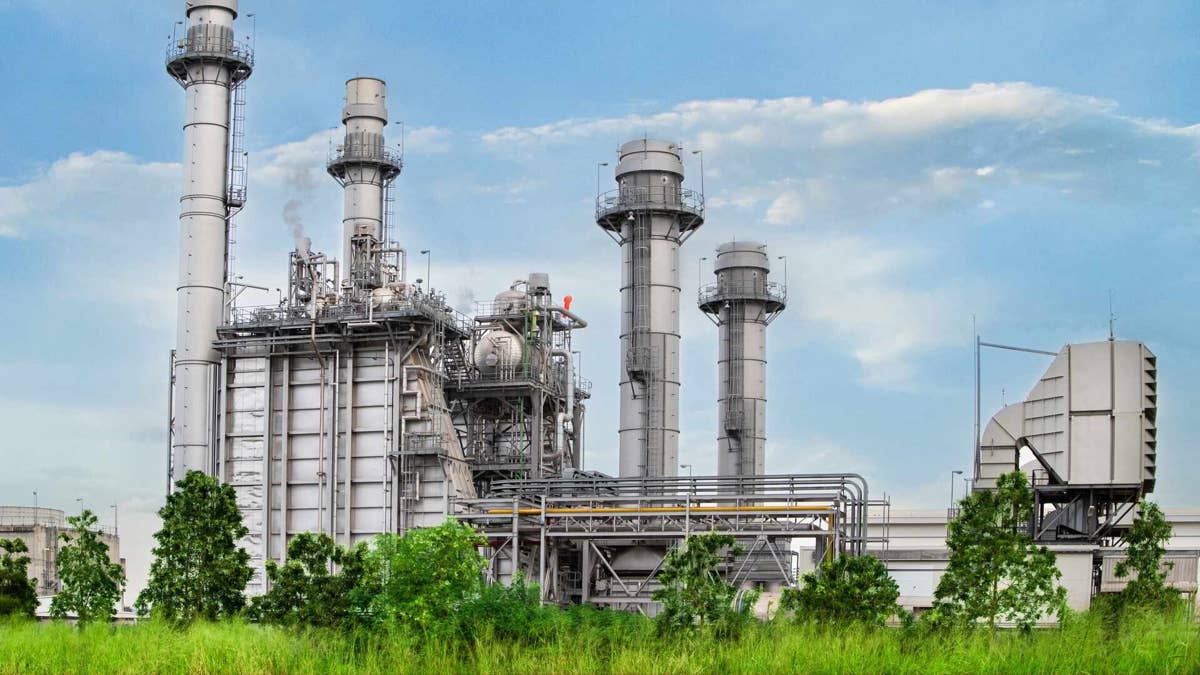
The GE Vernova factory expansion is doing something unusual
GE Vernova’s momentum is building, with the company now expecting at least 125 GW of gas equipment under contract by year-end 2026.
To meet that demand, it plans to deliver 20 GW of annual gas turbine output by the third quarter of 2026, ramping to 24 GW in 2028 and targeting 30 GW by 2030, according to GE Vernova’s Q2 fiscal 2026.
Related: GE Vernova’s AI power trade has one weak link
To make this happen, cash generation remains strong, with GE Vernova ending Q2 2026 with $13.1 billion in cash, while backlog and margins both continued to grow.
The Prolec GE transformer acquisition, closed in February 2026, is running ahead of plan, with 2028 financial performance expected to be materially better than the original October 2025 announcement suggested.
What comes next for GE Vernova
Strazik already mapped out the calendar: Q3 earnings that are expected to confirm continued growth, a January 2027 full-year 2026 results presentation with a 2027 outlook, and a Capital Markets Day in spring 2027 covering the 2030 opportunity and the decade beyond.
“The next decade,” Strazik said, is shaping up to be even better than the current one. And based on what the CEO laid out at the conference, there’s plenty of evidence behind that optimism.