Before we get into the coverage, I must admit that the SpaceX team is incredible. I’ve watched this company turn problems that once looked almost impossible into engineering milestones, one launch at a time.
Every time, SpaceX keeps finding ways to push the boundary, learn from what happens, and come back with the next iteration.
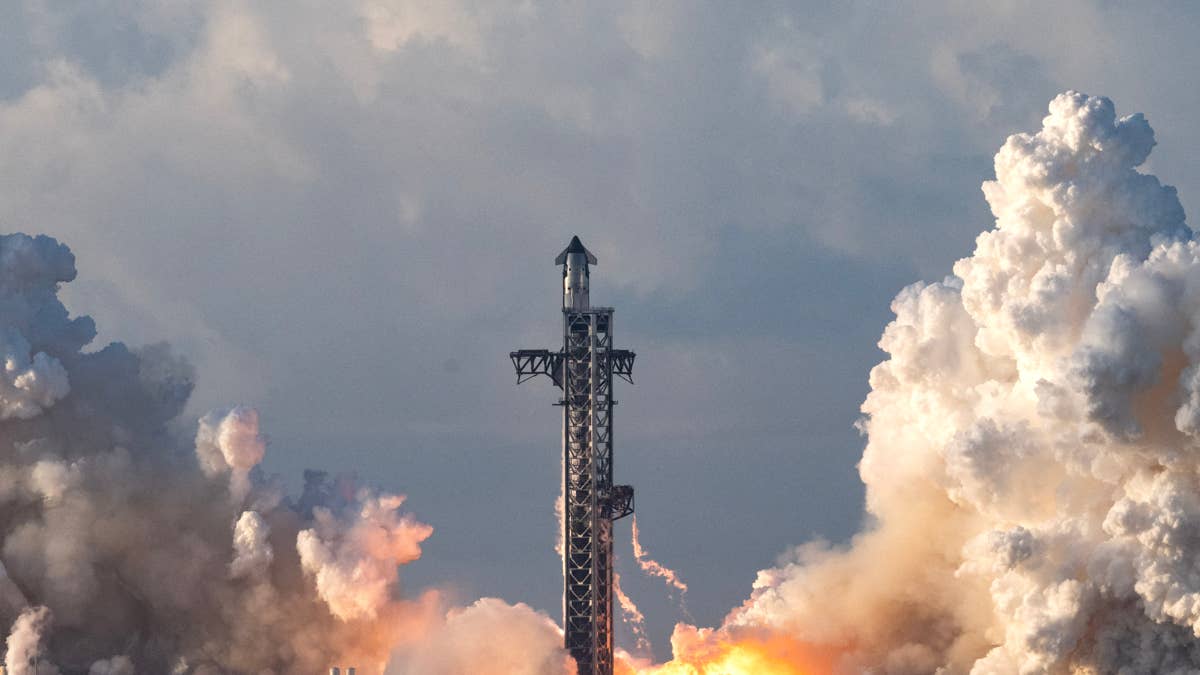
On Sept. 28, a rocket the size of a 40-story building lifted off from South Texas, flew two orbits around Earth, deployed 26 commercial satellites, and safely splashed down in the Pacific Ocean. Then it exploded, SpaceX reported.
SpaceX called Flight 14 a success. Morgan Stanley gave it a B+ in a note shared with me at TheStreet on Sept. 29.
The asterisk in both assessments is the same: V3’s propulsion system still faces engine reliability issues that must be resolved before Starship can achieve the rapid reuse at the heart of its economic thesis.
Morgan Stanley maintained its Overweight rating and $300 price target on SpaceX (SPCX) after the Sept. 28 flight review.
SPCX closed Sept. 30 at $150.86, giving a $300 target. That’s roughly 100% implied upside. But also reflecting how much execution risk the market is currently pricing in.
ALSO READ: SpaceX Latest News and Stories
What actually happened on SpaceX’s Flight 14 — seven-part scorecard
Morgan Stanley evaluated the mission across seven components, revealing a more nuanced picture than the headline alone suggests.
Launch readiness earned an ‘A+’ according to the note. The rocket lifted off cleanly at 8:46 a.m. Eastern with no delays. I genuinely can’t help but admit how rare that is for a vehicle this complex.
Liftoff and ascent earned a ‘C’. One of three Raptor Vacuum engines failed shortly after stage separation, SpaceX noted. The SpaceX team briefly considered scrubbing the rest of the mission before voting to proceed after determining the failure was isolated.
The problem: a similar Raptor Vacuum failure occurred on Flight 12 back on May 22. I don’t see two challenges on the same propulsion component across four flights as a coincidence, but rather a pattern the SpaceX team should work to overcome. And if the past is any guide, we will probably see the team working on those challenges sooner than later.
More SpaceX:
- Bank of America backs SpaceX stock that may be in your 401(k)
- SpaceX just proved why Starship matters to its $2 trillion valuation
- SpaceX top executive makes first major move since IPO
Hot-stage separation earned an ‘A+’. The clean stage split avoided a repeat of the approximately 90-degree flip that destroyed the Flight 12 booster.
The booster landing burn earned a ‘B.’ The splashdown was much improved over Flight 13’s hard impact, but two of the thirteen engines still failed to light during the final burn.
Orbital insertion earned an ‘A’. Despite the lost engine, Starship successfully burned into a 275-kilometer orbit using its engine-out capability — a meaningful demonstration of the vehicle’s redundancy design.
Starlink payload deployment earned an ‘A+’. 26 operational Starlink V3 satellites were deployed and confirmed to be communicating normally with the constellation. Each V3 satellite carries roughly ten times the downlink capacity of V2 minis, according to the note.
At 26 satellites per launch, Flight 14 did the equivalent of ten Falcon 9 Starlink missions’ worth of work — a number that reframes what Starship’s commercial value actually is right now.
Ship reentry and splashdown earned an ‘A-‘. SpaceX deorbited six hours early as a precaution due to the engine loss. The controlled descent and soft splashdown were completed successfully, followed by a post-splashdown explosion — not ideal, but the landing itself succeeded.
The propulsion issue keeps the grade from being higher
Morgan Stanley was honest, simple, and direct about what Flight 14 could not resolve.
“The current design clearly needs work before SpaceX can scale to rapid reuse,” the note states.
The recurring Raptor Vacuum failures on both Flight 12 and Flight 14 suggest a systemic issue with the V3 propulsion system that incremental improvements have not addressed.
Related: SpaceX stock starting to reward investors who stuck around
I think this matters for the investment thesis in a specific way. SpaceX’s $300 Morgan Stanley price target — built on a sum-of-the-parts framework that values Enterprise AI at $165 per share and Connectivity at $118 — depends on Starship achieving launch cadences and reusability economics that make the rest of the business model viable.
A Starship that deploys 26 satellites per flight but cannot yet be reliably caught and relaunched is doing useful work, but not yet the work that changes the cost equation for everything else.
Flight 15 and the catch that could be the biggest catalyst since the IPO
Morgan Stanley described a potential ship catch on Flight 15, expected in late October or early November, as “the stock’s most significant catalyst since the IPO.”
The ship landing uses the three gimballed sea-level Raptor engines, not the Vacuum engines that have been failing. That is important because the propulsion problems on ascent do not technically prevent a catch attempt. Whether SpaceX opts to take the risk depends on whether it believes the Vacuum engine failures are truly isolated or indicate a deeper V3 propulsion issue.
Elon Musk said in August via an X post (formerly Twitter) that a catch attempt would come “in a few months.” SpaceX has not explicitly confirmed whether Flight 15 is the target.
Morgan Stanley’s guidance to investors is that if the catch happens on Flight 15, bears lose their primary timeline argument. If it slips to Flight 16 or later, the same bears gain another round of credible questions about SpaceX’s execution cadence, according to the note.
The 26 Starlink V3 satellites deployed on Flight 14 are already earning revenue. Starship is no longer a test program. Whether SPCX at $150 reflects the right risk-adjusted value for what comes next is the open question Flight 15 will start to answer.