When Nancy Pelosi made her first-ever bet on Bloom Energy (BE) back in August, buying shares and call options in a company most Americans have never heard of, I covered it as a signal worth paying attention to.
If you don’t know what Bloom Energy does, it designs, manufactures, and sells on-site power generation systems using proprietary solid oxide fuel cell technology. The former 52nd Speaker of the House typically invests in themes she believes are inevitable.
The theme here is that the world needs more power than the grid can deliver, and it needs it faster than utilities can build. And it needs clean energy.
Bloom Energy (BE) is up 232% year-to-date and 228% over the past year, according to Yahoo Finance. The three-year return stands at 2,272%.
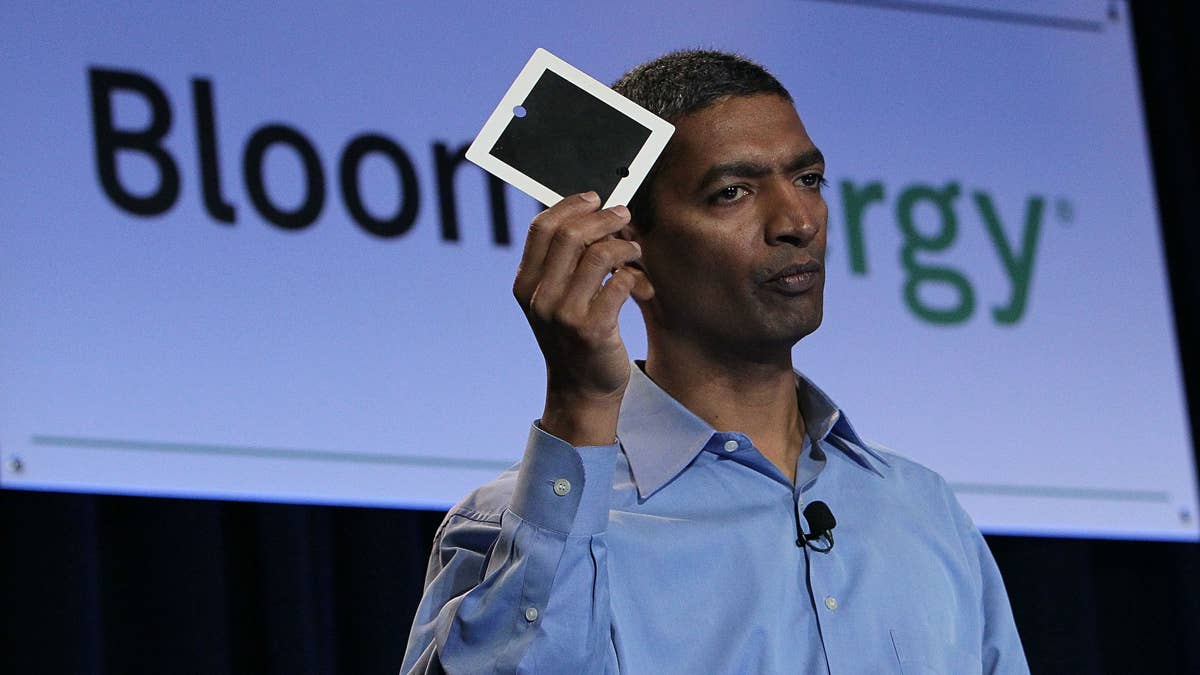
On Sept. 29, 2026, Bloom Energy CEO K.R. Sridhar rang the New York Stock Exchange opening bell, celebrating both the company’s 25th anniversary and its recent S&P 500 inclusion, the NYSE reported.
After that, Morgan Stanley hosted a management meeting in New York this week, according to a note shared with me at TheStreet. And the takeaway? The opportunities investors are most excited about are not even the full story.
Also Read: Bloom Energy Corporation Latest News
What most Bloom Energy investors are missing
Morgan Stanley mentioned three underappreciated products. The data center demand narrative is what most investors know.
Bloom’s second quarter earnings report confirmed that every major U.S. hyperscaler has validated Bloom’s fuel cells for AI infrastructure.
Related: Bloom Energy CEO delivers stark warning on America’s power demand
Full-year 2026 guidance is above $4 billion with 100% year-over-year growth at the midpoint. That part of the story is priced in, at least partially.
Morgan Stanley’s note points to three product opportunities it believes investors are underestimating, each extending Bloom’s value proposition well beyond its current power-generation business.
Bloom’s three underappreciated products
The first is carbon capture. Bloom’s fuel cells generate a highly concentrated CO2 byproduct as a direct output. That’s not a diffuse emission that requires expensive separation equipment to capture.
More Energy:
- Oil executives declared a fuel crisis, and diesel agrees
- JPMorgan doubles down on diesel as record prices test inflation
- Industrial CEO drops staggering take on AI energy
This concentrated stream can be sequestered directly, creating what Morgan Stanley describes as a “net zero solution.” We have seen community opposition to large data centers grow, and regulators increase their scrutiny of emissions.
BE’s ability to combine on-site power with on-site carbon capture could become a decisive competitive advantage. Morgan Stanley notes that Tallgrass, which is developing a Wyoming data center using Bloom fuel cells, already operates carbon capture facilities and infrastructure.
The second is 800V DC architecture. Next-generation data centers are moving toward 800V direct current power distribution, which reduces losses and increases efficiency throughout the facility.
Bloom’s fuel cells produce 800V DC. That means they eliminate the need for solid-state transformers, batteries, and conversion equipment that other power solutions require.
Bloom management quantified non-compute capital expenditure savings at $3.7 billion per gigawatt, with total savings, including operating costs, at $5.5 billion per gigawatt.
For a customer building a 1-gigawatt data center, imagine that choosing Bloom over grid power means a $5.5 billion cost reduction.
The third is combined heat and power. Bloom’s fuel cells operate at temperatures above 800 degrees Celsius, generating waste heat between 300 and 350 degrees. That excess heat can power absorption chillers for data center cooling or generate steam for industrial processes.
If you’re an industrial reshoring customer building a new factory, you’re definitely looking at both power and steam costs. Bloom can address both with a single system.
Bloom’s demand picture beyond AI and why the growth is secular
The Morgan Stanley note reinforced what CEO Sridhar said at the NYSE. The AI data center story is the headline, but the actual demand tailwind runs much deeper.
Non-data center customers are increasingly struggling to secure timely grid connections, according to the note.
Grid interconnection queues in the United States now stretch years in many regions. Any large industrial customer, whether a factory, a hospital, a university, or a logistics hub, that cannot wait for grid capacity has the same problem Bloom was built to solve.
International traction is also expanding. Japan is now a new market alongside Taiwan, Ireland, and the United Kingdom.
Manufacturing capacity is scaling from 1 gigawatt (GW) to a target of 5 gigawatts annually. Bloom is also on pace to exit 2026 with more than 2 GW of run-rate capacity, according to the note.
Bloom’s business case that funds all of this
I talked about Bloom’s numbers in my previous coverage. Bloom’s recent Q2 2026 results showed revenue of $1.065 billion, up 165.5% year over year. In fact, it was the first time in history Bloom crossed $1 billion in a quarter.
Full-year guidance was raised to $3.9-$4.2 billion. The company that was a niche clean energy story two years ago is now projecting to more than double its revenue in a single year. Interesting.
So, the investor meeting takeaways are that the market is still focused on the headline data center opportunity and has not yet fully priced the carbon capture moat, the 800V architecture advantage, or the industrial combined heat and power market.
At 235% year-to-date, I know Bloom has already rewarded patient investors. But the note also suggests a thesis for why more patience may be warranted.