Within five miles of my South Florida home, Walmart has four Neighborhood Markets and three Supercenters. Even my close friends who live in rural Tallahassee, in a home where they cannot get food delivered, have a Walmart within a few miles.
They don’t have a hospital or convenience store within that range, but Walmart is nearby.
The retail giant makes a claim on its website that shares one of the chain’s keys to success: “5,200 stores and clubs are within 10 miles of approximately 90% of the population.”
This geographic edge has helped the chain compete with Amazon. Two-day shipping, one-day shipping, and even same-day shipping don’t guarantee the ability to get what you need immediately, which Walmart offers many Americans.
Amazon, however, isn’t simply letting Walmart keep that advantage, even as the chain has largely dialed back its efforts to build out physical stores.
Amazon wants to deliver faster
Amazon has been investing heavily to speed up delivery and the company shared some stats and information in a March press release.
- 1-hour delivery is already available in hundreds of cities and towns across the U.S., and 3-hour delivery is live in more than 2,000 cities and towns.
- Customers will see items eligible for 1-hour and 3-hour delivery throughout their regular Same-Day shopping experience via new messaging next to product names.
- To make it even easier for customers to browse this selection, we’ve also added “in 1 hour” or “in 3 hours” search filters and a dedicated storefront shopping page in areas where these options are available.
“We saw an opportunity to use our unique operational expertise and delivery network to help make customers’ lives a little easier while unlocking even more value for Prime members,” said Udit Madan, senior vice president of Worldwide Operations at Amazon.
Amazon is building new warehouses
These changes are part of a bigger effort by Amazon to speed up its delivery times.
“Amazon is in the middle of a five-year build-out called Project Mercury: 1,000+ new same-day fulfillment centers by 2031, aimed squarely at Walmart’s biggest structural advantage, proximity,” according to Consumer Edge.
Consumer Edge used credit and debit card data to show what’s already happening in the first markets where that capacity has gone live. Key data points include:
- Same-day capacity is driving measurably more orders: In metros where Amazon opened a new same-day fulfillment center (Rochester, Pittsburgh, Jacksonville), order frequency rose 18%, from 1.6 to 1.9 orders per shopper per week between first half 2025 and first half 2026. Markets that gained same-day grocery delivery (Boise, Omaha, Salt Lake City, among others) rose 11%. Markets with no new same-day capacity were flat.
- The lift is concentrated in Amazon’s heaviest shoppers: The share of shoppers ordering three or more times a week rose from 13% to 19% in new-fulfillment-center markets and from 18% to 22% in new same-day-grocery markets, versus no change in markets without same-day capacity.
- Walmart hasn’t lost a step yet: In-store visit frequency held at roughly 1.5 visits per shopper per week across every market group Consumer Edge studied, including the metros where Amazon just got dramatically faster. Amazon’s gains currently look incremental, not share-shifting.
Shutterstock
Maybe Amazon isn’t going after Walmart directly
Despite my proximity to Walmart, I rarely shop there, as I’m now a Walmart+ member. Those members get free same-day shipping.
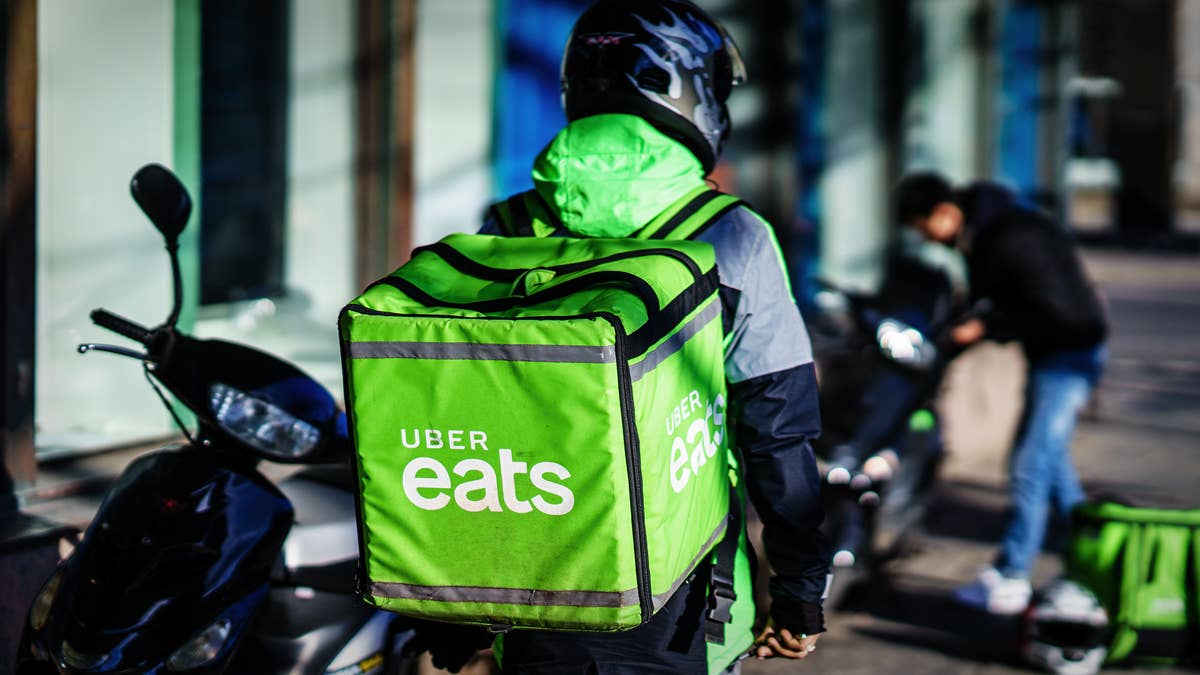
I am, however, an Instacart member and Uber Eats member. Since Amazon does not offer same-day delivery in my market (I am a Prime member, too), if I need something fast, I use one of those.
I’m not a Target Shipt member, which offers same-day delivery, but Uber Eats offers many Target items at in-store prices, so even though Target is closer to me than any of Walmart’s Supercenters, I will often have items delivered by Uber Eats.
That’s also a tactic I use when ordering bottled water, Gatorade, or anything else bulky I don’t want to lug to my car.
RTM Nexus CEO Dominick Miserandino told TheStreet that Amazon’s actions are all about stopping customers from using other services or retailers.
“Amazon isn’t spending billions just so it can brag about delivering something in an hour. Speed changes buying behavior. If I know Amazon can get me toothpaste, diapers or an HDMI cable this afternoon, I stop thinking about driving to Walmart or Target. The real payoff is getting customers to use Amazon for more of those everyday purchases,” he shared in a message to TheStreet.
Amazon has changed customer delivery expectations
In a broad sense, speed expectations have tightened.
Consumers now expect free delivery in an average of 2.7 days — down from 3.5+ days in prior years — with expectations varying sharply by category, from 0.9 days for grocery and food to 3.2 days for large general merchandise, according to a study from Alix Partners.
“The speed and free shipping expectations consumers hold today were once reserved for Amazon Prime members. They are now the floor — not the ceiling — for every category of retail,” said AlixPartners’ Marc Iampieri, who serves as partner and managing director, as well as global co-lead for Shipping, Logistics, & Infrastructure.
Ninety-seven percent of Americans used a convenience service (food delivery, takeout, grocery delivery, etc.) in the last month, and more than half say their spending has increased in the last five years, according to a Sept. 16 survey from Finance Buzz, conducted in partnership with Bank of America.
Key findings included:
- Americans value an hour of free time at $87 on average, more than double the $37.62 average hourly wage reported by the Bureau of Labor Statistics.
- 68% have abandoned a delivery order after seeing the total cost with fees, a figure that climbs to 78% among Gen Z and falls to 41% among baby boomers.
- The average American will pay $9.49 in food delivery fees before deciding to pick up the order instead.
- 85% of those surveyed pay for at least one convenience membership, averaging $22 a month, or $264 a year.
Related: Casey’s ending a 47-year-old convenience store brand after buying it