Jamie Dimon has spent much of this year warning that the bond market is a problem waiting to happen. On April 28, at a conference hosted by Norway’s sovereign wealth fund, the JPMorgan Chase CEO said there would be “some kind of bond crisis,” according to TheStreet.
The debt he had in mind was mostly owed by governments. But Dimon has long argued that the pain lands somewhere else.
In a 2025 Fox Business interview, he said bond market volatility hurts the people raising money, small businesses included. He admitted he could not tell whether trouble was six months or six years away. This time, he named the next group in line.
Also read: Scott Bessent just made a bold move on the bond market
Dimon says corporate borrowers will start to squeeze
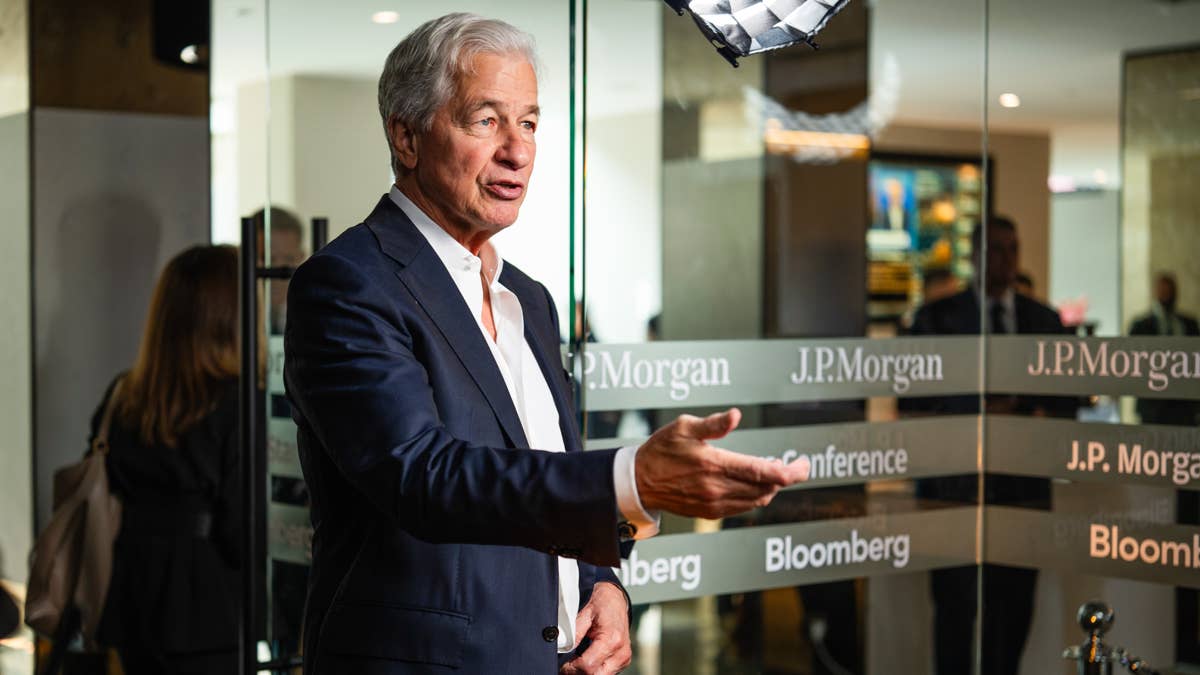
Speaking on the sidelines of a JPMorgan event in London on Oct. 6, Dimon said the worldwide scramble for capital could begin to squeeze corporate borrowers, Bloomberg reported. Investors will keep asking for more, he said. At some point, that feeds into corporate debt and credit spreads.
A credit spread is the extra interest a company pays over what a government pays to borrow. When spreads widen, refinancing an old loan or raising a new one costs more.
Dimon’s advice was to move early. “The best thing to do with any of these things is deal with it before it becomes a crisis,” he said. If it does become one, he added, it will still get dealt with, only in a much less pleasant way.
His comments land in the middle of a global bond sell-off. It began after the start of the war in Iran, which pushed inflation materially higher.
The benchmark 30-year Treasury yield recently climbed past levels last seen in 2007. The U.S. economy’s strength and the AI boom’s demand for capital have added to the pressure.
Riskier debt is already showing the strain. In the credit default swap market, the cost of insuring U.S. junk bonds against default has widened sharply, according to LSEG data compiled by Yardeni Research.
Distressed loans hit a pandemic-era high
JPMorgan’s own strategists have put numbers on the problem. Leveraged loans trading below 60 cents on the dollar reached $65 billion. That is up from $40 billion a year earlier and the most since March 2020.
The wider pool of troubled loans is larger still. Loans priced at or below 80 cents on the dollar total $139.8 billion. That is nearly 90% more than 12 months ago and just $4 billion short of the peak set in May 2020, as reported by Bloomberg.
Technology is the weak spot. The sector makes up 39% of the distressed total, or $54.4 billion. In all, 141 issuers have loans trading below 80 cents, which is 35 more than a year ago.
The bank expects more companies to miss payments. Its strategists see the high-yield bond default rate rising to 2.75% in 2027, up from a projected 2.25% this year. Defaults on leveraged loans are expected to reach 4.50% in 2027 as well.
Bonds rated CCC, the lowest rung of junk, already yield 15.58%, the highest since November 2022, according to Bloomberg.
Why money is getting more expensive
Dimon’s explanation starts with supply and demand. In May, he said the world had moved from a savings glut to a shortage of savings. He warned that interest rates could climb far above where they stood. The 30-year Treasury yield had by then reached levels not seen since 2007.
He pointed to three forces: high oil prices; worries about government spending in Japan, the U.K., and the U.S.; and growth driven by AI. He also noted that $30 trillion of that debt carried an average rate of 3.5%, with about $2 trillion due to be refinanced this year, Bloomberg reported.
More Wall Street:
- Wall Street’s AI trade faces its biggest valuation test
- The next Wall Street shift is already underway
- Wall Street sends strong 4-word verdict on the stock market
The U.S. debt load adds another layer. Federal debt had reached $39 trillion by the time Dimon spoke in Norway on April 28.
He cited the 2022 U.K. gilt crisis as a case study: Yields surged within days, and the Bank of England was forced to intervene. His point was that these things move fast.
Inflation rounds out the picture. Dimon’s April 6 shareholder letter called it “the skunk at the party.” His concern was that prices would move up rather than down through 2026, with energy costs pushed higher by the war in Iran.
What borrowers and investors should watch
For companies, Dimon’s test is a plain one. Leveraged or not, any business that has to refinance or borrow should ask whether it is ready for higher credit spreads. That goes for healthy balance sheets as much as stretched ones.
So far, the damage has stayed contained. After the Federal Reserve raised rates in September, Dimon told Yahoo Finance that borrowing costs could keep rising. But the job market’s relative strength showed those costs had not yet turned into broader economic stress.
He does not expect that calm to hold forever. It has been a long time since the last credit recession. When one arrives, “it would be worse than people think,” Dimon said in April.
That warning carries extra weight, given the size of what is now at stake. The private credit market alone is worth about $1.7 trillion, and that number has only grown.
Related: Scott Bessent just made a bold move on the bond market