As paper check usage continues to plummet, electronic checks (e-checks) have quietly become a workhorse of digital banking.
Powered by the Automated Clearing House (ACH) network, e-checks move billions of dollars annually for recurring bills, large purchases, and business payments.
While they offer steep cost savings over credit cards, they operate under fundamentally different rules than plastic. Knowing how e-checks work, and where their security gaps lie, is critical before linking your direct bank account.
What is an e-check?
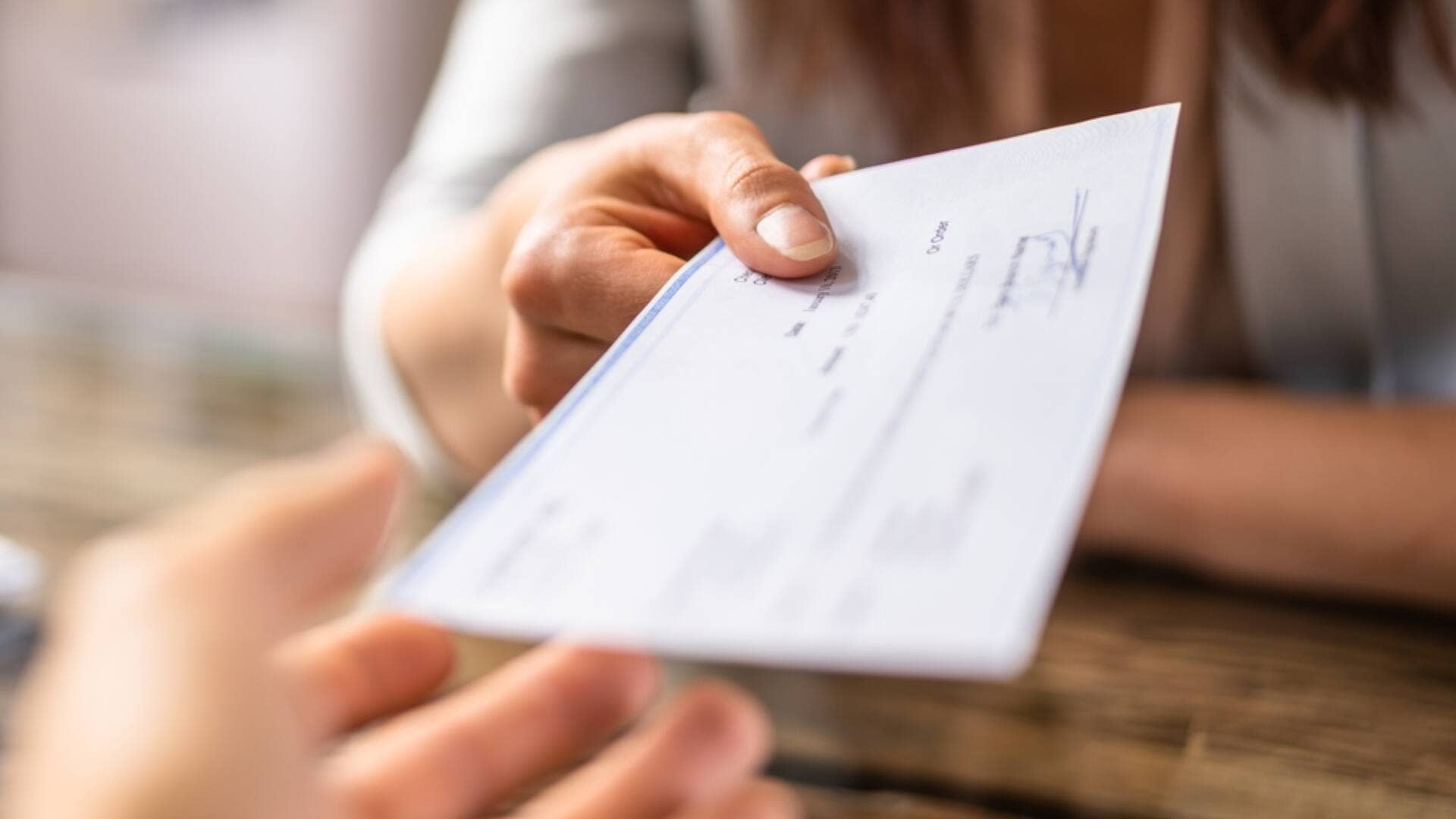
An e-check is a digital payment drawn directly from a checking account through the ACH network. Instead of writing paper checks by hand, you provide your checking account number and bank routing number along with formal transaction authorization.
The merchant or payee processes this information electronically, pulling funds directly from your bank account. E-checks are commonly used for a number of regular payments including:
- Mortgage payments
- Monthly rent payments
- Car loan repayments
- Membership fees
- Tax payments
- Credit card payments
- Utility payments
E-checks provide a more convenient way to pay versus a traditional paper check, but it’s important to consider both the benefits and potential risks of e-checks.
Key benefits of e-check payments
1. Lower processing fees
Credit card processing fees typically range between 1.5% and 3.5% per transaction. E-checks, in contrast, carry flat processing fees (often under $1.00 per transaction) or low percentages near 0.5% to 1.5%.
For high-ticket purchases — such as rent, tuition, or wholesale vendor payments — e-checks offer buyers and sellers substantial savings.
2. Enhanced security over paper checks
Paper checks are inherently vulnerable. They pass through multiple hands in the mail and explicitly expose account details written on paper.
E-checks substitute physical handling with 256-bit data encryption, tokenization, and digital authentication protocols, significantly mitigating physical theft risks.
3. Seamless automation for recurring bills
E-checks allow consumers and businesses to set up automated recurring payments for subscriptions, insurance policies, or mortgage payments.
Because checking account routing numbers rarely change (unlike credit card expiration dates and reissued card numbers), recurring transactions experience fewer administrative disruptions.
Hidden risks and drawbacks of e-checks
1. Processing delays and bounced fees
Unlike credit or debit card transactions, which approve or decline instantaneously, e-checks can take one to five business days to clear the ACH network.
If funds are lacking when the transfer settles, the transaction bounces, triggering overdraft or returned-check fees from both your bank and the vendor.
2. Strict limits on transaction reversibility
Under Federal Reserve Regulation E, consumers have protection against unauthorized electronic bank transfers. However, dispute resolution for an e-check is often far more burdensome than a credit card chargeback.
If you encounter a merchant dispute over service quality or non-delivery, reversing an e-check is difficult once the funds clear.
3. Direct exposure of checking funds
When an e-check process is compromised, fraudsters gain direct access to cash in your primary bank account.
Unlike credit card fraud, where disputed charges freeze the lender’s money, e-check fraud temporarily drains actual liquid savings until your bank resolves the investigation.
E-checks vs. credit cards vs. wire transfers
|
Feature |
E-Check (ACH) |
Credit Card |
Wire Transfer |
|
Settlement Speed |
1 to 5 Business Days |
Instant Approval |
Same Day / Minutes |
|
Average Cost |
Flat Fee ($0.20 – $1.50) |
1.5% – 3.5% Fee |
High Fee ($15 – $50) |
|
Fraud Protection |
Moderate (Reg E) |
Strong (Zero Liability) |
Very Low (Irreversible) |
|
Ideal Use Case |
Recurring bills, large purchases |
Everyday retail, travel |
Real estate, high-value urgent wire |
The verdict: When should you use an e-check?
Use an e-check for: High-dollar routine bills (rent, tuition, tax obligations, vendor payables) where credit card processing surcharges would add significant cost. E-checks also offer a way to avoid additional debt or interest payments since funds are pulled directly from your checking account.
Avoid an e-check for: Transactions with unfamiliar online vendors, time-critical purchases requiring immediate delivery, or items where purchase protection and simple chargebacks are required.