The most important part of your car’s motor may fit in the palm of your hand.
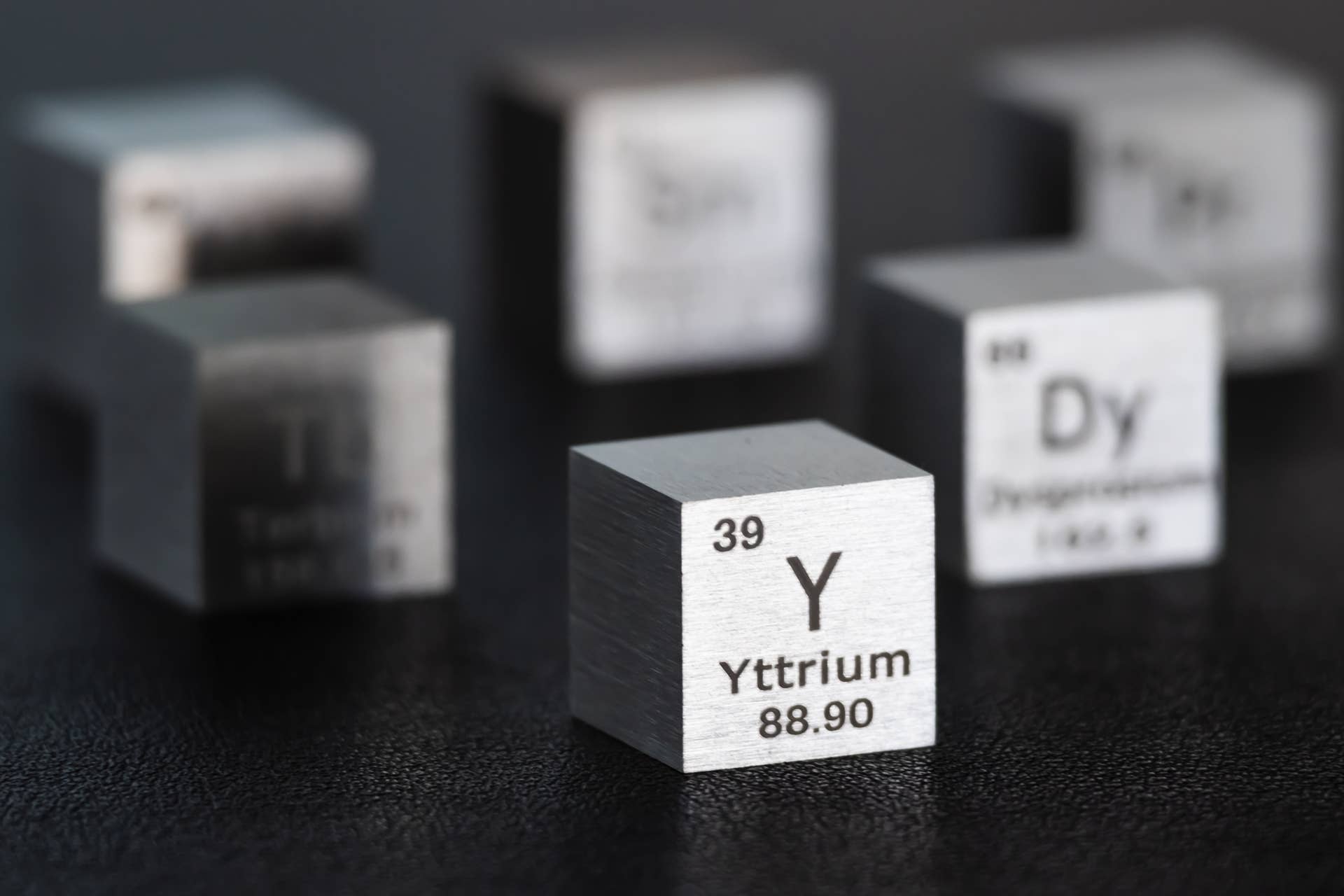
Permanent magnets made with neodymium, praseodymium, dysprosium and terbium sit inside electric vehicles, power steering units, wind turbines and data-center cooling systems. You never see them, and you rarely think about who makes them.
China makes most of them.
Some 94% of the world’s sintered permanent magnets were produced in China in 2024, according to the International Energy Agency. That leaves Western automakers with few backup suppliers when Chinese shipments slow.
That concentration matters because factories don’t buy magnets one week at a time. Automakers and electronics makers sign supply contracts months ahead, so a deadline in January starts changing purchasing decisions in October. A window that looks generous in Washington can feel tight on a factory floor.
That deadline became real on Sept. 23.
Treasury Secretary Scott Bessent said the U.S. and China would extend the truce they reached in Busan, South Korea, from Nov. 10 to Jan. 10, 2027, S&P Global Commodity Insights reported. The extension gives both sides “more time to see what we can do on the economic front,” Bessent said.
If you own rare-earth stocks, or plan to buy a car next year, the date matters because the biggest dispute under that truce is still open.
A Jan. 10 deadline moves magnet orders now
Two extra months may sound like breathing room. For a manufacturer trying to lock in magnets for early 2027, the extension works more like a countdown.
It also came in shorter than Washington had floated. U.S. Trade Representative Jamieson Greer told Bloomberg Television on Sept. 21 that three to six months was “probably the right kind of range,” The Edge Malaysia reported.
Greer tied that preference to rare earths. He said China’s export limits had created uncertainty, so Washington wanted shorter extensions it could use to check compliance.
“In my view, the significance of this short extension is being overstated,” said Alon Rajic, CEO of Finofin and founder of rare-earth research platform EarthRarest.com. “The truce includes concessions on certain export restrictions, but it has not fundamentally resolved the West’s dependence on China for strategically important materials.”
Rajic also warned against looking only at magnets. Gallium and germanium aren’t rare earths, but they feed semiconductors, fiber-optic communications and infrared imaging, and he said their prices remain far above 2023 levels despite earlier efforts to ease trade tensions.
Related: Rare earth materials offer investors potential gains along with big risks
“My speculation is that China will continue to manage these exports according to its own commercial and strategic interests,” Rajic said. “The relative easing of restrictions is more of a smoke screen than a demonstration of its collaborative spirit.”
I’d keep that timing in mind as an investor. Nobody has to announce a new restriction on Jan. 10 for supply to tighten, because buyers worried about that date can start stockpiling this quarter.
China’s August shipments fell even under the deal
The truce has not restored the flow of Chinese magnets to American buyers.
More rare-earth stocks:
- USA Rare Earth makes massive Brazil bet to break China’s grip
- White House makes surprising $1.6 billion rare earth bet
- USAR stock swings after strategic Texas rare earth deal
China shipped 512 metric tons of rare-earth magnets to the U.S. in August, down 13% from a year earlier and about 20% from July, the Financial Times reported, citing Chinese customs data.
Capital Economics told the FT that Beijing appeared willing to test the limits of the truce by slowing license approvals.
Licensing may not be the whole story. Some Chinese suppliers have declined to ship to the U.S. for fear of repercussions from Beijing, three sources told Reuters in early September.
“I am confident that China is deliberately controlling access to these materials,” Rajic said. “What we cannot establish from one month’s shipment figures is how much of the decline reflects deliberate restraint, administrative delays or changes in demand.”
He pointed to the gap between Chinese and overseas prices as a better signal. “Material can be available to Chinese manufacturers while foreign manufacturers face much higher costs and uncertain access,” Rajic said.
The two governments also described the September summit differently. Here is what each side put on paper:
- China’s Ministry of Foreign Affairs listed eight deliverables, including a $30 billion reciprocal tariff reduction and an extension of earlier trade outcomes. None mentioned rare earths or critical minerals.
- The White House said the two sides were still working on U.S. concerns over rare-earth and critical-mineral shortages, with the goal of returning shipments to “appropriate levels.”
“The silence in the summit readout does not prove a particular motive, but it gives buyers no explicit Chinese commitment to a new shipment target,” Rajic said. “I would take that as a reason to remain skeptical.”
Weaker shipments and no public breakthrough give you little reason to treat the rare-earth fight as settled.
The supply chain bottleneck sits after the mine
Rare-earth investing can look simple. A country either has the ore or it doesn’t.
The real supply chain runs through extraction, beneficiation, chemical upgrading, separation into oxides, metal refining, alloying and magnet manufacturing, the IEA said.
China’s grip tightens at each step. It accounted for 60% of mined production of magnet rare earths in 2024, 91% of refined output and 94% of sintered magnet output, according to the IEA.
“Separation and processing are where much of China’s advantage lies,” Rajic said. “Having a mineral deposit is very different from being able to turn it into a consistent, commercially usable material.”
The hard part, he said, is the technical knowledge, equipment and operating experience needed to separate closely related elements, reach the required purity and handle the waste economically.
The IEA reached a similar conclusion. Magnet production remains the main bottleneck for diversification, the agency said, with constraints most acute in magnet making and metallization, where oxides become metals and alloy powders.
“The West already has some capacity and should add more over the next few years, particularly for NdPr,” said Rajic, referring to the neodymium-praseodymium blend used in most magnets. “But when it comes to many other critical materials, it could take about a decade until the West becomes independent of Chinese supply.”
That gap shows up for you in two ways. A company can own a great deposit and still be years from shipping a finished magnet.
And when China’s April 2025 controls squeezed supply, some automakers outside China cut utilization rates or temporarily shut down production, the IEA said. That is how a mineral dispute reaches a car lot.
MP Materials faces a Shenghe ownership question
MP Materials (MP) has spent years pushing down the supply chain. Its Independence facility in Fort Worth, Texas, made finished magnets on commercial equipment in 2025, and its planned 10X campus in Northlake, Texas, is set to begin commissioning in 2028, according to MP Materials.
Washington is now its partner. The July 2025 Pentagon deal included preferred equity, warrants, financing, a price floor for MP’s neodymium-praseodymium products and offtake commitments for 10X magnets, the company said.
A new wrinkle surfaced in September. State-owned China Rare Earth Group is in talks to acquire Shenghe Resources, two sources told Reuters. Shenghe owns three percent of MP, so a deal would put that stake under a Chinese state group.
Shenghe called the reports false in a Shanghai exchange filing, saying its controlling shareholder has no plans to transfer control, Reuters reported. MP has repeatedly said neither Shenghe nor the Chinese government has any control over its operations.
“If the reported talks are accurate, I would see them as part of Beijing’s effort to bring more of the rare-earth industry under direct state control,” Rajic said. “That can make it easier to coordinate production, allocate quotas and influence access to raw materials.”
Rajic said MP holders should watch for changes in board representation, new shareholder rights or supply arrangements that seem out of place. “The larger investment question remains whether MP can keep expanding its own processing and manufacturing capacity and turn that into dependable sales,” he said.
In my analysis, that makes the 10X timeline a bigger swing factor for MP holders than the Shenghe stake.
USA Rare Earth and Lynas take different paths
USA Rare Earth (USAR) is assembling a mine-to-magnet business. It completed its combination with Brazil’s Serra Verde on Sept. 3, adding what it calls the only scaled producer of all four magnetic rare earths outside Asia, according to USA Rare Earth.
The company targets a 600-metric-ton annual run rate at its Stillwater, Okla., magnet plant in the fourth quarter, it said in its second-quarter results. With a planned Blacksburg, S.C., plant and a Stillwater expansion, it expects 10,000 metric tons of annual magnet capacity.
One risk is easy to miss. USA Rare Earth says China has placed it on an export control list, which the company expects to keep hurting its ability to source key raw materials from China.
Lynas Rare Earths (LYC.AX) is the most established of the three. The Australian company says it is the world’s only commercial producer of separated light and heavy rare-earth oxides outside China, a lineup that includes dysprosium and terbium, according to Lynas.
So you’re looking at three different bets. MP is scaling U.S. magnet output, USA Rare Earth is stitching together assets on three continents, and Lynas already runs separation outside China.
All three will react to the same U.S.-China headlines. Their execution risks look nothing alike.
What investors should watch before the truce expires
Rare-earth stocks swing hard on political headlines. That makes it tough to tell a real supply change from a mood swing.
“Between now and Jan. 10, I would watch actual export volumes, delivery times and the availability of the specific materials manufacturers need,” Rajic said. “An improvement in total shipments can still leave shortages in particular grades or heavy rare earths.”
He would also track the gap between Chinese and overseas prices, because it shows whether foreign buyers are gaining more reliable access. On the company side, he pointed to production and sales rather than share prices.
MP produced 840 metric tons of neodymium-praseodymium in the second quarter, up 41% from a year earlier, the company reported. For USA Rare Earth, Rajic said the test is turning magnet-line capability into customer-approved output and sales, while for Lynas he would watch processing volumes, costs and heavy rare-earth growth.
“Tighter supply does not automatically make every rare-earth company profitable,” Rajic said. “A magnet manufacturer can face higher input costs, and a promising project can still need years of investment.”
“My base case for Jan. 10 is another extension or limited compromise, with China retaining substantial influence over supply,” Rajic said. “I would not expect a sudden return to unrestricted trade.”
That is a useful test for your own holdings. If a rare-earth position only works when Washington and Beijing extend again, it is probably sized too big.
For most people, rare earths stay invisible inside a car, a phone or a laptop. For anyone holding the companies trying to break China’s grip, Jan. 10 is already on the calendar.
Related: Greenland again a focus as Critical Metals ups rare-earths stake