As many consumers come under increasing financial pressure, they are becoming more selective about travel. Yet cruising has remained comparatively resilient.
In 2025, there was a record high of 37.2 million global cruise passengers, up 7.5% from 2024, according to Cruise Lines International Association (CLIA). Moreover, nearly 90% of surveyed cruisers said they plan to cruise again.
While travelers may still be willing to spend on a cruise, they now have a good reason to care about how much of that money they could lose if their plans change.
Royal Caribbean’s new cancellation policy creates a potentially costly gap between when a traveler books a cruise and when they know their plans are secure.
Royal Caribbean changes cancellation policy
Founded in 1969, Royal Caribbean International is one of the world’s largest cruise operators, known for its innovative ships, family-friendly attractions, and itineraries spanning the Caribbean, Europe, and Alaska.
Its ships feature amenities ranging from water parks and surf simulators to diverse dining and entertainment options. However, beyond the advertised fare, deposits, cancellation penalties, and travel protection can significantly hike the cost of a cruise vacation.
As of Oct. 12, 2026, Royal Caribbean International’s revised cancellation policy has taken effect for qualifying new bookings made on or after Oct. 11, according to the cruise line’s official website.
“We’re simplifying our North American cancellation penalty structure by consolidating sailing length categories and streamlining penalty tiers,” Royal Caribbean wrote in a letter to travel advisors published by Royal Caribbean Blog.
The change is intended to simplify the cancellation-penalty structure, but it can also mean substantially larger losses for travelers who cancel at certain points before departure.
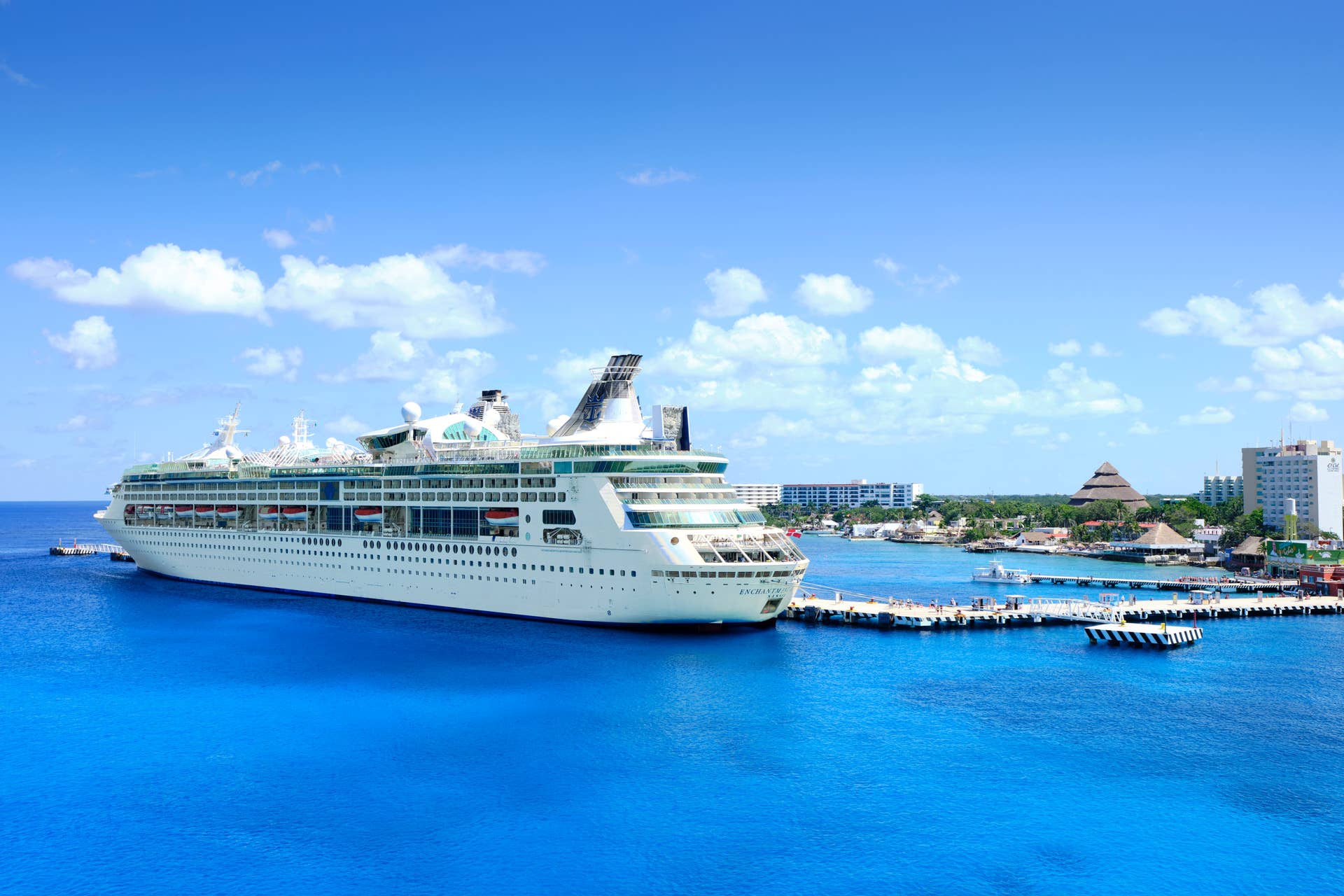
Royal Caribbean key cancellation policy changes:
- The 25% cancellation-penalty tier is being eliminated. Under the previous structure, certain cruise bookings could be canceled 75 to 89 days before departure with a penalty of 25% of the cruise fare. For affected bookings under the new structure, that penalty rises to 50%.
- Cruises are being divided into different length categories. The new groupings are 1-4 nights, 5–9 nights, and 10 nights or longer, rather than the previous 1-4, 5-14, and 15-plus-night groupings.
- Cruises lasting 10–14 nights face a particularly important change. These voyages move into the longer-cruise category, which has an earlier window (119 to 61 days) for the 50% cancellation penalty. Moreover, under the old 5-14 schedule, cancellation was free at 90+ days. Under the new 10+ schedule, free cancellation requires 120+ days. So someone canceling at 119-90 days goes from $0 to 50%.
The treatment of additional guests is also changing operationally. Royal Caribbean’s cancellation policy noted that the charges vary for solo travelers, third and fourth guests in a stateroom, and groups. The cruise line’s Sept. 28 email to travel advisors said those penalties will no longer be waived, PAX also reported.
Travel advisor Amy Post, co-owner of Postcard Travel Planning, told TravelHost that tighter policies reflect growing cruise demand and lines wanting to avoid holding inventory for uncommitted bookers.
Existing reservations generally aren’t automatically switched to the new cancellation schedule.
The new schedule applies to bookings created on or after Oct. 11, 2026. For Alaska, Hawaii, Transpacific, Panama Canal, or Pacific Coastal sailings departing on or after April 11, 2028, it applies to bookings created on or after Sept. 29, 2026.
Full previous cancellation policy vs. new policy by cruise length:
- 5-9 nights: 89-75 days goes from 25% to 50%. Everything else is unchanged.
- 10-14 nights: 119-90 days goes from 0% to 50%, and 89-75 days from 25% to 50%.
- 15+ nights: 119-75 days goes from 25% to 50%.
- 1-4 nights: No change.
What does this change mean for travelers’ pockets?
While canceling 30 days or less before departure hasn’t changed and still costs 100% of the total price, the consequences of canceling earlier have changed, depending on the length of the booking.
For example, if you booked a $4,000 five-night cruise and canceled 80 days before departure, the previous policy would mean a $1,000 penalty. Under the new policy, that same cancellation would cost $2,000, or exactly 50% of the cruise fare.
This illustrative example is based on a $4,000 cruise fare, before considering any applicable nonrefundable deposit, taxes, fees, or other booking-specific terms.
The percentages apply to the cruise price. Under Royal Caribbean’s ticket contract, applicable taxes, fees, and fuel supplements are refunded separately when a cruise is canceled.
Some fare types also require a nonrefundable deposit, which is not returned, even if you cancel before any penalty window begins.
These schedules are Royal Caribbean’s North American cancellation terms. For bookings made outside the U.S. and Canada, the cruise line says a different policy may apply, so check with your local office or travel advisor.
This is one of the key changes, as some travelers now face a 50% penalty at an earlier stage.
Travelers on 10- to 14-night cruises are the most exposed: Canceling 119 to 90 days out previously cost nothing beyond any nonrefundable deposit, and now costs 50%. Travelers on 5- to 9-night cruises face a smaller jump, from 25% to 50% when canceling 89 to 75 days out.
Here’s some of my other recent travel news coverage:
- America’s biggest RV seller closing more stores
- Southwest Airlines’ new points giveaway rewards this phone habit
- Marriott finally fixes major pain point for key travelers
- TSA finally lifts an annoying airport restriction after 25 years
What about travel insurance?
Travelers can purchase Royal Caribbean’s Travel Protection Program or compare coverage from third-party insurers.
According to Royal Caribbean’s official website, cancellations for specified, covered reasons can qualify for a 100% cash refund of the unused trip cost. However, if travelers cancel for any other reason, the program offers up to 90% of eligible nonrefundable cruise costs in future cruise credits, rather than cash.
That distinction matters for travelers who want flexibility.
Royal Caribbean’s program may help protect a cruise booking, but those who cancel for a reason not covered by the plan generally cannot expect their money back in cash under the any-reason benefit.
Travelers should compare the program with third-party insurance policies and review coverage limits, exclusions, and reimbursement terms before purchasing.
According to Squaremouth, Royal Caribbean’s plan typically costs 8% to 10% of the cruise fare, while third-party travel insurance averages around 6% of the total trip cost, although prices and coverage vary.
Related: Six Flags permanently closes iconic ride after scary allegations