Jamie Dimon has spent much of 2026 warning that the easy money will not last.
He sharpened that message again on Oct. 6. Speaking with Bloomberg in London, the JPMorgan Chase CEO said rising borrowing costs could spill into corporate credit markets. “The market will ask for more and more and more,” he said, as reported by Bloomberg.
His bigger worry is what happens when the credit cycle finally turns. “When there’s a credit cycle, losses will be worse than people expect,” Dimon told analysts on JPMorgan’s earnings call in April.
Also read: JPMorgan CEO doubles down on his inflation and economy verdict
Big banks are still minting money
For now, the warning comes from a position of strength. JPMorgan earned $21.2 billion in the second quarter. That was the highest quarterly profit in the bank’s history. Equities trading revenue rose 86% from a year earlier. Investment banking fees also climbed to their highest level since 2021, according to Quartz.
Choppy markets have been good for Wall Street’s trading desks. A surge in trading revenue and a gain on the bank’s Visa stake drove that record result. Dimon said in July he would not buy the broad stock market at current valuations. He has also flagged risks from wars to swelling budget deficits, as reported by TheStreet.
That volatility has only grown since. A global bond sell-off tied to the Iran conflict and heavy demand for capital from the AI boom has pushed the 10-year Treasury yield above levels last seen in 2002.
Dimon is careful not to call a downturn, though. He declined to predict whether the U.S. would enter a recession. He said the economy remains resilient, largely because of a stable job market. He also noted there is “always a surprise in a credit cycle.”
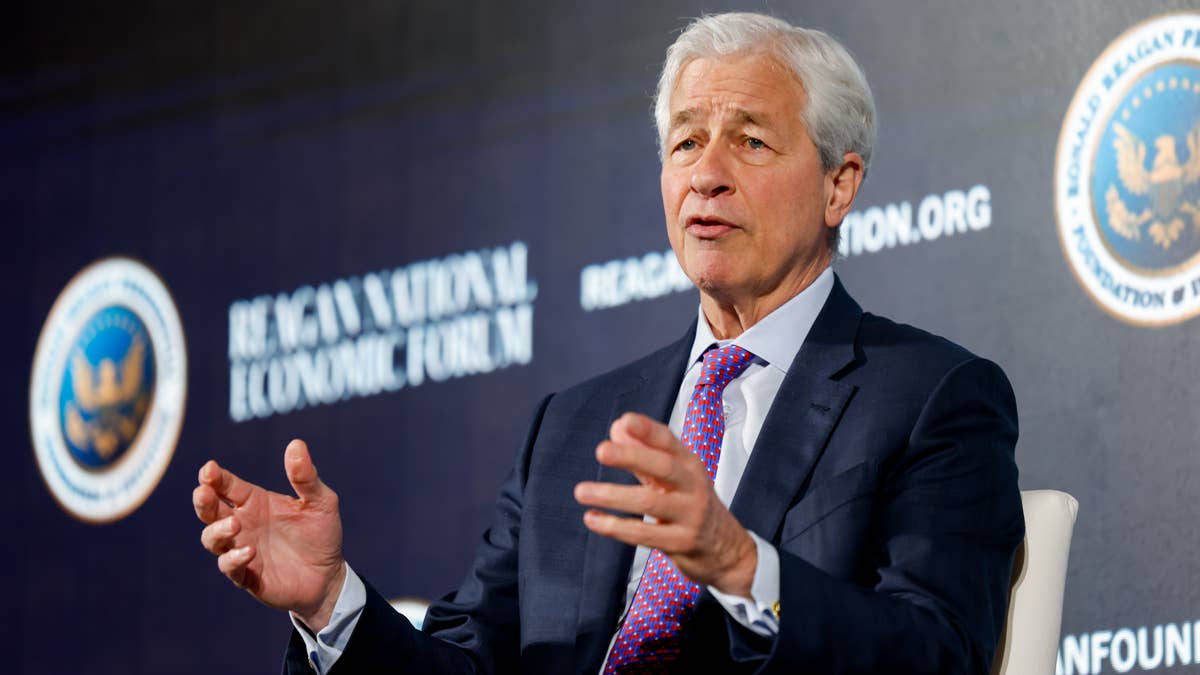
Why Dimon expects a rougher credit cycle
Credit tends to move in waves. In good times, lending expands and borrowers pay on schedule. In bad times, lending dries up and more people fall behind.
At a Norges Bank Investment Management conference in April, Dimon said a credit market downturn “could be worse than expected.” He pointed to lender complacency, high debt, elevated asset prices and weak underwriting.
Some of that stress is already visible in corporate debt. The pool of leveraged loans trading below 60 cents on the dollar has climbed to its highest level since March 2020. Tech companies make up a large share of that pool. JPMorgan strategists expect defaults to rise in 2027, as reported by TheStreet.
Dimon has framed the problem as a test of readiness. He questioned whether companies are “prepared for higher credit spreads or not.” The cost of insuring against defaults is rising alongside heavy AI, defense and infrastructure spending and large government deficits.
His advice to markets is simple: act early. “The best thing to do with any of these things is deal with it before it becomes a crisis,” Dimon said. He had warned in April that the next credit downturn could be worse than people expect because of geopolitics, oil and government deficits.
Strains are already showing for households
Everyday borrowers are feeling the squeeze too. New York Fed data showed that new delinquencies for auto loans and credit cards remain at elevated levels. Policy adviser Joelle Scally said the Fed will continue to monitor the trend, as reported by Fox Business.
Many families are leaning on plastic just to get by. More than half of consumers are using credit cards for essentials, according to an Achieve survey. Analyst Austin Kilgore warned that for many, it is “a coping mechanism to make ends meet,” according to TheStreet.
More JPMorgan:
- JPMorgan just put a different spin on the stock market selloff
- JPMorgan reveals stocks worth buying in October 2026
- JPMorgan sends a strong message to Mag-7 stock investors
September’s jobs report didn’t help. Payrolls grew by only 29,000, against the 84,000 economists had forecast. The jobless rate edged up to 4.2%. July and August were both revised down. Average hourly earnings inched up just 0.1%.
Borrowing is also getting more expensive. The Federal Reserve raised its benchmark rate on Sept. 16. The average 30-year mortgage rate passed 7% in late September. Credit card balances are now carrying an average interest rate of about 21.5%.
Steps to protect your wallet now
Your emergency fund is a good place to start. Bankrate puts the national average savings rate at 0.65%. The best high-yield accounts pay more than 4%. On a $10,000 cushion, that difference comes to about $346 a year. With the Fed hiking again, First Bank CEO Patrick Ryan said some banks may push CD rates up “by more than a Fed rate hike,” according to TheStreet.
Card debt is the other pressure point. Interest on balances averaged about 21.5% earlier this year. The card with the highest rate is usually the one to clear first. Some people would rather wipe out their smallest balance for a quick win. Either way, a call to the issuer asking for a lower rate is worth a try. A nonprofit credit counselor can also help set up a repayment plan.
Finally, resist the urge to guess which stocks will crack first. Picking winners and losers ahead of a downturn is hard even for professionals. Warren Buffett has long argued that “for most people, I think that the best thing to do is buy an S&P 500 index fund.” Over the past decade, most large-cap mutual funds have trailed the S&P 500 after fees.
Related: JPMorgan just put a different spin on the stock market selloff