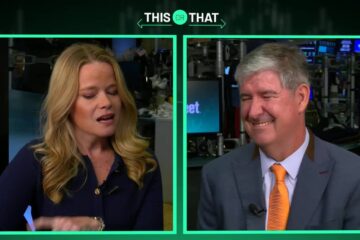
What options do you have at the end of life if you’re diagnosed with Alzheimer’s? For author and advocate Laura Carroll, the question became personal after she watched her mother live with the disease for seven years, declining until she no longer recognized her own family.
Transcript:
Jeffrey Snyder, Broadcast Retirement Network
Well, Laura, thanks so much for joining us. Really appreciate coming on the program this morning.
Nice to be here. Thank you. And you’re a prolific writer.
We were joking that you’ve been on Book Notes on C-SPAN. I don’t recall seeing that episode, but I know.
Laura Carroll, nonfiction author and end-of-life choice advocate
It’s been a while.
Jeffrey Snyder, Broadcast Retirement Network
It’s been a while, but you’ve written many books and we appreciate you coming on to talk about Alzheimer’s because it’s a little bit, maybe a little bit different topic than you write about, but you’ve actually had some personal experience with a diagnosis. Would you mind sharing a little, to the extent you want to, a little about your personal experience?
Laura Carroll, nonfiction author and end-of-life choice advocate
Yes. My mother, she was diagnosed around, oh, in her early seventies and our family was noticing some memory issues and she went to a neurologist, took tests and she was diagnosed with it. And we watched her over seven years, you know, lose her cognitive capacity.
And we tried to give her as good a life as possible. But I have to say that by the time she was 80, it was just a really difficult journey to go through with her. And she ended up breaking her hip and then didn’t survive much longer, which by then she didn’t know who any of us were in the family.
So, you know, it was just, it was very eyeopening to me on what it’s like for my mom to live with it and to, for a while know that she’s losing it and then going over a precipice and knowing that she no longer knows who we are. So it’s, as many people know, it’s a tough disease to go through and to witness when you’re a loved one.
Jeffrey Snyder, Broadcast Retirement Network
And I don’t want to bring up bad personal feelings. So that’s not my intent on asking this question, but I would like to, but I think, obviously, I think you’re coming on because your experience can help other people, but it must’ve been devastating going back to that moment of finding out about the diagnosis, both for her, of course, but also as a family, because in a way you, you have no control. You’re now in this world that you weren’t in beforehand.
Laura Carroll, nonfiction author and end-of-life choice advocate
That’s right. And we had to make as a family decisions on whether, on when it was time for my mom to not live at home anymore. It was just my mom and my dad at that point.
And that was a tough time to know exactly when and where she was cognitively. When I look back on that time now, and I look at some of the laws that are in place that really still wouldn’t have given her an option to, you know, decide whether she wanted to move forward and go to a place or stop now before it gets too bad at that, at that point to my eyes started to open to what is out there on why, why is there no option for people with this disease? So, and our family, you know, definitely looked into that and found that there really weren’t any, except to just watch her decline, which is very difficult.
Jeffrey Snyder, Broadcast Retirement Network
Yeah. I can only imagine that experience. Let’s, let’s fast forward now, because I know you do a lot of advocacy work.
You’re, you’re heavily invested in educating and, and getting people to understand some of the options available. How have we progressed from the time that your mother was diagnosed and had to go through all these key decisions? Have, have we progressed as a, as a nation, as a, as a state, I believe you live in, in California.
Yeah. So have we progressed to a place where, where, where there’s some better options for people?
Laura Carroll, nonfiction author and end-of-life choice advocate
Well, I know that there’s a lot more education out there. And in September was Alzheimer’s education and awareness, awareness month. It’s also global.
So a lot has happened in those years to make sure people know more about it, what it’s like to live with it in the early, mid to late stages, help for families, kudos to the caregivers, things like that. But when it comes to end of life talk, you know, options about that, we haven’t really gotten that far. Now there’s 12 states in Washington, DC that now have medical aid and dying laws, which do give options for people who have a terminal illness, but Alzheimer’s is not included in any of, so nobody who has Alzheimer’s will qualify for medical aid and dying right now.
And so organizations like a better exit and others there, they are wanting to say, Hey, look, this is also a, a D a disease. It’s progressive. It’s neurodegenerative.
Why not give people the option? The only, the only rub is if the option is that people need to choose an option when they still have cognitive capacity. So with Alzheimer’s, that’s, that’s a tricky point and neurologists and whatnot can help them through this process.
But, but I still think that as far as being able to have options to take control over the end of your life, people with Alzheimer’s, it runs up short.
Jeffrey Snyder, Broadcast Retirement Network
Let me, let me, I’m unfamiliar. And some of the people in the audience may be familiar with the medical aid and dying act. Would you mind, would you, would you mind explaining kind of what that is?
What I’m not asking you to, you know, you’re not, you don’t have to be an attorney later, but, but, but, you know, just maybe the in lay terms so that I and others can understand what that is and how do we have a advantage ourselves to this act?
Laura Carroll, nonfiction author and end-of-life choice advocate
Well, medical aid and dying, at least in our country, it’s most commonly called that or made for short it commonly it requires, of course, you to be 18 or older. And, and I think in most States, maybe there’s one exception to that. You need to be a resident of your state in order to be able to do it.
You have to have a terminal illness that a doctor or two, two, probably most commonly we’ll say you have got six months or less to live and have cognitive capacity and be able to self ingest a medication. So it’s a medication. That’s a cocktail, you know, we call it in quotes, as it were that you drink in stages that once you’re done, you basically fall asleep and you die very peacefully.
Okay. So it is available to people who qualify, but most of the time it’s people who have cancer that their doctors can say, yep, you’re at six months or less to live. Now, as many people know, when you have Alzheimer’s, you can live with it for a while.
So it doesn’t qualify is terminal in that sense. And so that’s a big reason why people with this disease or other kinds of dementia for that matter, or people who have ALS, other neurological diseases like Parkinson’s, they cannot take advantage of this law as it stands. And so they’re part of my advocacy that I feel strongly about and work as a volunteer with a better exit.
And now a board member they’ve convinced me is that we really feel like there should just be micro broadenings to include more people so that more people at least have the option. Many people don’t even choose it, but they like having the option there for them as an available thing if they choose to do it.
Jeffrey Snyder, Broadcast Retirement Network
So, so, so obviously there’s some legislative or advocacy work has to be done at the state level, but let’s just say you live in a state that has the made act and you have, well, you can’t do it because Alzheimer’s is not included, but should you have, let’s talk about some of the, well, let me back up then and ask you about some of the paperwork based on your experience and the experience of others. So let’s just say that you’re diagnosed with this dreaded disease.
What, what can you do to get ahead of, of things so that you as a family, as an individual, while you still have command of your, of your cognitive functions to document your wishes. I mean, are there things that steps that you should take together as a family to document all this? And when do you do it?
Laura Carroll, nonfiction author and end-of-life choice advocate
I would say, you know, I’ve done it and I don’t even have the disease. I have it, you know, as part of my trust and my directives. Now, traditional advanced healthcare directives typically don’t include, if I get this kind of disease, this is here are the behavioral triggers or markers.
And if you see that, this is what I want you to do or tell my doctor to do. It’s more for, you know, catastrophic things that happen, but this is changing. As I wrote in the op-ed that you read that there are now more addendums to these advanced healthcare directives or dementia directives themselves that are being developed by, you know, organizations, compassion and choices.
The final exit network is a very good organization that has, does great help in this area to help people like us put these documents together as part of our wills and trusts and that sort of thing. So you can have that and it will express your wishes, but to my knowledge, they’re not legally binding. So, you know, in other words, a doctor won’t be legally bound to follow it.
So your healthcare agent or your advocate is very important to be there to express what your wishes are when you can no longer express them yourself.
Jeffrey Snyder, Broadcast Retirement Network
So it sounds like, I don’t want to, I guess I’m paraphrasing it, you know, based on my readings of, you know, daily news articles and things, we’re making a lot of progress with respect to Alzheimer’s, treating Alzheimer’s and dementia. At the same time, we’re making progress or trying to make progress with some of these stages. Do you feel like we, you know, in terms of like addressing things when you get, when things get bad, you know, because you have to be prepared.
I mean, you got to be the boy scout or the girl scout, always prepared for the option. So, you know, in terms of trying to get the other states involved in at least recognizing, it seems like there’s got to be more, I don’t know, legislation or regulation around this so that other states can have, and people there can have access to these types of services.
Laura Carroll, nonfiction author and end-of-life choice advocate
Well, I know there’s certainly more of a swell across the United States of more states having on the ground advocacy with just normal people saying we want medical aid in dying in our state. There is more of that, but there’s much less of, yes, we have it and it needs to expand to include people who have these neurodegenerative diseases. We don’t see that anywhere.
And that’s why a better exit is fighting for that in California and ultimately nationally to try to convince that the law is good, but we just need to add little pieces to it, to include these other diseases that really are debilitating for people. So I think we’re advancing in the directive area to that, you know, here are my wishes when I get to a point in the disease, but I don’t think we’re very far in being able to take charge of the end of our life before we don’t have cognitive capacity, if we have dementia and Alzheimer’s. And I feel like people need to have more of those choices.
They do now outside of, you know, not an expanded medical aid in dying. There are other ways that the media doesn’t really like to talk about that much, but there are people who, when they still have cognitive capacity, they stop eating and drinking and they often quickly qualify for hospice. So they get very good care.
And that is a way to go peacefully, takes a little longer, but there are other ways that people do do it that are really sort of not talked about as much as they should be because it’s all the people have right now. Again, the catch is you got to do it while you’re still have cognitive capacity, which means you typically need to leave a little life on the table, which that’s a hard thing for a lot of people to get their mind around too.
Jeffrey Snyder, Broadcast Retirement Network
Yeah, I guess I’m trying to figure out what the, is it, let me ask you this way, is it because it just is not on the legislative agenda to, or the regulatory agenda, or is there some kind of, because I think, you know, I’m just, my own opinion is, you know, I want to have, be my own advocate and I want to be able to make my own decisions. Right. So I’m a, I’m an individual and I, you know, as long as my impact, I don’t impact other people.
So what is the hang up around expanding it? Because you already have it for terminal disease in some ways, right now, Alzheimer’s is a terminal illness. It is, it is eventually going to consume someone’s cognitive functions, so what is the hang up?
Laura Carroll, nonfiction author and end-of-life choice advocate
Yes, that is the $100,000 question. I think in part, I think a lot of legislators and even the general public don’t understand or haven’t seen stories of where medical aid and dying, the law, the made law comes up short. And we’re trying to do that as part of our work at a better exit is we have finding people who have stories of here’s where we’re made failed us.
And, and my wife had, you know, this disease or my husband had this disease. So I think with more public awareness and more armed, we can be in going to the legislature with this information to say, Hey, here’s, here’s the reality on the ground. We’ll do, we’ll lobby better.
We’ll do much better. So that’s, I think what we’re working toward is to bring more of that information and personal life experience to those legislators. So they see the real deal.
Jeffrey Snyder, Broadcast Retirement Network
Yeah. It sounds like it’s about education because I can’t, I don’t see like there’s no hit to the budget. I would think to do that.
It just, it’s just like, Hey, this is an option that should be available for people that have ALS or Alzheimer’s and dementia. Anyway, Laura, I’m going to, we’re going to have to leave it there. Really great piece.
Very thought provoking. Look, you got to be, we’re all going to check out at some point. So it’s always, it’s always best to control where you can and these things.
Great to see you.
Laura Carroll, nonfiction author and end-of-life choice advocate
I think end of life choices. I think that is a thing for a lot of people to learn more about whether you have Alzheimer’s or not, we’re all going to go somehow, some way, but if we can choose how we want to end our life, I think that’s a very important thing to be able to do.
Jeffrey Snyder, Broadcast Retirement Network
Well, thank you so much. And maybe next time when you’re, we can bring you back, but we can also talk about if you, if you have a new book. I want to do my own, I told you, I love C-SPAN.
I want to do my own BRM book notes. So maybe we’ll, we’ll, we’ll do that. I can say, we do it in like a coffee shop.
I can come out to California. Thanks so much for joining us and enjoy the rest of your week.
Laura Carroll, nonfiction author and end-of-life choice advocate
Thank you very much.