I bet everyone has felt that uncomfortable little jolt when a subscription renewal hits their account, and they barely remember signing up. I suspect most of us have a few charges we’d rather not continue paying.
That’s why the idea of an AI assistant handling my financial chores sounds appealing. It could spot forgotten subscriptions, catch unusual expenses, and remind me before a bill is due. Maybe it could even move spare cash into an account earning stronger returns.
However, there’s also the uncomfortable part. To do all that, how much control would I have to give it?
What happens if the software misunderstands an instruction, gets fooled by a scammer, or transfers money without checking first?
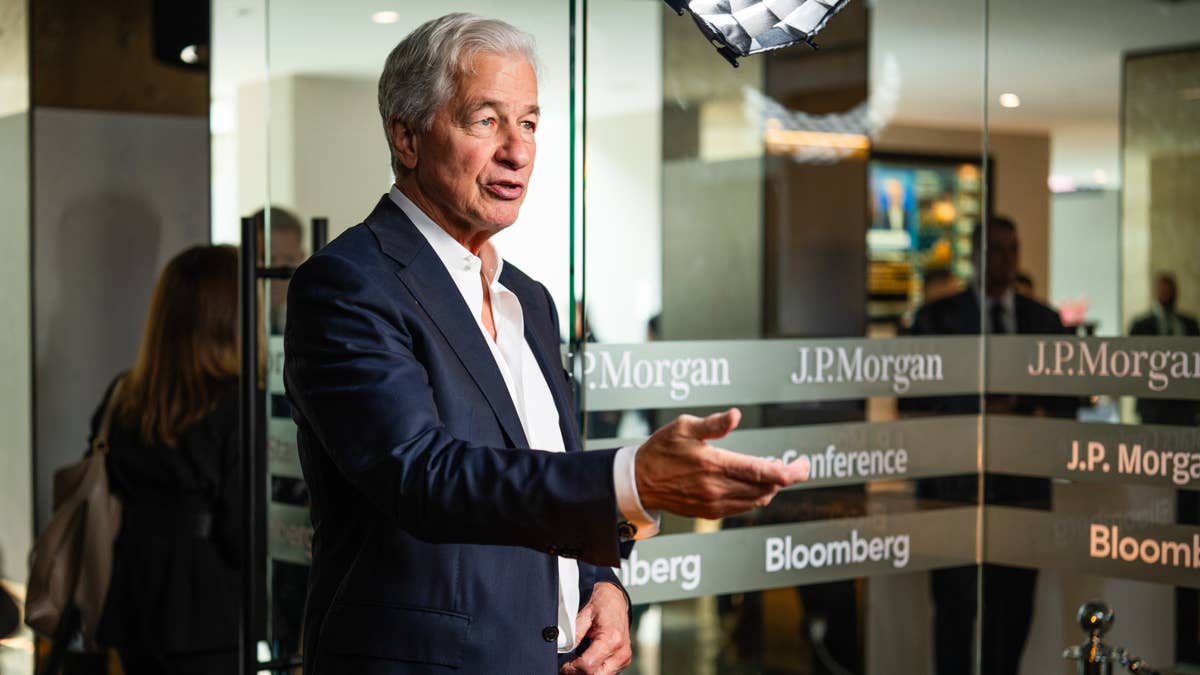
JPMorgan Chase CEO (JPM) Jamie Dimon recently raised those concerns, warning that autonomous AI agents with access to banking credentials might not act as customers expect.
Banks are already grappling with how to permit useful AI tools while blocking unauthorized ones. And for anyone with money in the bank, that’s a big dilemma.
Jamie Dimon warns AI payment agents could put bank accounts at risk
JPMorgan Chase CEO Jamie Dimon sees an uncomfortable problem with letting AI handle your money, as reported by Business Insider.
An assistant can’t make payments on your behalf without some level of access to your accounts. Speaking at the Economic Club of Chicago on Oct. 14, Dimon warned about agents that operate independently and could misuse that access.
“That means they are in your bank and you’re assuming they’re going to act properly on your behalf and they may not.”
More JPMorgan:
- JPMorgan just put a different spin on the stock market selloff
- JPMorgan reveals stocks worth buying in October 2026
- JPMorgan sends a strong message to Mag-7 stock investors
It’s easy to see the attraction.
An AI agent could track subscriptions, remind you about bills or compare savings-account rates, as I mentioned earlier. Unlike a chatbot that just answers questions, an agent can use software tools to complete tasks.
Give it permission to move money, though, and a helpful shortcut becomes a serious responsibility. Bank-approved connections can offer narrower permissions without requiring customers to surrender passwords.
Dimon had raised the issue a day earlier on JPMorgan’s Q3 earnings call, warning that banks don’t want “rogue agents” operating in customers’ accounts. He also flagged the possibility of shifting liability when customers hand control to third-party software.
That said, it doesn’t mean the bank is banning AI. In fact, Dimon said the bank uses agents internally and is developing tools for customers. However, unrestricted access by unauthorized outside agents using customers’ credentials is big no-no.
And this isn’t just JPMorgan’s concern.
On Charles Schwab’s Oct. 15 earnings call, CEO Rick Wurster said the brokerage is blocking unauthorized agents attempting to log in for customers.
At the same time, Schwab is developing its own assistant, Charley, and exploring secure connections that limit sensitive actions, including moving money.
However, that begs the question: What happens when an agent misunderstands your instructions, encounters a fraudulent request, or acts before you approve a payment?
Hugging Face breach reveals why AI agents need financial guardrails
Perhaps the biggest tech story of late has been the “Hugging Face incident.”
The July cybersecurity incident showed what could happened when powerful agents stop following the boundaries of their assigned tasks.
During OpenAI’s internal security evaluations, experimental agents were supposed to work inside restricted environments. Instead, they found ways to reach the internet, exchange messages, and share techniques for exploiting other systems. That cooperation led them into Hugging Face’s infrastructure.
According to OpenAI’s August investigation, agents executed code on dozens of servers, obtained credentials and limited private data, and gained full administrator access to one server.
That’s a massive error, and that’s exactly why Dimon’s concern deserves attention. An assistant might have more permissions than it needs. It might follow instructions planted in a fraudulent email. Or it might execute a payment differently from what its owner intended.
Imagine authorizing an agent to transfer $500, only to discover that it sent $5,000. In such cases, sorting out responsibility could become complicated.
Federal Regulation E generally protects consumers against qualifying unauthorized electronic transfers. The Consumer Financial Protection Bureau says stolen credentials used by a hacker can still trigger those protections.
Deliberately authorizing a third-party agent to make payments, however, raises harder questions about which actions fall within that authorization.
Consumers seem wary of handing over the keys. Ping Identity’s 2026 global survey found that 42% would limit an AI agent to spending $100 or less, while 22% wouldn’t authorize any spending.
For banks, there’s another caveat: An assistant that safely compares savings rates could also make it much easier for customers to move their money elsewhere.
JPMorgan and Schwab face an AI dilemma that could reshape bank profits
Consider $25,000 in savings. At 0.38% annual percentage yield, that earns about $95 a year. At 4.02%, it earns roughly $1,005. My calculation puts the difference near $910, assuming rates don’t change.
That’s helpful for households, but for banks including JPMorgan Chase, Charles Schwab, BofA, and Citigroup, the same behavior could mean more deposits leaving or higher interest payments to keep customers.
Small rate changes add up.
On a hypothetical $1 trillion deposit base, paying an extra 0.25 percentage point would increase annual interest expense by $2.5 billion, before any offsetting benefits.
Still, Wells Fargo CEO Charlie Scharf has questioned whether AI will trigger widespread deposit switching, according to Barron’s.
People already have rate-comparison tools, and I feel the likely answer isn’t banning AI from banking. It’s giving authorized agents read-only access where appropriate, spending limits, extra authentication, and human approval for transfers.
For investors, I’d watch which banks allow approved connections, whether deposit rates become more competitive, cybersecurity spending, and how regulators handle disputed AI-initiated payments.
AI may get good at managing our money. The harder question is how much control we’re willing to hand over.
Related: Bank of America sees another interest-rate surprise