Five months into his term as Federal Reserve chairman, Kevin Warsh has kicked off his promised “regime change” at the U.S. central bank by dropping a bombshell about monetary policy in 2027.
But he repeatedly sidestepped the question of why the Fed is keeping short-term borrowing rates steady if the majority of policymakers say the economy is strong and inflation remains too high.
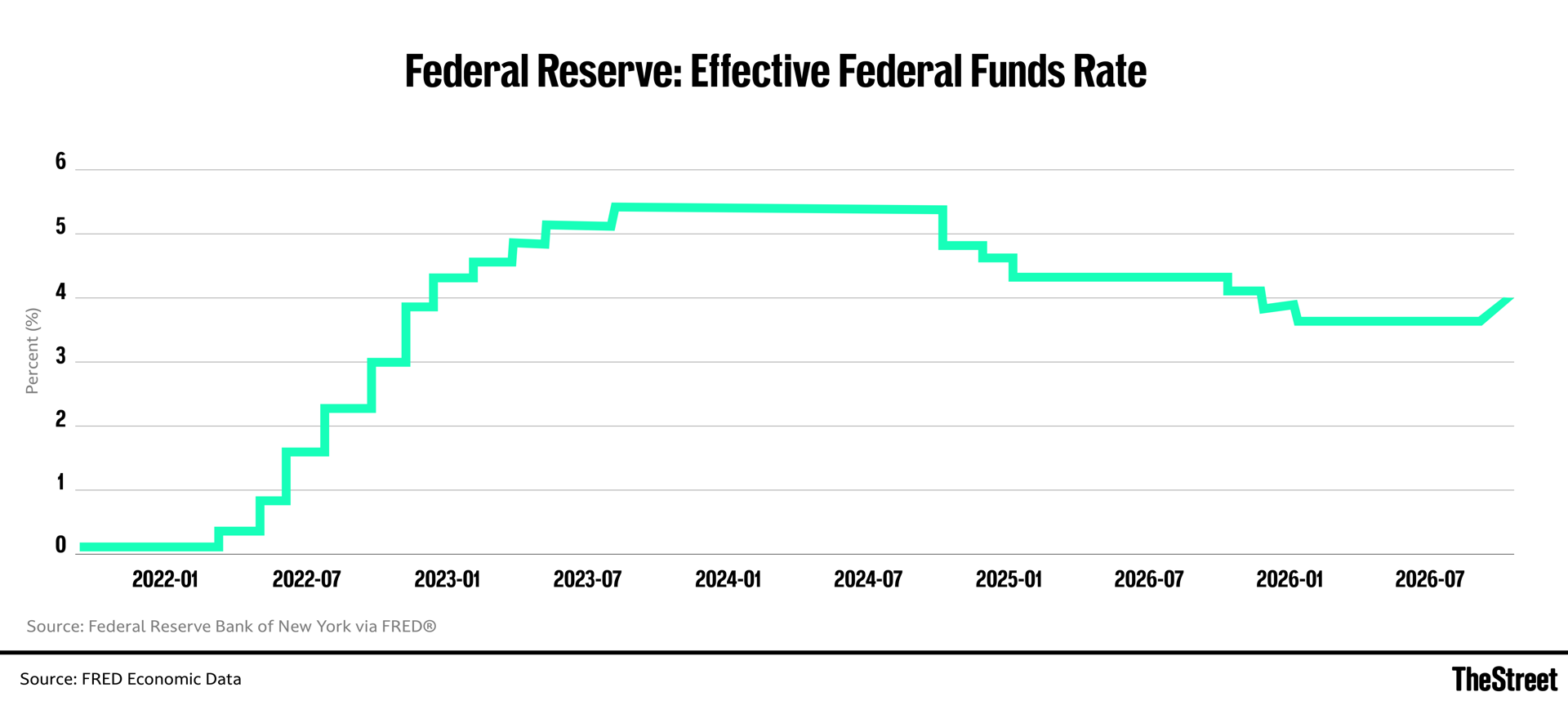
Markets expected the Federal Open Market Committee’s pause at its Oct. 27-28 meeting, despite hiking short-term interest rates by 25 basis points in September to a range of 3.75% to 4%, aiming to cool rising price pressures.
In keeping with his “no-forward guidance” stance, Warsh stayed mum during the post-meeting press conference as to what the Fed might consider for its rate path at the Dec. 8-9 meeting.
But heads turned when he announced that starting in the fall of 2027, the Fed would hold eight scheduled meetings in 2027, with one devoted exclusively to monetary policy strategy and no rate vote. In 2028, he expects two strategy meetings and six policy-setting meetings.
“In terms of Warsh as an institution builder, this is the most ambitious overhaul of how the Fed operates in decades: less guidance, no rate projection of his own, outside task forces to re-examine their entire suite of metrics, and now a new meeting calendar that will put monetary policy on a 60-day pace, which seems to be congruent with how Warsh views the time needed for the committee to properly function,’’ REX Financial Head of Research Bill Birmingham told TheStreet in an exclusive email interview.
My first thought: “Whoa.” How will this less-is-more approach impact Wall Street and Main Street?
“The trade-off is that with less guidance and fewer decision points, each rate move has to carry more weight. The net result will be elevated volatility until the inflation target is met,” Birmingham said.
Why did the Fed pause interest-rate bets in October?
The Fed has struggled to bring inflation back to its 2% target after years of above-target price increases.
“I would call this a hawkish hold with an eye towards a December hike that got the hawks to a 10-2 decision rather than splitting the vote on hiking now. It was a best of worlds situation for Warsh here: Tough language, but patient action,’’ Birmingham said. “He talked about owning 2% after six years above it, then described policy that isn’t yet tight by his own account.”
Given this backdrop, Warsh had no reason to wait on another rate hike but did. Why?
“Mainly because any measure of core PCE is not showing the diesel shock pushing what has been slowing inflation momentum in the other direction. That could change with the new results out tomorrow, but he has room for now to let the economy run, and he made it clear he will,’’ Birmingham said.
The September PCE index will be released Oct. 29 and is estimated to rise to 3.60% year-over-year according to the Cleveland Fed — and displaying nearly six years of inflation above the Fed’s own 2% target.
Could more Fed interest-rate hikes be ahead?
There were two notable dissents on the 12-member committee — Fed Governor Lisa Cook and Cleveland Fed President Beth Hammack, who both would have preferred another 25 basis-point hike to the benchmark federal funds rate to tame prices.
PGIM Chief U.S. Economist Robert Sockin said the FOMC decision to pause was “perplexing.”
“This pause looks divorced from not only the economic data, but the Fed’s interpretation of the data as well. Ultimately, we think the decision to hold is a policy mistake, and a gradual Fed likely means one that has to hike higher, mechanically raising recession risk,’’ he told TheStreet in an email. “We still see four 25 basis-point hikes, one per quarter, with the next one in December.”
The CME Group’s FedWatch Tool shows traders pricing in a roughly 78.4% probability of another 25 basis-point hike at its Dec. 8-9 meeting.
Greg Gizzi, CIO of Fixed Income and Head of Municipal Bonds at Nomura Asset Management International, agreed there could be additional tightening ahead.
Related: How a Fed interest rate pause would impact Main Street investors
Warsh “seemed to take some comfort that financial conditions were tighter since the last meeting but said he is unwilling to call them tight,’’ Gizzi told TheStreet in an exclusive email.
“The Fed seems willing to take a methodical approach, but work remains to be done to bring inflation back to their target. We anticipate that the Fed will still need to increase interest rates to achieve their target.’’ Gizzi said.
FOMC meets as divisive midterm elections loom
This was the final FOMC meeting of the year before the Nov. 3 midterm elections.
Historically, the Fed doesn’t act on rates before an election.
President Donald Trump has been demanding the independent central bank cut interest rates to 1% or below for his entire second term, and has repeatedly described the U.S. economy in glowing terms and downplayed affordability concerns especially during his recent campaign rallies for GOP candidates.
“Due to the politically charged climate, there will naturally be more scrutiny around the Fed’s decision to hold the rates steady. Kevin Warsh explicitly said political considerations, including the midterms, did not play a role in the decision,’’ The Wealth Alliance CEO and Managing Director Robert Conzo told TheStreet in an exclusive email interview.
Ultimately, preserving that independence is critical to the Fed’s credibility, he added.
“Monetary policy certainly has consequences for voters, but decisions need to remain focused on inflation, employment and the broader economy rather than the political calendar,” Conzo said.
Fed’s dual mandate focuses on jobs, prices
The Fed’s dual mandate from Congress requires maximum employment and price stability.
Yes, it’s a tricky balance of monetary policy because:
- Lower interest rates support hiring but can fuel inflation. This risks fueling further inflation, potentially leading to an inflationary spiral.
- Higher rates cool prices but can weaken the job market. This increases the cost of borrowing and further stifles economic activity.
Warsh’s hands-off approach seems to be working, Birmingham said.
“He also has burgeoning signs that consumer inflation expectations are off peak, and the broader credit markets, whether through spreads, long term rates, or credit committee decisions, are doing the rest of the work for him,’’ Birmingham said.
“As long as this doesn’t get out of hand, Warsh seems to have found a winning formula for the moment,” he added.
Related: Fed holds rates: Good news for homeowners (for now)