After closing dozens of stores across its luxury brands, Kering is preparing to shutter even more locations worldwide as it works to turn around its struggling business.
The ongoing restructuring could leave luxury shoppers with fewer opportunities to visit some of their favorite brands in person, particularly in markets where the company is reducing its presence.
Founded in 1963, Kering is the French multinational luxury goods group behind some of the world’s most recognizable high-end brands, including Gucci, Saint Laurent, Bottega Veneta, Balenciaga, and Alexander McQueen.
Kering closes 128 stores across its brands
Kering completed 128 store closures and 23 openings in the first nine months of 2026, ending with 105 net store closures, according to its latest financial results.
The company finished the third quarter of fiscal 2026 with 1,614 directly operated locations.
Kering surpassed its original full-year target of 100 net store closures ahead of schedule. As a result, the company raised its 2026 target to at least 125 net store closures, signaling that further reductions are expected before the year ends.
Read more: Another mattress chain files Chapter 11 bankruptcy
Most of the closures occurred in the Asia-Pacific region across its Fashion and Leather Goods division, with Gucci accounting for the largest number of shutdowns among Kering’s brands, according to the company’s third-quarter revenue presentation.
The latest reductions follow 75 net store closures in 2025, highlighting Kering’s ongoing efforts to streamline its retail network.
“We keep focusing on maximizing the productivity and appeal of our existing network with store refurbishments, strengthening the expression of each house, and elevating the client experience,” Kering CFO Armelle Poulou said during the company’s latest earnings call.
Poulou explained that Kering has been cautious about communicating its store closure figures because some shutdowns depend on lease exit negotiations. The company has also closed certain locations before their leases expire.
The restructuring is weighing on revenue. Poulou estimated that store closures represented a one-percentage-point headwind to sales in the first half of 2026, before accounting for sales recaptured elsewhere, and that the impact would reach two percentage points in the second half.
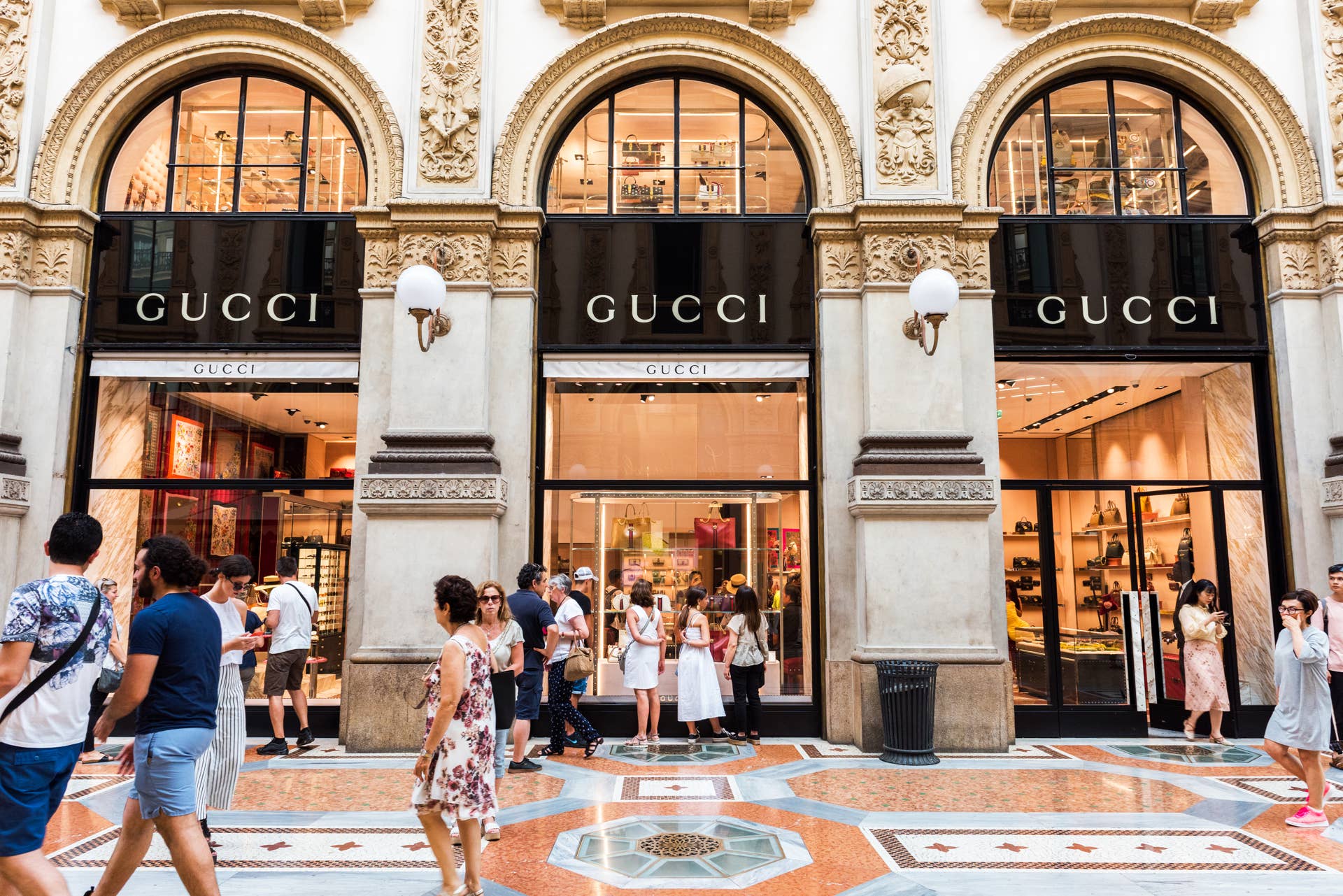
Kering struggles to revive luxury brands
Kering’s store reductions come as the luxury group continues to navigate financial challenges across several of its brands.
During the third quarter of fiscal 2026, Kering reported revenue of approximately €3.3 billion, down 1% on a comparable basis year-over-year.
Its Fashion and Leather Goods division, which includes Gucci, Saint Laurent, Bottega Veneta, and Balenciaga, recorded a 3% comparable revenue decline. Gucci remained a significant source of pressure, with comparable revenue falling 6%.
As Kering’s largest fashion house, Gucci is a central focus of the group’s turnaround efforts.
The company’s directly operated retail network, including e-commerce, recorded a 3% comparable sales decline. Meanwhile, wholesale and other revenue increased 3%, according to its financial results.
During the earnings call, Poulou acknowledged that the company’s performance was not where management wanted it to be. She outlined three priorities Kering is pursuing to improve its business:
- Rebuild Gucci’s desirability: Renew its creative direction, increase marketing investment, strengthen client engagement, and improve retail performance.
- Revitalize China: Give local teams more decision-making power, tailor products and campaigns to Chinese consumers, and optimize the store network.
- Improve products and efficiency: Simplify product offerings, upgrade quality, reduce inventory, strengthen operations, and cut costs while maintaining investments in its brands.
These initiatives are part of a broader turnaround effort aimed at improving brand appeal, strengthening customer relationships, and making Kering’s operations more efficient.
Fashion industry faces ongoing headwinds
Kering is not the only luxury company facing challenges as fashion retailers navigate a prolonged industry slowdown.
McKinsey & Company’s State of Fashion 2026 Report projects low-single-digit growth for the global fashion industry in 2026.
Macroeconomic volatility and tariff pressures are expected to continue influencing consumer behavior, especially as shoppers become more cautious about discretionary spending. In the U.S., consumer sentiment also remained low throughout 2025.
As luxury brands face pressure to restore growth and improve profitability, shoppers could see more changes to store networks as companies prioritize their strongest markets and locations.
Here’s some of my previous coverage of luxury store closures:
- Capri Holdings: Closed 41 locations across its brands in the year ending June 27, 2026.
- Prada Group: Closed 10 Versace stores since the end of 2025 and plans to shutter more locations while relocating select boutiques to stronger markets in 2026 and 2027.
- Ferragamo: Closing roughly 70 stores between 2025 and 2026.
- Burberry: Closed 21 locations during fiscal 2026.
- Tapestry: Closed 64 directly operated stores during fiscal 2026.
- Zegna Group: Closed 14 stores during the first half of fiscal 2026.
Related: Luxury giant to close more than 200 stores after sales drop