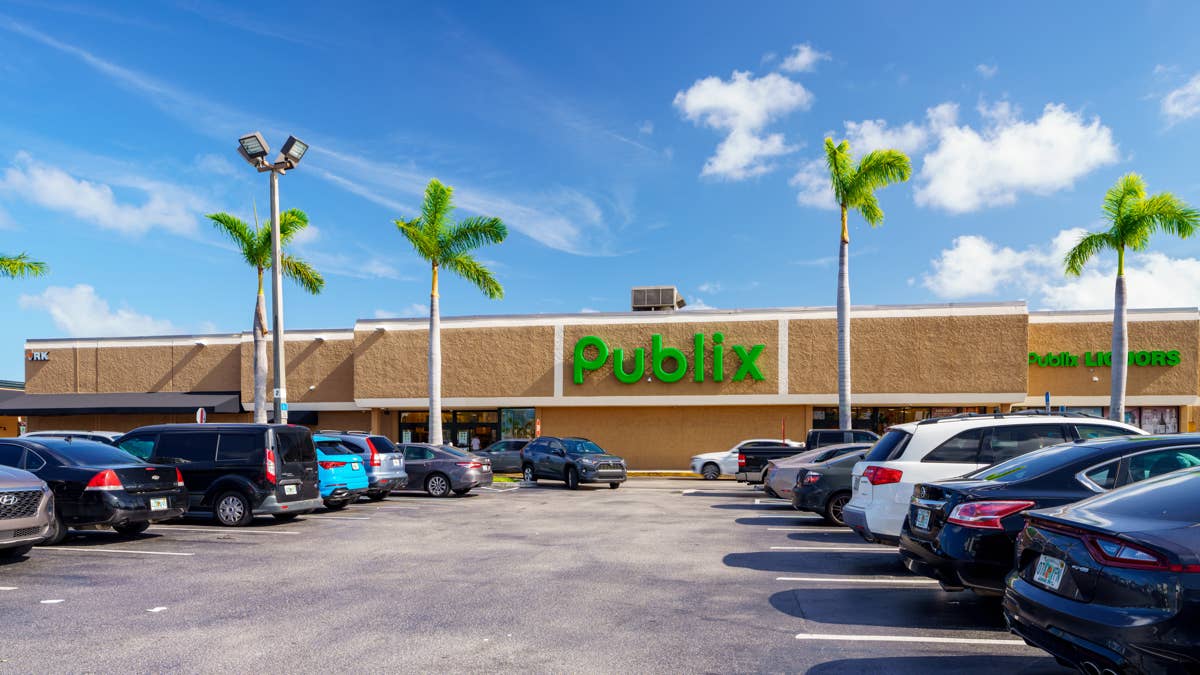
Publix continues to feel the weight of a significant customer problem it has struggled to shake in recent months.
The grocery chain’s difficulties come as it navigates a challenging economic environment and recent customer pushback over its in-store policies.
For instance, Publix faced boycott calls in May after signaling a preference for only law enforcement to openly carry firearms in its stores. It also faced further criticism from customers in August when it began eliminating the 10-items-or-less limit from its express checkout lanes in Florida.
More recently, Publix’s buy-one-get-one-free (BOGO) deals came under scrutiny in September, when it confirmed differences in how the promotions work across states.
Florida shoppers must purchase one BOGO item to get the second one free. However, in other states, if customers want only one BOGO item, they have the option to purchase it at half price.
Publix sees another sales decline
Against this backdrop, Publix sales are continuing to fall. The grocery chain revealed in a new press release that its comparable store sales decreased 0.6% year over year in the third quarter of 2026.
Publix said that the sales decrease “was primarily due to the impact of the MFP (Medicare maximum fair price) change and economic conditions impacting consumer spending,” which is what it said in its previous earnings release when it revealed its comparable store sales fell 0.5% year over year in the second quarter.
The Medicare maximum fair price change that Publix is referring to took effect on Jan. 1, which lowered prices for 10 prescription drugs and changed how pharmacies are reimbursed for these medications.
Read more: Publix plans significant store change customers will soon notice
In addition to another sales decrease, Publix reported net earnings of about $1.1 billion in the third quarter, down from $1.2 billion it generated in the same period in 2025.
Publix CEO Kevin Murphy acknowledged in the press release that consumers are facing economic headwinds.
“We know many of our customers are feeling the effects of a challenging economy,” said Murphy. “I’m proud of our associates for the premier service and care they provide to our customers during this time.”
Publix faces growing price sensitivity among shoppers
Publix’s persistent sales challenges come during a time when it has been facing criticism from shoppers on social media over its high prices.
Americans nationwide have indeed been paying more for groceries this year. Food-at-home prices increased 1.8% year over year in September, according to Consumer Price Index data from the U.S. Bureau of Labor Statistics.
As prices rise, U.S. consumers are shifting their grocery shopping habits, creating additional pressures for grocery retailers.
More Grocery News:
- Target raises price of annual grocery deal for holiday shoppers
- Kroger loses $12 billion as customer behavior takes a turn
- Publix struggles to reverse concerning customer behavior
A survey from Acosta Group’s Affordability Tracker in October revealed that 75% of Americans say groceries are putting more strain on their budgets than a year ago. Many cited housing, transportation, health care, insurance, and utilities as significant expenses affecting their grocery shopping decisions.
Due to high grocery prices, 43% said that they have cut back on nonessential purchases over the past six months, while 43% said they spent more time hunting for deals. Also, 38% have opted to purchase more store brands, while 35% shopped at lower-priced stores and 30% bought cheaper food and household items.
“The affordability recovery has reached a point where small gains in purchasing power are offering little breathing room for households,” said Colin Stewart, executive vice president of business intelligence at Acosta Group, in a press release.
“Shoppers are weighing a grocery purchase against everything else their income needs to cover, and the habits they developed during the inflation surge remain practical ways to manage that pressure,” he continued.
Publix struggles to compete against key rivals that are cutting prices
As shoppers become more cautious about their spending, Publix faces mounting competition from grocery retailers offering lower prices.
In the 12 months ended in September, Walmart accounted for the largest portion of U.S. grocery sales, capturing a 20.3% market share, according to Numerator data shared with TheStreet. That was an increase of 0.2 percentage points from the previous year.
Costco held the second-largest share at 8.4%, compared with 7.9% a year earlier. Kroger came next at 8.2% market share, followed by Albertsons at 4.5%. Publix took fifth place, maintaining its 4.1% share from the same period in 2025.
All of the retailers that have surpassed Publix in market share have cut prices this year to attract more shoppers. For example, Walmart revealed on an earnings call in August that it used tariff refunds to lower prices on thousands of items in its second quarter of fiscal 2027.
Costco took a similar approach. Its CEO, Ron Vachris, said on an earnings call in September that the company predominantly used the $184 million it received in initial tariff refunds to reduce prices on various products at its warehouse clubs throughout its fiscal fourth quarter.
In May, Kroger unveiled plans to lower prices on thousands of items in its stores. Albertsons also accelerated its price investments in July to better compete for shoppers.
In a Grocery Dive report in October, Scott Mushkin, a retail analyst and CEO of R5 Capital, said that Publix’s rivals in grocery retail, particularly Walmart, Amazon and Costco, are “taking a lot of share in a market that doesn’t have any to give.”
“It’s a really tough macro environment,” said Mushkin. “I think it’s the toughest I’ve ever come across in 30 years for traditional supermarkets.”
Related: Publix faces customer backlash over an unusual discount policy