Most people never think about where the internet physically lives. In Texas this year, voters had to, as server farms spread faster than officials could track them. Their answer hangs over Bloom Energy (BE), a company that sells power systems to exactly those buildings.
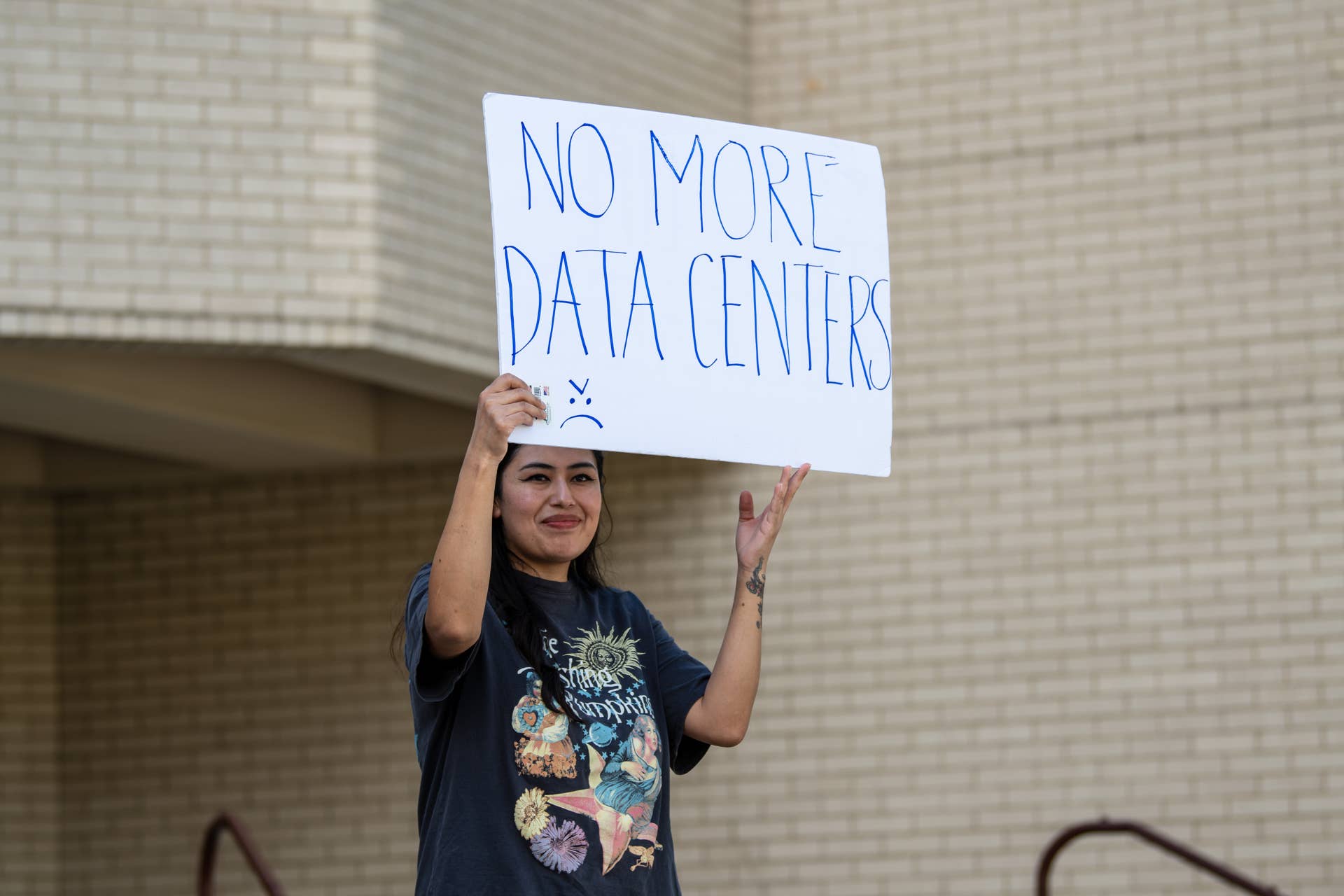
That unease found a candidate. Democrat Gina Hinojosa ousted Gov. Greg Abbott on Tuesday, November 3, 2026, after pledging to crack down on data center growth, Reuters reported. An October University of Houston poll cited by Reuters found that 79% of likely Texas voters supported limits on the number of data centers.
Two days later, NTT DATA agreed to deploy 900 megawatts of Bloom fuel cells, Bloom’s largest international project to date, according to a press release. Yet the stock finished down about 15% in a week.
Also read: Oracle, Bloom in focus after Trump’s data center power push
The split screen is the story. Bloom is winning abroad as Texas turns against the buildings its fuel cells serve.
Texas hearings showed the fight was never just about power
The backlash reached the state Capitol months before Election Day. On Monday, July 27, 2026, the Texas Senate Finance Committee held a hearing on the state’s data center sales tax break.
Lawmakers once expected that break to cost about $14.6 million over the 2014 to 2015 budget cycle, Texas Public Radio reported. Projections now put it near $3.3 billion for the 2028 to 2029 budget cycle, turning a tax question into a trust question.
The hearing exposed a bigger blind spot. Officials acknowledged that the state does not regulate where data centers are built.
Brad Reynolds, the comptroller’s chief revenue estimator, was asked if more projects existed than the state knew about. “We don’t really know what’s going on,” he said.
On Monday, August 3, Abbott halted new data center grid connections and ordered an audit expected to wrap up by year-end, Reuters reported. Hinojosa promised something broader: a ban on all data center approvals until the Legislature passes new laws.
Bloom Energy’s onsite pitch answers the wrong question
For Bloom, that difference matters. Its fuel cells generate electricity on a customer’s own site. Chief Commercial Officer Aman Joshi said in the NTT release that fast power offers an “accelerated path to revenue.”
On paper, a freeze on grid hookups is the problem Bloom exists to solve. ERCOT, the state’s grid operator, was tracking more than 400 gigawatts of data center connection requests, according to Reuters. Self-powered data centers can sidestep much of that line.
However, Hinojosa’s promise works differently. A ban on approvals decides whether a data center gets built at all, not where its power comes from. Nothing in her pledge, as Reuters described it, exempts projects that make their own electricity.
The release seems aware of that. It stresses minimal water use and quiet operation, language aimed at the communities now deciding elections.
NTT DATA shows Bloom Energy can follow the builders
So the overseas win is bigger than the stock’s reaction suggests. The release says the partnership is designed to reach gigawatt scale across NTT DATA’s global data center portfolio.
More Bloom Energy:
- Another AI power stock plunges 11% despite earnings beat
- Morgan Stanley spots 3 game-changing Bloom Energy opportunities
- Bloom Energy CEO delivers stark warning on America’s power demand
Capital may move before the politics settle. Alpha Compute CEO Brittany Kaiser said developers without signed contracts and financing are more likely to look elsewhere, including Canada, Mexico and Europe, Reuters reported. A supplier that ships wherever builders go is better placed than one tied to a single state’s permit office.
Even so, the release gives no dollar value and names no sites. Shipments start in 2027, which may help explain why investors shrugged it off.
Bloom Energy stock now trades below a cautious target
Bloom is a $51 billion company whose stock has become shorthand for how fast data centers can get electricity. The shorthand took a beating, sliding from $222.30 on Thursday, October 29, to $167.52 on Thursday, November 5.
Shares bounced 3.4% on Friday, November 6, 2026, to close at $173.24. The close leaves them about 51% below their 52-week high of $351.28, yet more than double the 52-week low of $75.70.
Wall Street has not walked away. The 29 analysts tracked by StockAnalysis rate Bloom a Buy, with an average price target of $283.85, about 64% above Friday’s close.
Yet one cautious call stands out. Wells Fargo analyst Praneeth Satish kept a Hold rating on Monday, October 26, 2026, while raising the price target to $182 from $176. The stock trades below even that mark.
Here the NTT deal earns its keep. It will not change this year’s results, but it gives the stock a growth path beyond Austin’s reach.
The bigger question arrives in January, when Hinojosa takes office and lawmakers return to Austin. Investors will watch whether a Texas moratorium treats self-powered data centers like any other project. If it does, the next chapter of onsite power may be written far from Texas, and Bloom just signed its biggest one abroad.