I know you spend some time online, moving between sites and other websites. And I’m certain that now and then, a page has asked you to confirm you’re human before letting you through. You might see it as a small interruption, but it shows how much work goes on behind the scenes to keep websites accessible while filtering out automated traffic.
You see that check? Often happens through Cloudflare, which serves 115 million web requests a second on average from data centers in more than 340 cities. And there’s a reason.
Imperva‘s 2026 Bad Bot Report found automated programs generated a record 53% of requests over the past year, with bad bots alone accounting for 40%. Another tally shows daily AI-enabled bot attacks rose from 2 million to 25 million in 2025 — a 12.5x year-over-year increase.
CEO Matthew Prince said the third quarter was “Cloudflare’s best quarter ever,” as revenue crossed a $3 billion annualized pace at $782.5 million, up 39%. It is its fastest growth in nearly four years. However, growing this fast has a price.
We have built the development platform for the AI-powered Internet—and as digital threats escalate, organizations of every size continue to rely on Cloudflare for protection.
Also Read: AI agents are quietly rewriting how the internet works
Cloudflare posts a record quarter, and Morgan Stanley stays bullish
In a note Morgan Stanley shared with me at TheStreet, it maintained an Overweight rating and a $370 price target on Cloudflare (NET). That’s a 37% increase from Nov. 6 close of $268.75, according to Yahoo Finance. The bank said broad-based execution and momentum in developer and security products support durable growth.
In fact, revenue beat Cloudflare’s own guidance midpoint by $46 million, or 6.2%, and was more than 6% above consensus, while contracted future revenue grew 37%. Fourth-quarter guidance of $845-$846 million implies 38% growth, about 6% above consensus.
More AI:
- Bank of America has unexpected verdict on AI stocks after post-midterm Democrat sweep
- BofA cuts to the chase on AI data center demand
- Cloudflare CEO disagrees with Bezos on AI and US jobs
Profits are catching up. Non-GAAP operating margin hit a record 17.5%, up 2.2 points. Non-GAAP EPS was $0.38 versus $0.27 a year ago. Cloudflare now expects GAAP profitability in the fourth quarter, well ahead of its previous 2028 target. In the third quarter, it still had a GAAP operating loss of $67.9 million.
All of that performance is reflected in its shares, which are up 36.32% this year, 18.97% over one year and 325.84% over three years through Nov. 6, according to Yahoo Finance.
What’s driving Cloudflare’s growth
Customers are arriving in huge numbers. In its Q3 earnings call, Cloudflare CEO said they added more than 158,000 paying customers, about double its prior quarterly record, lifting the total 110% from a year ago. It also added a record 308 large customers paying over $100,000 a year, bringing that group to about 5,000.
Net retention rose 2 points to 122%, meaning existing customers are spending more. Sales productivity set a record for the 11th straight quarter, and quota attainment was the highest in more than five years.
Related: Canva CEO apologizes to workers, makes unusual promise amid layoffs
Much of the upside came from customers using more than expected. Under Cloudflare’s pool-of-funds contracts, customers commit a budget and draw it down. They consumed faster, renewed earlier, and signed bigger commitments. Developers building on its Workers platform grew to more than 10 million from more than 7 million last quarter.
I see this as part of a broader shift in how people use the internet. Even a small website or online business needs reliable infrastructure to handle visitors, protect its pages, and keep everything running smoothly. And of course, as more services move online, the demand for the technology behind them keeps growing.
Security is another driver. AI-driven vulnerability discovery is raising urgency, and Cloudflare is winning more often against core zero-trust vendors. Management said security is playing a bigger role in expansion.
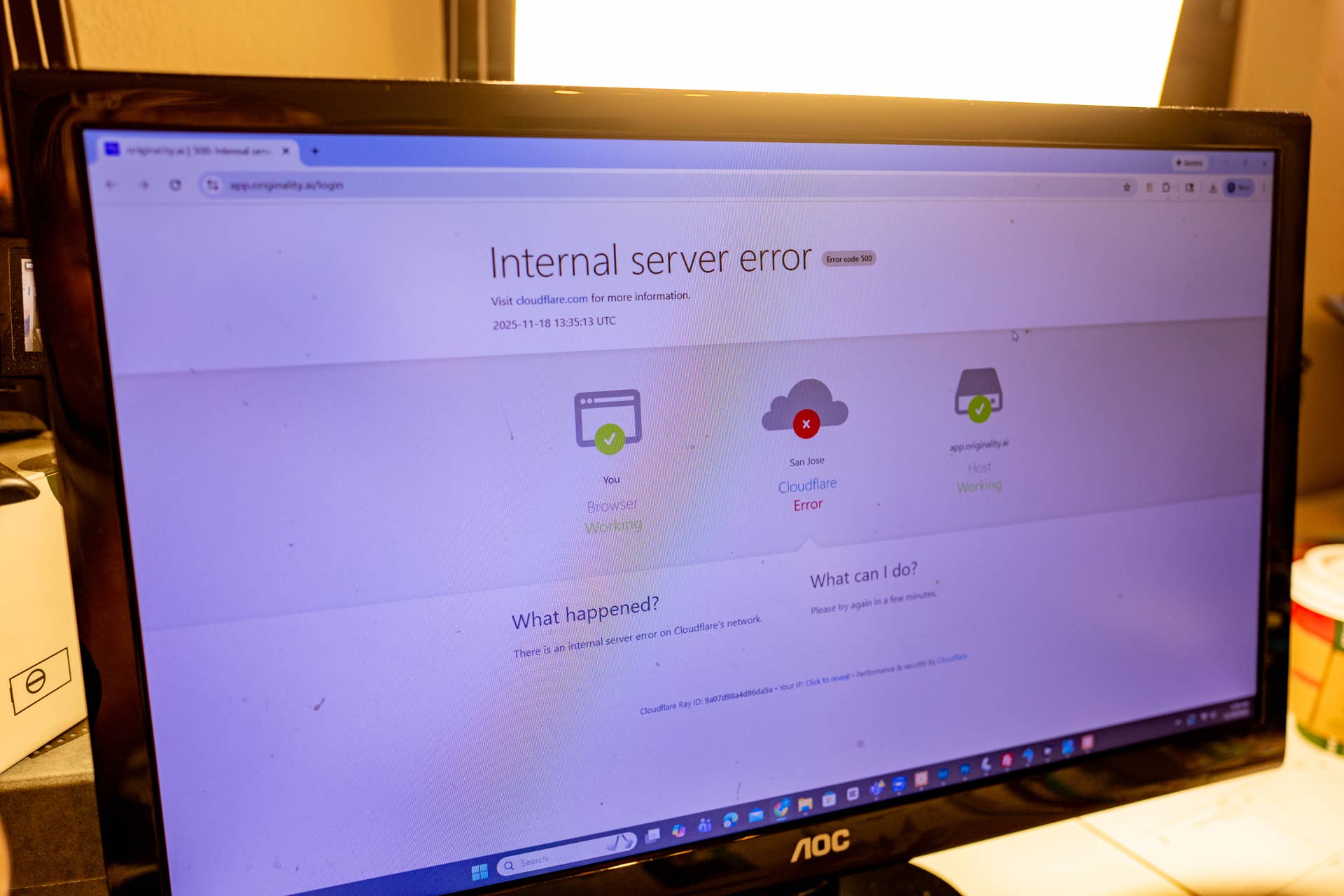
The trade-offs Morgan Stanley is watching
Gross margin fell 0.7 points from the prior quarter and 2.9 points from a year ago to 72.4%, because the lower-margin developer platform is growing faster than the rest. Network capital spending stays at 14% to 15% of revenue as AI workloads and agent traffic grow. Management points to better compute efficiency.
Faster consumption also adds quarterly swings. And Christian Smith takes over as President of Revenue as Mark Anderson retires, just as sales execution peaks, which Morgan Stanley says could add risk in 2027. A new business line, Act IV, recorded its first revenue, including AI crawling, with agent access and micro-payments possible later. Timing and size remain uncertain.
For the full year, Cloudflare guides to revenue of about $2.96 billion, up 37%. Fourth-quarter non-GAAP operating income of $156 million to $157 million and EPS of $0.43 should follow.
So, Morgan Stanley’s view is that growth broad enough to head toward 40% or more into 2027 outweighs those costs, as Cloudflare becomes a platform where app development, security, and AI agent traffic meet. Now, the things to watch are gross margin and the sales handoff.