American families looking to purchase a three-row SUV often struggle to find adequate room without committing to years of costly fill-ups.
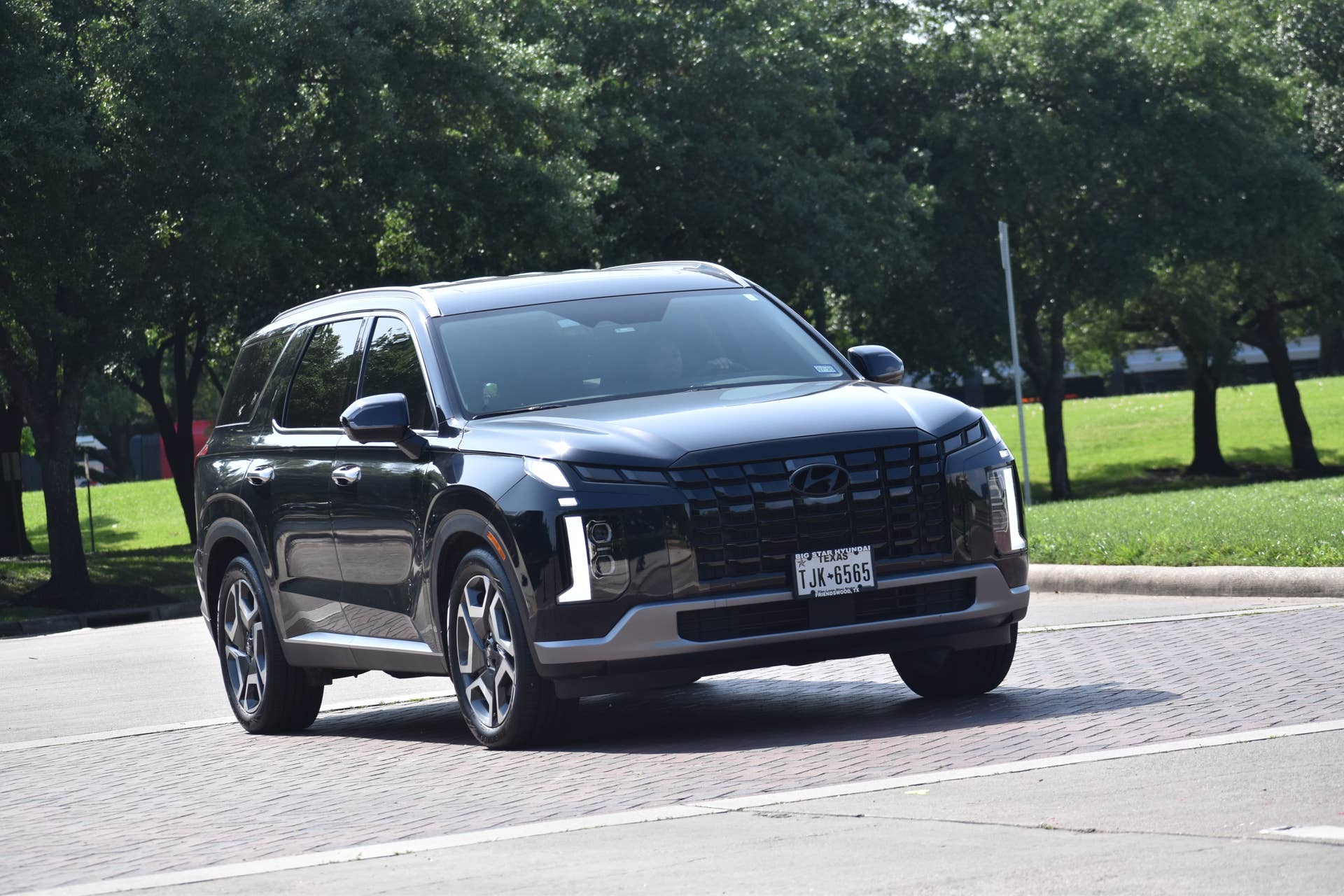
Choosing between the two options offered by the 2027 Hyundai Palisade might have an impact on family finances long after the purchase.
The combined mileage of its gasoline variant is up to 22 miles per gallon. Drivers can go about 55% further on a gallon with the most efficient hybrid, which achieves 34 mpg.
If the average price of fuel is $3.50 a gallon, that difference could save roughly $3,370 over five years for a family traveling 12,000 miles a year.
However, buying a hybrid isn’t always the best option. It is more expensive initially, and selecting all-wheel drive lessens its benefit.
Cars.com detailed the 2027 Palisade’s fuel economy differences in a Nov. 6 report.
Additional factors include towing capability, warranty protection, and crash test results, according to official data from Hyundai, Toyota, and the Insurance Institute for Highway Safety.
Families considering SUVs may find that the cheapest sticker price does not equate to the lowest cost of ownership.
Hyundai’s hybrid delivers more power with less fuel
Hyundai’s hybrid uses less fuel while producing greater power.
The 3.5-liter V-6 engine in Hyundai’s gasoline-powered Palisade generates 287 horsepower. The EPA estimates that front-wheel-drive cars get 22 mpg overall, while the majority of all-wheel-drive models get 20 mpg.
The XRT Pro, which is focused on off-roading, achieves 19 mpg.
Related: Ford and GM see savings drivers may pay for later
A 2.5-liter four-cylinder turbocharged engine and electric motors are combined in the hybrid. Despite having 329 horsepower, the most fuel-efficient front-wheel-drive models get 34 miles per gallon.
Hyundai estimates those versions can travel up to 619 miles on an 18.2-gallon tank.
All-wheel-drive hybrids earn 30 mpg, while fancier front-wheel-drive hybrids get 31 mpg.
That distinction is important. If a customer chooses an all-wheel-drive car with a budget of about 34 mpg, they will underestimate gasoline costs.
Towing capacity is an additional sacrifice. With a properly fitted braked trailer, Hyundai claims that the hybrid can draw up to 4,000 pounds, while the gasoline Palisade can pull up to 5,000 pounds.
Even though the V-6 uses more gas, families pulling larger boats or campers may prefer it.
A $2,320 premium changes the calculation
The gasoline Palisade starts at $39,735. The hybrid starts at $44,560, but the gasoline base SE has no matching hybrid trim.
Comparing SEL versions is more informative.
Hyundai’s official pricing lists the gasoline SEL at $42,240 and the hybrid SEL at $44,560, a $2,320 premium before freight, taxes, and options.
More Automotive:
- BMW’s second profit warning of the year hit harder than the first
- Ford and GM see savings drivers may pay for later
- Ford stock rises as car buyers face a costly reality
A 22-mpg Palisade would cost approximately $1,909 a year to fuel at 12,000 miles per year and $3.50 per gallon.
The cost of a 34-mpg hybrid would be around $1,235, saving about $674 a year. It would take about three and a half years to recoup the $2,320 premium at that pace.
Financing, upkeep, insurance, and resale values are not included in the computation. The payback time is extended by driving fewer miles or using less fuel.
One ownership consideration favors the hybrid: Hyundai provides a 10-year, 100,000-mile warranty for its hybrid battery and covered system components, subject to warranty terms.
Toyota and safety ratings add perspective
Toyota is a fierce rival of the Palisade.
Official Toyota specifications show that the 2026 Highlander Hybrid achieves up to 35 mpg combined. The larger 2026 Grand Highlander Hybrid reaches 36 mpg in its most efficient configuration.
Despite differences in cost, spaciousness, and equipment, both barely surpass the Hyundai’s greatest hybrid mpg.
Safety offers another viewpoint. For cars manufactured after November 2025, the Insurance Institute for Highway Safety designated the 2026 Palisade as a Top Safety Pick+.
The institute says several crash-test ratings, including its updated moderate-overlap frontal evaluation, also apply to the 2027 model.
Although consumers should evaluate certain cars and features instead of depending only on a logo, that is helpful assurance.
In the end, the Palisade Hybrid presents the best economical argument for owners who maintain their SUVs for a number of years and get significant mileage.
The traditional V-6 may still be the better option for those who pull large loads, drive infrequently, or discover a significant gasoline-model savings.
Related: Ford sets 2027 goal to dethrone Toyota in certified used cars