Out in the Atlantic Ocean, about 490 miles east of New York, a lonely tanker ship, the Agioi Fanendes, is waiting to be told where to unload a large cargo of diesel fuel.
Apparently, it won’t be at the Port of New York and New Jersey or any other port in the United States. That’s because the diesel fuel in the ship’s holds, all 30,000 metric tons (equivalent to about 224,000 barrels) was made in Russia.
And U.S. law won’t allow any Russian-produced or refined oil or oil products, like diesel, to be sold in the United States.
So much, then, for President Donald Trump’s deal to buy 4.8 million metric tons of diesel from Russia to pull down U.S. diesel prices, if it ever happens. That total, spread out over the next year or so, works out to maybe a third of what the United States consumes in a month.
Read more: U.S. gasoline prices are coming down fast
A flotilla gets pushed off course
It’s not just the Agioi Fanendes, owned by a company in Malta, that is affected by this conflict with the Ending Importation of Russian Oil Act of 2022. The law was passed in retaliation for Russia’s invasion of Ukraine.
The law banned all Russian energy products from the United States, and President Trump, much as he would like to — and expected to when he announced his Russia deal on Oct. 9 — cannot unilaterally waive the law.
More Oil & Gas:
- Ahead of election, oil and gas prices take a breather
- Exxon, Chevron paint bullish pictures of the oil business
- Risk of more Mideast war boosts oil, threatens your wallet
Only Congress can waive the legal requirement, and Congress isn’t interested in doing so.
And New Jersey Governor Mikie Sherrill — yes, a Democrat — warned the state’s port operators a week ago that unloading such a cargo could cost them civil penalties equal to the fuel’s full value.
Sen. Richard Blumenthal (D-Conn.) also told the owner of the Agioi Fanendes that unloading the cargo in a U.S. port would be an “illegal transaction or aiding and abetting it,” according to the Maritime Executive. As a result, energy traders and buyers signaled they wouldn’t buy the Russian diesel.
Before the Agioi Fanendes approached the U.S. coast, three more tankers had halted their journeys from the Russian port of Primorsk to U.S. ports.
Two have been redirected to ports in Brazil, and a third is on its way to Egypt, according to Reform.news, a Belarussian news site based in Poland.
The Agioi Fanendes, at some point, probably in the next day or so, will be sent to another country, Energy Secretary Chris Wright said on Nov. 11. Betting in New York was that the ship is headed to Brazil.
The problem was, and is, the Iran war
Diesel and gasoline, we should note, really weren’t in short supply in the United States. There were no gas or diesel lines in the United States as there were in 1973 and 1974 during the first Arab oil embargo.
But the U.S.-Israel war against Iran did send global crude oil prices and fuel prices soaring earlier this year, and high prices contributed to Republican losses in the recent midterm elections.
Moreover, since September, fuel prices in the United States and many other countries, in fact, have been coming down with oil prices generally.
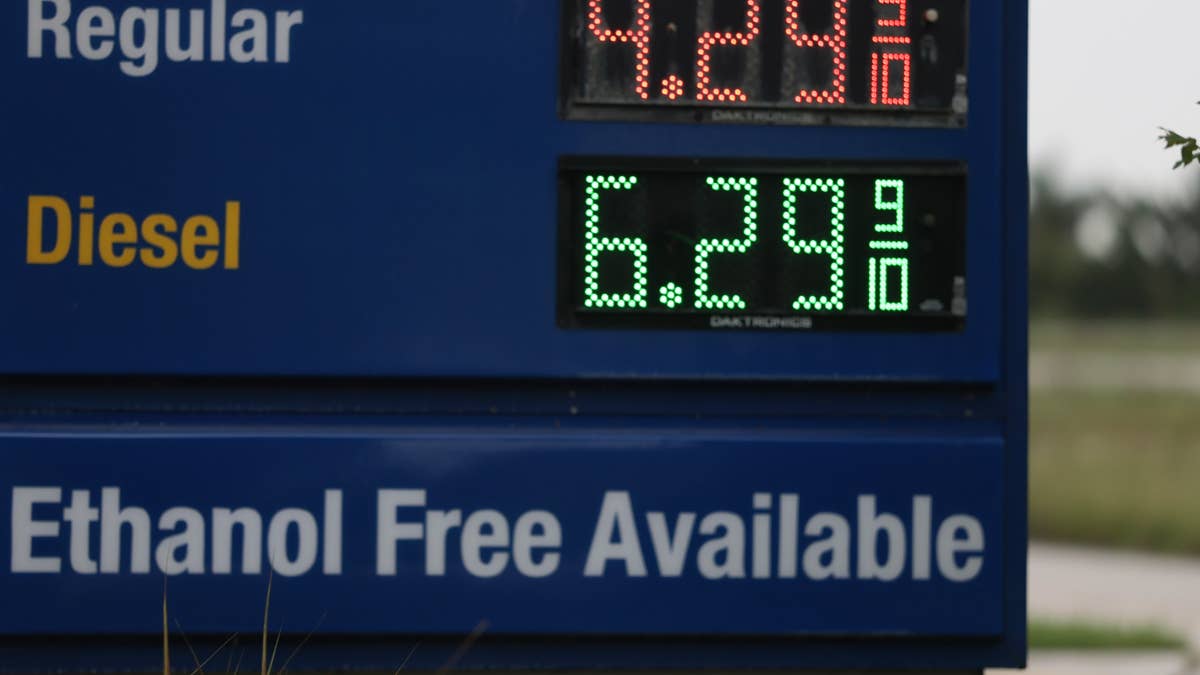
AAA Oil Prices and GasBuddy.com put the national average price of diesel at $6.13 per gallon on Nov. 11, down about 6% from the peak of about $6.528 on Oct. 22. The prices are still up about 73% this year.
The price of gasoline is down about 15% since peaking in mid-May and off 13% from highs in September.
Crude oil generally was higher on Nov. 11. Light sweet crude, the benchmark U.S. oil, was up 49 cents to $86.53 per 42-gallon barrel. Brent crude, the global benchmark, rose $1.27 to $92.76 a barrel.
Related: Trump’s diesel deal with Russia runs into a math problem