THC-infused beverages have gone from specialty cannabis products to a growing category at liquor stores, convenience stores, and even major national retailers.
Marketed as alternatives to alcohol, the drinks have attracted consumers seeking different ways to unwind, and retailers have been eager to capture the demand.
Target, Total Wine & More and Sprouts Farmers Market are among the chains that have expanded into hemp-derived THC beverages.
But the growing market now faces a major threat.
A new federal law could force retailers across the country to remove many popular THC drinks from their shelves beginning December 11, 2026, unless Congress changes the restrictions.
And in some states, the crackdown has already begun.
Illinois started enforcing new limits on November 12, prompting retailers to clear inventory. New Jersey and Missouri, meanwhile, have taken different approaches ahead of the federal deadline.
New federal THC limit threatens popular beverages
These restrictions come from a federal spending law enacted on November 12, 2025, that significantly changes which cannabis-derived products qualify as legal hemp.
Under Section 781 of Public Law 119-37, final hemp-derived cannabinoid products containing more than 0.4 milligrams of combined total THC and certain similarly acting cannabinoids per container will be excluded from the federal definition of hemp.
More Retail:
- Struggling home goods chain closing more stores
- Verizon makes changes to be more like T-Mobile used to be
- Home Depot drops generous offers as customers grow harder to win
This means THC beverages exceeding the permitted limit will no longer qualify as federally legal hemp products and would instead fall under federal marijuana restrictions.
As a result, liquor stores, supermarkets, and convenience stores that currently sell these drinks as hemp products could be forced to remove them from their shelves.
That is a dramatic reduction compared with THC beverages commonly sold today.
For example, a drink containing 5 milligrams of THC has 12.5 times the permitted threshold, while a 10-milligram drink contains 25 times that amount.
The restrictions were originally scheduled to take effect in November, but a federal spending measure signed in September postponed most of them until December 11.
Certain restrictions involving cannabinoids that cannot be produced naturally by the cannabis plant still took effect in November.
The changes primarily threaten hemp-derived beverages sold at conventional retailers, and do not prohibit products sold through state-licensed marijuana dispensaries. Those products remain subject to separate state rules and federal controlled-substance laws.
Target’s THC beverage expansion faces uncertainty
Major retailers have already invested in the emerging beverage category.
In October 2025, Target began testing low-potency THC drinks at select Minnesota liquor stores. By April 2026, the retailer had obtained licenses covering 72 Minnesota locations.
As TheStreet previously reported, the expansion followed a pilot program intended to gauge consumer interest. Target subsequently confirmed plans to expand its THC beverage test into Florida, Texas and Illinois.
The expansion involved a potential retail footprint of more than 300 stores, although the retailer described the initiative as a limited test rather than confirming sales at every location.
The strategy now faces uncertainty as new regulations threaten a potential source of sales.
Other retailers have embraced the category, too.
In January, Sprouts Farmers Market began offering THC beverages at approximately 115 stores in Florida and Texas, carrying brands including Cann, Delta, Magic Cactus, Wynk and Nowadays, according to Supermarket News.
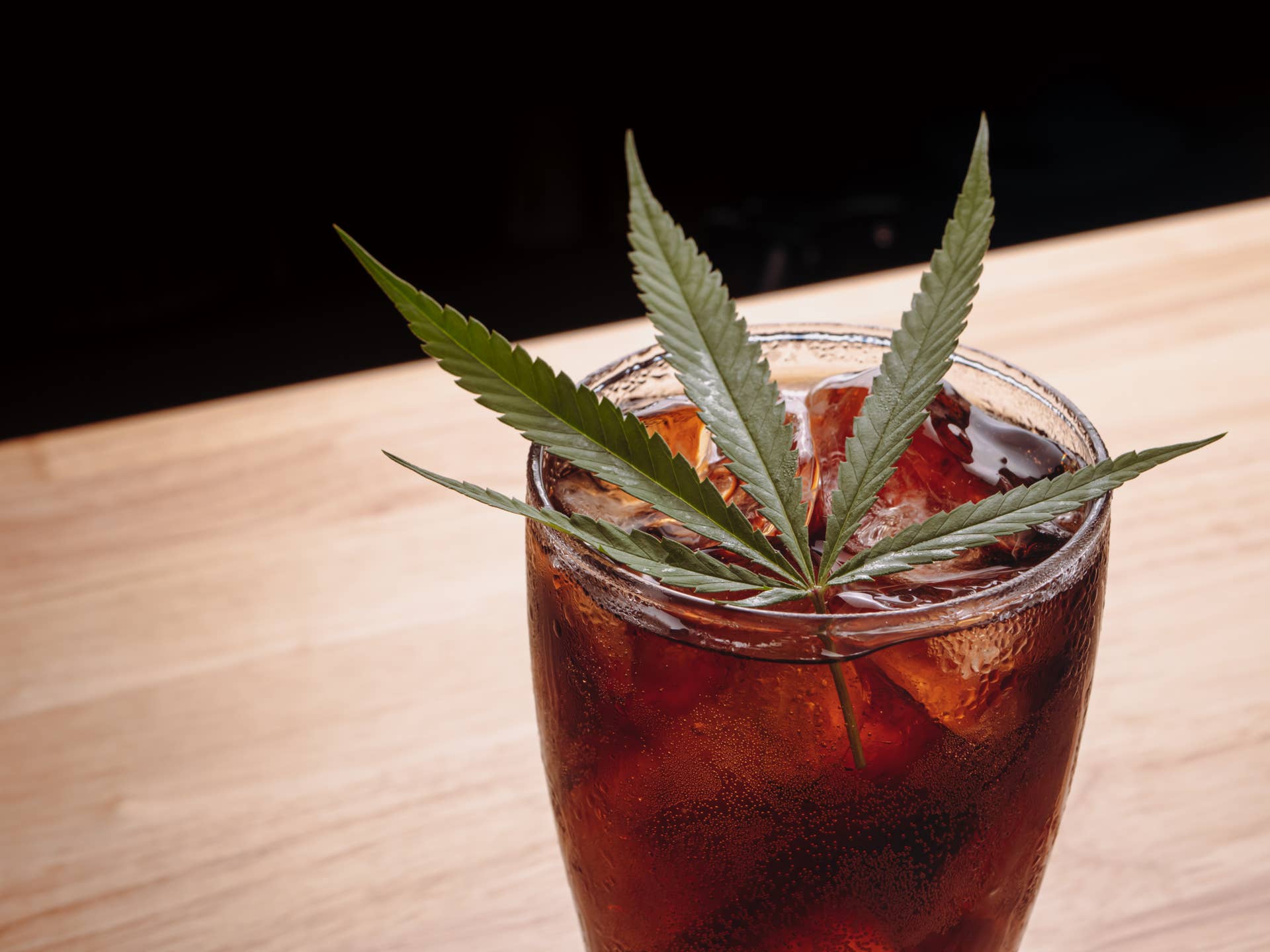
Popular THC drink brands caught in the crackdown
The restrictions could affect beverages that have become familiar sights at liquor stores and supermarkets.
Among the brands carried by major retailers are Cann, Wynk, Nowadays, Señorita, Trail Magic and Willie’s Remedy+.
These products include flavored seltzers, sodas, lemonades and alcohol-free cocktails, frequently containing between 5 and 10 milligrams of THC per can.
Total Wine & More, for example, has listed Wynk’s 5-milligram Black Cherry Seltzer and Trail Magic’s 10-milligram Half & Half Peach drink.
Binny’s Beverage Depot has also listed Señorita’s 10-milligram Mango Margarita and Willie’s Remedy+ Lemonade containing 5 milligrams of THC.
All four drinks exceed the upcoming federal limit, although availability varies by retailer and location.
What is the THC beverage law in different states?
While the federal deadline approaches, states have adopted different approaches to regulating intoxicating hemp products.
THC beverage laws in six states as of November 16, 2026
|
State |
Current restrictions and consumer impact |
|
Illinois |
Since November 12, products exceeding 0.4 mg total THC per container are classified as cannabis and generally require licensed dispensary sales. |
|
New Jersey |
A November 12 law allows qualifying licensed retailers to continue selling covered hemp beverages until the federal deadline, currently set for December 11. |
|
Missouri |
Certain intoxicating hemp products are restricted, but qualifying naturally occurring cannabinoid beverages retain a temporary exception until December 11. Sales are limited to adults 21 and older. |
|
Minnesota |
Permits regulated lower-potency hemp beverages containing up to 10 mg delta-9 THC per single-serving container, subject to the upcoming federal restrictions. |
|
Texas |
Alcohol licensees selling consumable hemp products must verify purchasers are at least 21. Other state requirements also apply. |
|
California |
Intoxicating hemp beverages cannot be sold through conventional retailers outside the regulated cannabis system. |
Sources: Illinois regulators, New Jersey governor, Missouri health department, Minnesota cannabis regulators, Texas Alcoholic Beverage Commission and California cannabis regulators.
State permissions do not override federal law, and availability also depends on retailer licensing and local regulations.
Retailers remove THC drinks, oppose crackdown
Illinois offers one of the clearest examples of the immediate impact on retail.
Binny’s Beverage Depot announced that it would no longer be permitted to sell hemp-derived THC beverages beginning November 12.
The liquor chain discounted its remaining THC inventory before the restrictions took effect.
A Binny’s store manager in Bloomington, Illinois, also confirmed that the location had stopped replenishing inventory, while a nearby Fresh Thyme Market took similar action, according to WGLT.
Total Wine & More has publicly opposed the crackdown.
In a November 9 statement, CEO Ryan Ross said approximately 1,000 Illinois retail locations sold low-dose THC beverages, generating more than $50 million in annual retail sales.
The company identified Target, Circle K, Binny’s and other outlets as participants in the category.
Total Wine argues that existing retail licensing systems, rather than outright prohibitions, could provide a safer framework for regulating THC beverages.
THC crackdown threatens a fast-growing multibillion-dollar industry
The restrictions arrive just as THC beverage sales have been accelerating.
According to NielsenIQ data released in 2026, THC beverage sales reached $200.5 million in tracked U.S. retail channels during the 52 weeks ended January 3, 2026.
That represented a 134% increase from $85.7 million a year earlier.
Separate Hemp Beverage Alliance research found wholesale case-equivalent sales among 26 participating brands increased 133% between 2024 and 2025, surpassing 1.6 million case equivalents.
Drinks containing 6 to 10 milligrams of THC also gained market share, illustrating the demand for products that would exceed the new federal threshold.
The economic stakes extend beyond beverages.
A September 2026 Whitney Economics report estimated the broader U.S. hemp-derived cannabinoid industry’s total addressable market at $38.7 billion.
The research firm estimated the industry supported approximately 350,000 jobs and generated $13.9 billion in wages.
Under its modeled regulatory scenario, the firm projected potential losses of:
- $28.3 billion in retail revenue
- 225,000 jobs
- $2.1 billion in state sales tax revenue
However, these estimates cover the broader hemp-cannabinoid industry, not beverages alone.
Retailers are now urging lawmakers to reconsider the restrictions.
In a November 11 statement, Total Wine said nearly 300,000 customer messages had been sent to Congress supporting continued access to low-dose THC drinks.
The company also cited a survey it commissioned of 2,001 registered voters, in which 85% opposed a ban.
Total Wine is advocating alcohol-style regulations, including age restrictions, standardized testing, potency limits and labeling requirements.
Unless Congress approves another extension or creates a new regulatory framework, December 11 could be the last time you see some of your favorite THC-infused drinks in your retail store next door.