After more than a century of serving Southern families, Winn-Dixie is continuing to retreat from markets outside its home state, marking another significant change for the longtime grocery chain.
Founded in 1925 in Miami as Winn & Lovett Grocery Co., Winn-Dixie has grown into one of the South’s best-known supermarket brands. Today, however, its operations are becoming increasingly concentrated in Florida.
The latest move will leave shoppers in another state without the familiar grocery chain, as Winn-Dixie prepares to transfer its remaining locations to a competitor.
Winn-Dixie exits Georgia as Food Lion takes over stores
Winn-Dixie has agreed to sell its remaining five grocery stores in Georgia to Food Lion, a competing supermarket chain, marking the company’s planned exit from another state.
According to Food Lion’s parent company, Ahold Delhaize (ADRNY), the five locations include:
- Brunswick: 5420 Jesup Highway
- Folkston: 3606 Second Street
- Lake Park: 1060 Lakes Boulevard
- St. Simons Island: 220 Retreat Village Street
- Valdosta: 3200 North Ashley Street
The stores will remain under the Winn-Dixie name until the transaction is completed, pending customary closing requirements.
Food Lion plans to briefly close the locations for remodeling before reopening them as its own stores in mid-December, according to the company’s announcement.
Although the locations are expected to reopen under the Food Lion banner, shoppers will eventually see changes to the store’s branding, product selection, and shopping experience.
The decision comes as Winn-Dixie continues to build what it calls “a year of growth and transformation” by shifting its focus to Florida through new store openings, ongoing investments, and initiatives designed to strengthen its position as the state’s hometown grocer.
As part of this transition, Winn-Dixie wants to expand its presence in Florida, enhance its stores, and deliver better customer service and more everyday value.
“This strategic decision allows us to build on that momentum and direct more resources toward expanding and strengthening our presence across Florida,” Winn-Dixie CEO Raymond Rhee said in the announcement.
Following the Georgia sale, the company expects to operate approximately 120 grocery stores and more than 100 liquor stores, all concentrated in Florida.
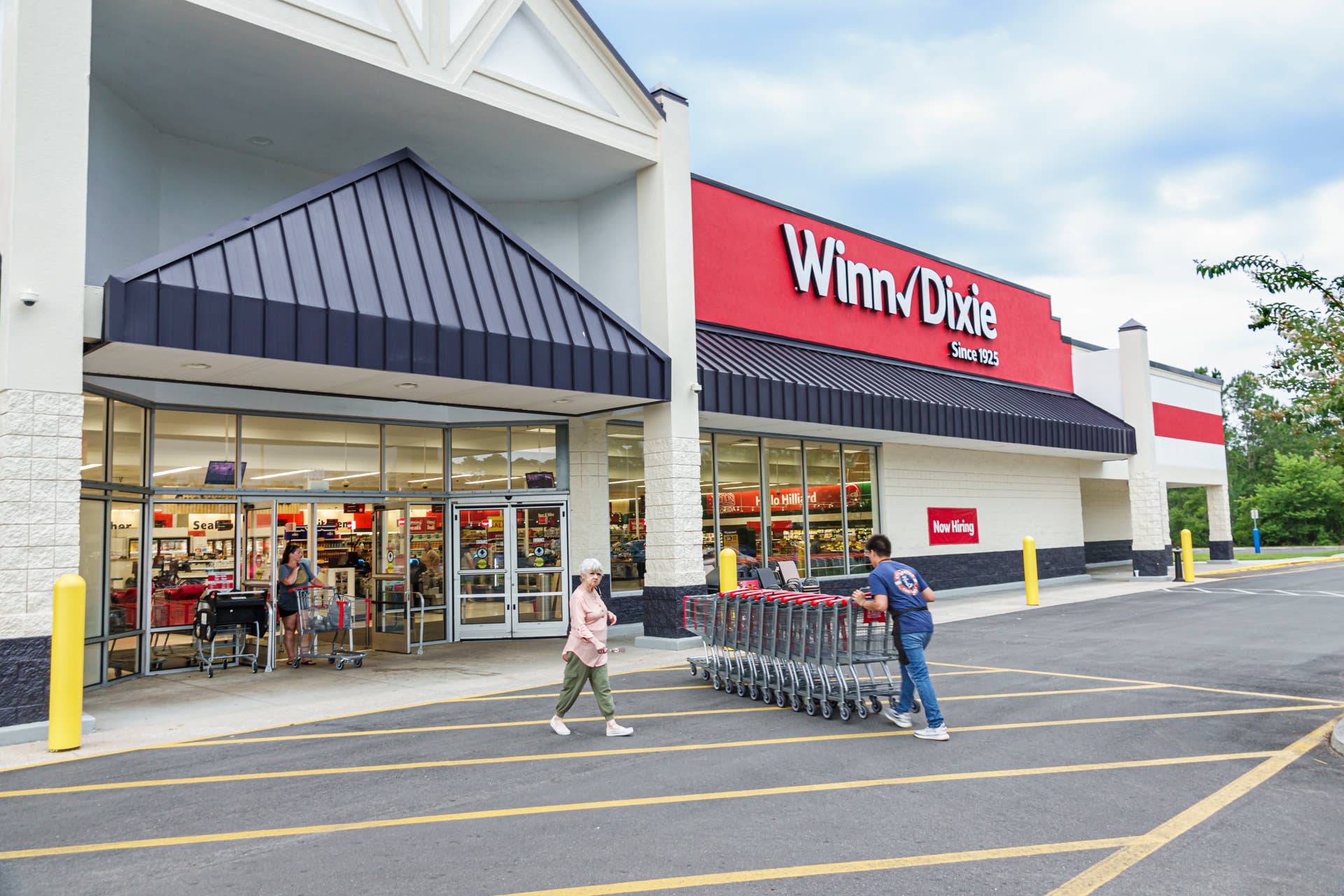
Winn-Dixie rebrands and sells multiple stores
Formerly known as Southeastern Grocers, Winn-Dixie rebranded as The Winn-Dixie Company in early 2026, aiming to unite its operations under the familiar grocery brand and establish a more focused regional footprint.
Initially, the company said it was prioritizing Florida and select markets in Georgia, where it planned to invest heavily in modernization, operational efficiency, and long-term growth.
As part of this transition, Winn-Dixie sold 32 of its namesake stores and eight Harveys Supermarket locations across Alabama, Georgia, Louisiana, and Mississippi.
Rouses Market acquired 10 locations in late 2025 and began converting them into its own brand, according to its official website. The remaining stores were sold to other grocery operators, including Food City and Piggly Wiggly.
The latest Georgia agreement further advances the company’s efforts to concentrate its resources on Florida, where it continues to invest in and open stores.
Winn-Dixie is currently advancing plans for new locations in Zephyrhills and Eustis in 2027 while exploring additional opportunities to expand its footprint statewide.
The company has also continued to modernize its existing locations, completing eight store remodels across Florida in 2026.
However, the broader transition has significantly reduced Winn-Dixie’s geographic reach, ending its presence in Alabama, Louisiana, and Mississippi, while the pending sale in Georgia will leave Florida as its only grocery market.
Pressures across the grocery store industry continue to drive closures
Winn-Dixie’s latest divestiture comes as traditional supermarket chains face mounting pressure across the grocery sector, competing not only with one another but also with large-scale and nontraditional retailers.
While Winn-Dixie has described its Georgia sale as part of a Florida-focused growth strategy, the move highlights the importance of concentrating resources in markets where the company believes it can strengthen its competitive position.
Here’s some of my previous coverage of grocery store closures:
- Albertsons saved a beloved grocer, now it keeps closing stores
- Discount grocery chain closes 12 stores after expanding too fast
- 98-year-old grocery chain closing stores in key markets
Economic uncertainty and rising operational costs, combined with evolving consumer preferences, including the growth of online grocery shopping and value-focused spending, are forcing companies to reevaluate their business models.
For regional supermarket operators such as Winn-Dixie, maintaining a competitive position can require significant investments in store upgrades, supply chains, pricing, and digital services, making geographic focus an important part of long-term strategy.
U.S. retailers are expected to close about 7,900 stores in 2026, down 4.5% from 2025, while 5,500 locations are projected to open, up 4.4%, according to Coresight’s U.S. Store Tracker 2026 Outlook.
Industry analysts warn that continued store closures may have ripple effects beyond retail, particularly in local communities. Reduced physical store presence can limit access to essential goods, weaken local economies, and accelerate the shift toward e-commerce.
“What we see is something that is currently legal but clearly unethical, where corporations are allowed to devastate the health of a community for profit,” Food Empowerment Project Founder and President Lauren Ornelas told Berkeley Food Institute.
Scott Moses, a partner and head of the grocery, pharmacy, and restaurants advisory group at Solomon Partners, has also highlighted the growing competitive pressures from large-scale and nontraditional retailers.
“For many years, I’ve been sounding the alarm about the rise of national/discount grocers— Walmart, Costco, Amazon, Target, Dollar General, Family Dollar, and Dollar Tree — and the existential threat that they pose to supermarket grocers, just as we’ve all seen over the last 20 years how department stores have been marginalized,” Moses told Supermarket News.
Related: Grocery chain closes stores, leaving shoppers with fewer options