I only realized how good a toy business could be once I got my own children. Before you become a parent, you don’t realize how willing you’ll be to spend money on all kinds of toys.
Many millennials around me still remember having one box of toys they could play with. Nowadays, kids have rooms and attics piled with a variety of toys collecting dust while they spend most of their time on one toy they actually use: a screen.
The toy industry keeps changing, and the latest data shows that toy sales are still growing, but what is driving this increase is once again shifting.
U.S. toy sales increased 20% between January and September 2026, compared with the same period in 2025. But the more interesting finding is who is buying toys, according to market research firm Circana.
- Collectible toy sales increased 56%.
- Licensed toy sales increased 27%.
- Consumers aged 12 and older accounted for the majority of toy industry growth.
- Toy sales through TikTok Shop nearly tripled, reaching $1.6 billion.
- TikTok Shop became the fourth-largest toy retailer in the United States.
At the same time, the iconic toy retailer many shoppers around the US grew up in is pushing for a major comeback across the US. The question is: can it give consumers exactly what they need right now?
Toys “R” Us hits a major milestone in its U.S. comeback, but is it enough?
There was a time when taking a child to Toys “R” Us was an experience in itself. Parents remember the aisles, the endless choices, and the excitement of finding a toy they had been asking for all year.
Over time, the iconic toy retailer failed to adapt to online shopping and battled the fierce competition of Walmart and Amazon, which frequently offered lower prices.
In September 2017, after accumulating approximately $5 billion in debt, Toys “R” Us filed for Chapter 11 bankruptcy.
Despite efforts to restructure the business, the company eventually closed its U.S. stores in 2018. However, the brand survived under new ownership and gradually began returning through partnerships, including smaller stores inside Macy’s.
Today, the brand is growing again under WHP Global, its current owner.
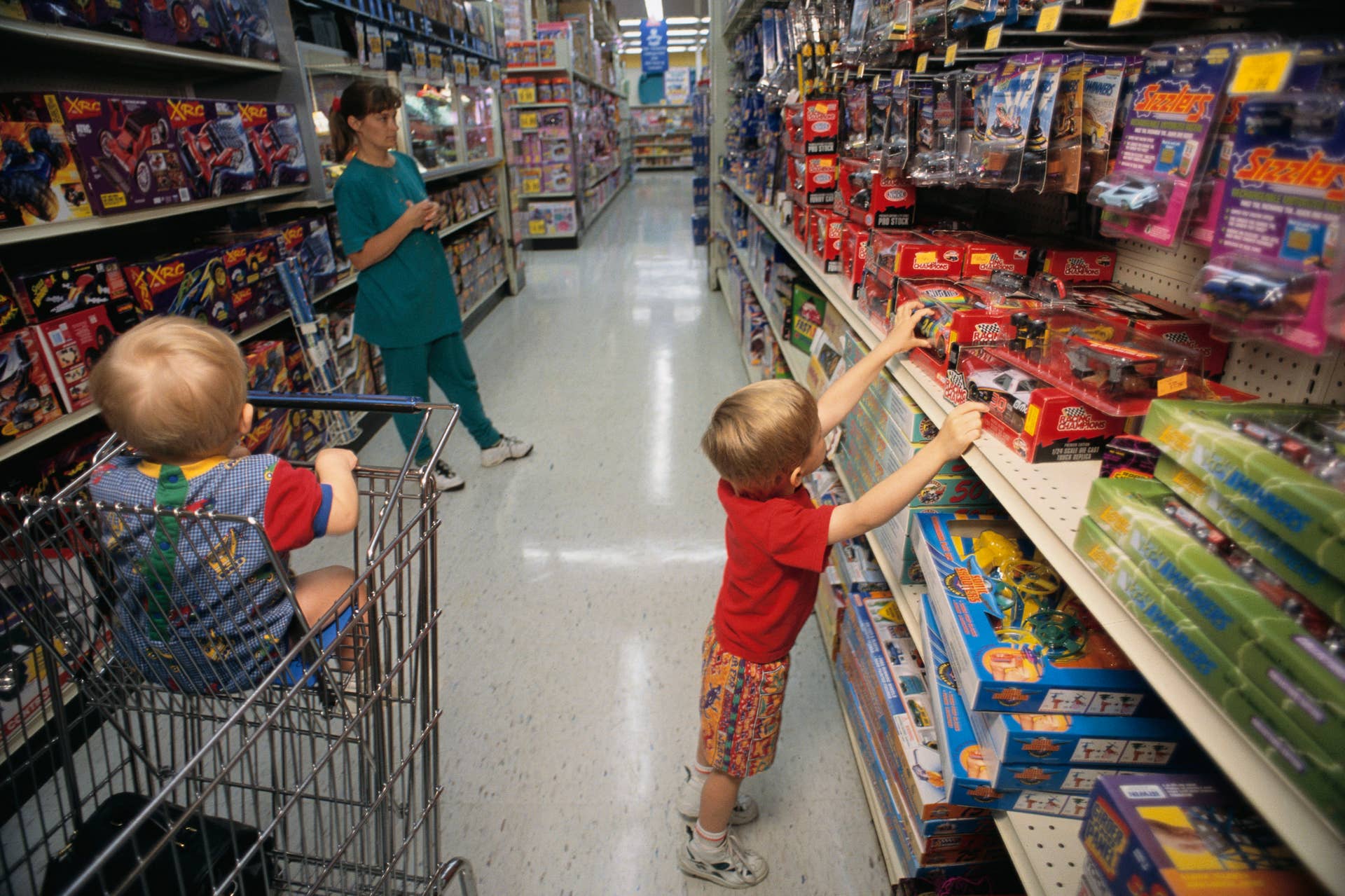
On November 13, 2026, the company announced that 160+ standalone Toys “R” Us stores are now open across the U.S. in partnership with Go! Retail Group.
The brand also announced the opening of a new standalone store at New York City’s iconic Grand Central Terminal with a special celebration on November 20.
The comeback is built on a much lighter real estate model than the old chain.
Roughly 120 of the 160-plus standalone stores were added specifically for the 2026 holiday season through Go! Retail Group, an operator known for seasonal mall pop-ups, alongside permanent destination flagships such as Grand Central Terminal.
That flexible approach lets Toys “R” Us test demand without taking on the heavy long-term lease obligations that weighed down the original retailer.
While the brand certainly evokes nostalgia among many consumers nationwide, its comeback also faces two challenges: a different kind of toy market and the same aggressive competition that contributed to its fall in the first place.
What went wrong with iconic Toys “R” Us in the first place?
For decades, Toys “R” Us was one of the major toy destinations in the United States. It was founded in 1948 as a baby furniture store in Washington, D.C., and over the years it grew into a global retailer specializing in toys, clothing, and baby products.
Toys “R” Us’s financial troubles can be traced in large part to its 2005 leveraged buyout.
A consortium of private equity firms Bain Capital and KKR, alongside Vornado Realty Trust, acquired the retailer in a $6.6 billion deal, leaving it with approximately $5 billion in debt. The resulting interest payments drained money that could otherwise have been invested in stores, technology and e-commerce, as The Washington Post reported.
However, the buyout alone does not explain the company’s collapse.
Toys “R” Us also struggled to adapt to the rise of online shopping and competition from Amazon, Walmart and Target. As Harvard Business School Online’s analysis explains, its financial burden and competitive challenges contributed to its downfall.
The debt did not make bankruptcy inevitable, but it left the retailer with fewer resources to modernize and respond to a rapidly changing retail market.
Toys “R” Us consumers doubled their spending on Amazon
While debt weakened Toys “R” Us financially, the retailer was also losing shoppers to competitors offering more convenient and competitive ways to buy toys.
Amazon was capitalizing on the growing popularity of online toy shopping, with more than 14% of parents saying they shopped most often for toys at the retailer, according to a 2017 consumer survey by Coresight Research.
The shift intensified competition across the toy retail sector, putting pressure on traditional retailers to adapt to changing shopping habits.
The shift is also visible in actual consumer spending. Earnest Research, using anonymized spending data from more than 500,000 Toys “R” Us customers, found that between 2014 and 2017, consumers who had shopped at Toys “R” Us more than doubled their spending at Amazon, while their average annual spending at Toys “R” Us fell by 41%.
Meanwhile, Amazon’s share of the combined market among Amazon, Walmart, Target and Toys “R” Us grew from 18% in 2014 to 32% in 2018.
Can Toys “R” Us survive its own comeback?
The biggest question is whether Toys “R” Us can give consumers a reason to visit its stores rather than simply buy toys online or at popular retail giants.
“A toy store has to be special to compete with Walmart and Target. It needs to offer games, activities, and really smart staff or it will lose on pricing every time,” said TheStreet Co-Editor-in-Chief Daniel Kline, who used to run a large, successful independent toy store.
The chain is returning to a different market. For Toys “R” Us, this means competing on more than its familiar name and childhood nostalgia. It needs to appeal not only to parents shopping for children but also to teenagers, adult collectors, and consumers influenced by social media and pop culture.
It appears that the retailer is very aware of this shift and is trying to answer the current demands with its latest offering.
In September 2026, Toys “R” Us confirmed that its new standalone stores would feature many of the toys and experiences currently gaining popularity among consumers (according to Circana data).
Namely, the company said these stores will feature a “curated assortment of the season’s hottest toys, collectibles and must-have gifts” from the most popular toy brands and latest movies like LEGO, Barbie, Hot Wheels, KPop Demon Hunters, and more.
Moreover, select locations will introduce new experiences such as Creator Studios: “dedicated spaces where influencers, creators and toy brands can create content, unveil new products and host toy reveals, launches and special events.”
Some stores will also feature candy shops and cafés in an effort to provide customers with even more reasons to come, visit and spend time at Toys “R” Us.
WHP Global says Toys “R” Us now generates more than $2 billion in annual retail sales across more than 1,800 stores in 37-plus countries, while the old company reported net sales of about $11.5 billion in the fiscal year ended January 2017, including $7.1 billion in the U.S, according to its annual report filed with the SEC.
The figures aren’t directly comparable, but they show how much smaller the business is today.
Overall, Toys “R” Us’s return offers an opportunity to revive an iconic retail experience, but reopening stores is only the first step. To make its comeback last, Toys “R” Us will need to prove it can offer something shoppers cannot get elsewhere.
Related: Target brings back a holiday benefit that protects shoppers