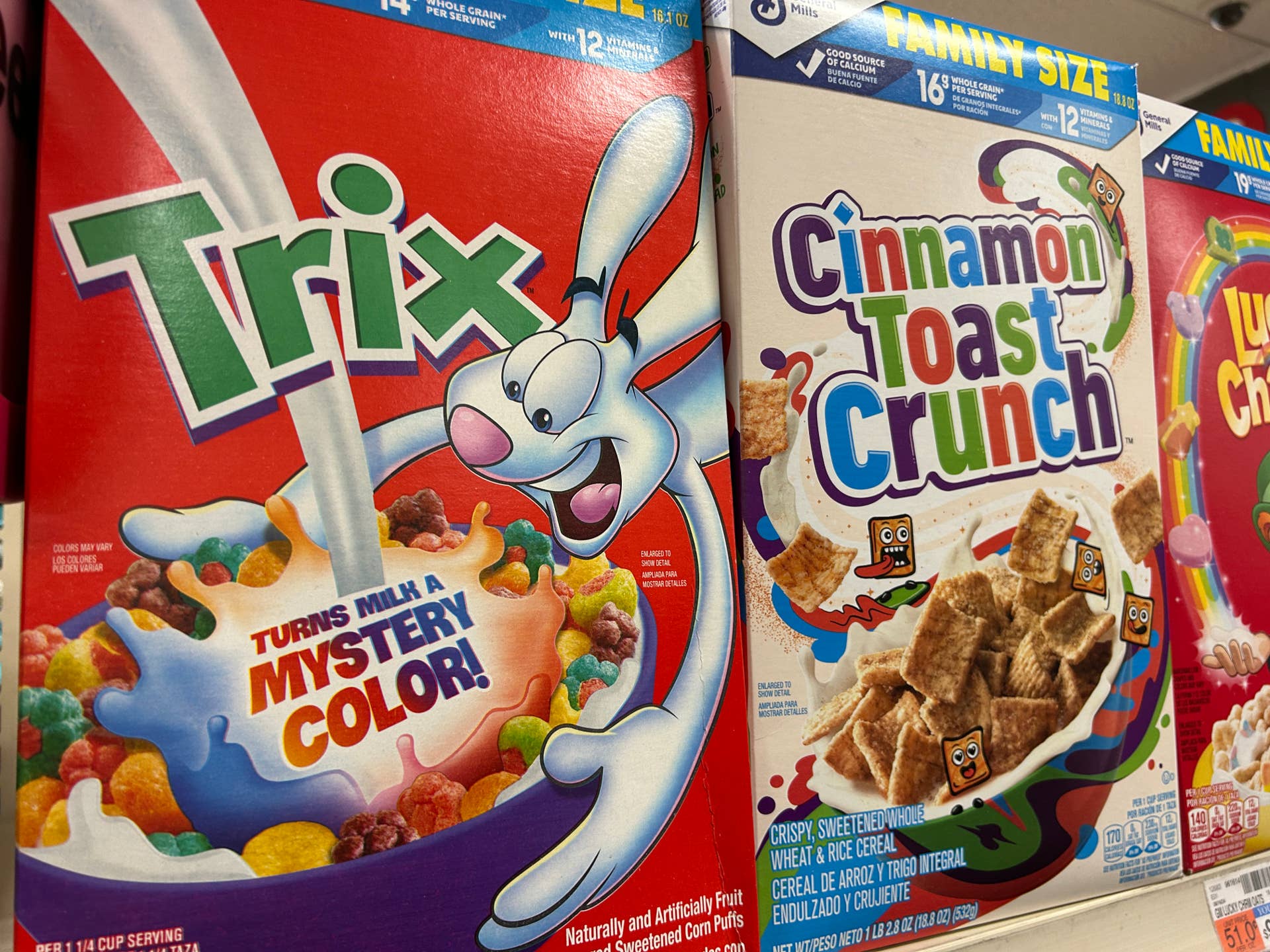
For decades, General Mills’ colorful, fruit-flavored Trix cereal has been a childhood breakfast favorite, thanks in part to its mischievous rabbit mascot.
Now, the nostalgic cereal is getting a protein-packed makeover aimed at a new audience: adults increasingly focused on fitness, nutrition and healthier eating habits.
The maker of Cheerios, Lucky Charms and Cinnamon Toast Crunch has teamed up with sports nutrition brand GHOST to introduce a protein-enhanced version of Trix containing 17 grams of protein per serving.
And that is a lot of protein, especially in a breakfast cereal, which, until recently, only served to give that early-morning sugar rush.
This new product is part of General Mills’ broader push into higher-protein foods as traditional breakfast cereal makers struggle with declining sales and changing consumer preferences. For General Mills, the challenge is particularly important.
Its long-established cereal brands remain household names, but consumers increasingly have alternatives that promise more protein, less sugar and greater nutritional value.
The company is betting that giving familiar cereals a nutritional makeover can help attract shoppers who might otherwise skip the cereal aisle.
General Mills brings protein-maxxing to Trix
The new GHOST Protein Cereal x Trix retains the familiar fruity flavor associated with the original cereal while offering significantly more protein.
According to GHOST, each serving contains 17 grams of protein, is a good source of calcium and uses colors from natural sources. The cereal is being marketed as an option for breakfast, post-workout meals and snacking.
More Retail:
- Struggling home goods chain closing more stores
- Verizon makes changes to be more like T-Mobile used to be
- Home Depot drops generous offers as customers grow harder to win
A 9.2-ounce box is currently listed for $9.99 on GHOST’s website, although prices at other retailers may differ as distribution expands.
The product reflects the growing popularity of protein-maxxing, a trend that has encouraged food companies to introduce higher-protein versions of everything from snacks and beverages to breakfast staples.
General Mills has already been experimenting with the approach.
In February 2026, the company announced GHOST Protein Cereal versions of Cinnamon Toast Crunch and Lucky Charms, each offering 17 grams of protein per serving. The company has also expanded protein-focused offerings across other brands, including Cheerios and Nature Valley.
For traditional cereal makers, the strategy offers a way to appeal to consumers interested in nutrition without giving up the flavors and brand recognition developed over decades.But the emphasis on protein is only one part of a broader transformation unfolding across the breakfast industry.
Protein craze reshapes America’s struggling cereal industry
America’s breakfast cereal industry is facing declining sales as consumers increasingly seek healthier, protein-rich alternatives.
According to Circana data published by Snack Food & Wholesale Bakery, U.S. shelf-stable cereal sales declined 1.2% to $12.8 billion during the 52 weeks ended March 22, 2026.
General Mills’ cereal sales fell 3.7%, while WK Kellogg and Post Consumer Brands recorded declines of 4.3% and 3.8%, respectively. Meanwhile, protein-focused brands are gaining ground. Catalina Snacks, the maker of Catalina Crunch, recorded an 80.6% increase in sales during the same period.
A separate August 2026 Circana report found that 48% of American adults are seeking more protein in their diets, up seven percentage points from 2025. Among GLP-1 users, that figure rises to 65%.
Convenience also matters, with 65% of breakfasts taking less than five minutes to prepare.
Interestingly, Circana found that Americans already consume nearly twice the recommended amount of protein while getting less than half the recommended amount of fiber.
For General Mills, protein-enhanced cereals offer a way to appeal to changing nutritional preferences while keeping familiar breakfast brands relevant.
General Mills is changing more than its cereal recipes
General Mills’ effort to modernize its cereal business extends beyond adding protein.
In August, the company announced that it had completed the removal of certified artificial colors from its U.S. cereal portfolio, including Trix and Lucky Charms. The changes came as consumers and policymakers placed greater scrutiny on artificial food dyes and ingredients used in products marketed to children.
The company is also preparing for a major organizational change.
On November 10, General Mills announced that it would reorganize into three operating segments beginning January 1, 2027:
- Cereal, Snacks & International
- Meals & Baking Solutions
- Pet
The restructuring is intended to improve decision-making, strengthen commercial capabilities and better align the company with evolving consumer preferences.
“Winning consumer choice today means responding faster to changing needs,” General Mills Chief Operating Officer and incoming CEO Dana McNabb said in the announcement.
The company’s latest financial results illustrate why those changes matter.
General Mills reported fiscal first-quarter 2027 net sales of $4.4 billion, down 3% from a year earlier, partly reflecting the divestiture of its U.S. yogurt business.
Its North America Retail segment reported a 7% decline in sales, including the impact of the divestiture, while organic sales fell 3%.
General Mills said its Big G Cereal & Canada operating unit recorded a double-digit reported sales decline, although that figure also included effects from the yogurt divestiture.
The company is investing in product development, packaging and consumer value to restore growth. The protein-enhanced Trix cereal is one example of how it hopes to do that.
But at nearly $10 per box through GHOST’s online store, the product also highlights another challenge for traditional cereal makers: convincing cost-conscious consumers that a familiar breakfast staple is worth paying more for because of the nutritional updates.